How to Build Stairs on a Deck: Safe Access is Key!
Deck stairs are required for more than just connecting levels. They must ensure safety, comfort, and be visually appealing.
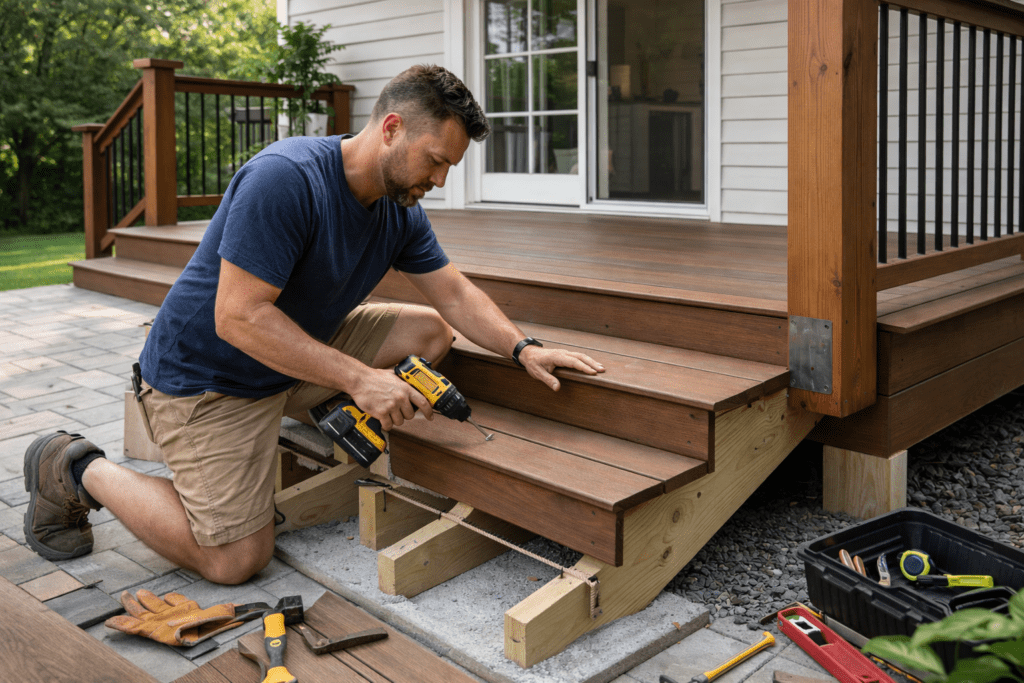
Poorly built stairs flex, feel awkward, or fail inspection. Well-built stairs feel natural underfoot and last as long as the deck itself.
This guide walks through how to build stairs on a deck the right way.
It ties in principles from How to Build an Attached Deck, How to Build an Elevated Deck, and How to Build a Ground-Level Deck, because stair design always depends on what the deck is connected to and how high it sits.
For actionable, location-based bill of materials, cost estimates, and a pro-level PDF, you need the DeckMaster AI. Click on the image below to get it!

Use this guide and Best Practices on How to Build a Deck to learn the fundamentals. Use DeckMaster AI to build “your” deck with confidence.
Table of Contents
Why Deck Stairs Deserve Extra Attention
Stairs take more abuse than almost any other part of a deck. They handle:
- Concentrated foot traffic
- Weather exposure
- Lateral movement
- Impact loads
A deck might look great, but if the stairs feel unsafe, the whole project suffers.
How to Build Stairs on a Deck: Planning Comes First
Before cutting anything, you need accurate measurements and a clear plan.
Measure Total Rise and Total Run
Start by measuring:
- Total rise: distance from deck surface to finished ground
- Total run: horizontal distance the stairs will occupy
Always measure to the finished grade, not the raw soil.
Understand Stair Code Basics
Most building codes require:
- Consistent riser height
- Minimum tread depth
- Maximum total rise per flight
- Secure handrails above certain heights
Local codes vary, so confirm requirements before building.
Calculating Riser Height and Tread Depth
Comfortable stairs are predictable stairs.
Riser Height Guidelines
Typical residential deck stairs use:
- Riser heights between 7 and 7 ¾ inches
- Identical risers throughout the flight
Even a small variation can feel awkward and unsafe.
Tread Depth Guidelines
Standard tread depth is:
- Around 10 inches minimum
- Measured from nosing to nosing
Deeper treads feel safer, especially on outdoor stairs.
Choosing Stringers for Deck Stairs
Stringers are the backbone of the stairs.
Notched Wood Stringers
This is the most common method. They are:
- Cut from dimensional lumber
- Notched to hold treads and risers
- Easy to build with standard tools
Proper spacing is critical to prevent flex.
Engineered or Metal Stringers
Prefabricated options are increasingly popular. They offer:
- Consistent geometry
- High load capacity
- Clean, modern appearance
These work especially well with composite or PVC decks.
Attaching Stairs to the Deck Frame
This connection must be solid.
Stair Ledger or Rim Attachment
Stairs usually attach to:
- A rim joist
- A dedicated stair header
Connections should use:
- Structural fasteners
- Metal connectors
- Proper blocking
Never rely on toenails alone.
Stairs on Attached Decks
For attached decks, follow guidance from How to Build an Attached Deck. Make sure:
- Stair loads don’t compromise ledger connections
- Water is directed away from the house
- Flashing remains intact
Stairs should never create drainage problems.
Supporting the Bottom of the Stairs
The base of the stairs needs a firm landing.
Concrete Landing Pads
Concrete provides:
- Long-term stability
- Consistent height
- Reduced movement
Pads should sit below frost depth where required.
Ground-Level Stair Terminations
On ground-level decks, stairs may transition directly to grade. In that case:
- Compact soil properly
- Use gravel or pavers
- Maintain drainage away from the stairs
Movement at the base leads to failure over time.
Installing Treads and Risers
Once stringers are set, the build speeds up.
Tread Materials
Common tread options include:
- Pressure-treated lumber
- Composite decking
- Hardwood decking
Match tread material to the deck surface for consistency.
Riser Choices
You can choose:
- Open risers for airflow
- Closed risers for a finished look
Some codes restrict open risers, especially on elevated decks.
Handrails and Guardrails on Deck Stairs
Railings are about safety, not decoration.
When Handrails Are Required
Handrails are typically required when:
- There are four or more risers
- The deck is elevated
They must be continuous and easy to grip.
Guardrails Along Stair Runs
Open sides of stairs often require guardrails. These prevent:
- Side falls
- Child hazards
- Inspection failures
Follow spacing rules for balusters and infill.
Stairs for Elevated Decks
Stairs on elevated decks require extra care.
Long Stair Runs
For tall decks:
- Consider intermediate landings
- Break up long runs visually and structurally
- Reduce fatigue and improve safety
This mirrors planning concerns in How to Build an Elevated Deck.
Wind and Lateral Stability
Tall stair runs may need:
- Bracing
- Wider stringers
- Heavier connections
Movement is the enemy of outdoor stairs.
Stairs for Ground-Level Decks
Ground-level deck stairs are simpler but still important. They often:
- Have fewer risers
- Sit closer to soil
- Face more moisture exposure
This makes material choice and drainage critical.
Finishing Touches That Matter
Details make stairs feel complete.
Nosing and Overhangs
Consistent nosing:
- Improves comfort
- Reduces trip hazards
- Enhances appearance
Keep overhangs uniform across all treads.
Lighting for Safety
Stair lighting improves usability. Options include:
- Riser lights
- Post-mounted lights
- Low-voltage systems
Lighting is especially valuable on covered or shaded decks.
Common Deck Stair Mistakes
Avoid these frequent issues:
- Inconsistent riser heights
- Inadequate stringer spacing
- Poor bottom support
- Missing or weak handrails
Most stair problems come from rushing the layout.
Final Thoughts
Building stairs on a deck is not a minor task. It’s one of the most technical parts of the project. When done correctly, stairs feel natural, safe, and sturdy. When done poorly, they become a constant annoyance or a safety hazard.
By carefully planning layout, following proven framing methods, and applying lessons from How to Build an Attached Deck and How to Build an Elevated Deck, you can build deck stairs that last as long as the deck itself and feel right every time someone uses them.