How to Build Deck Steps and Railings: Safety Ensured!
Deck steps and railings should be designed as one system. Steps guide movement. Railings protect edges.
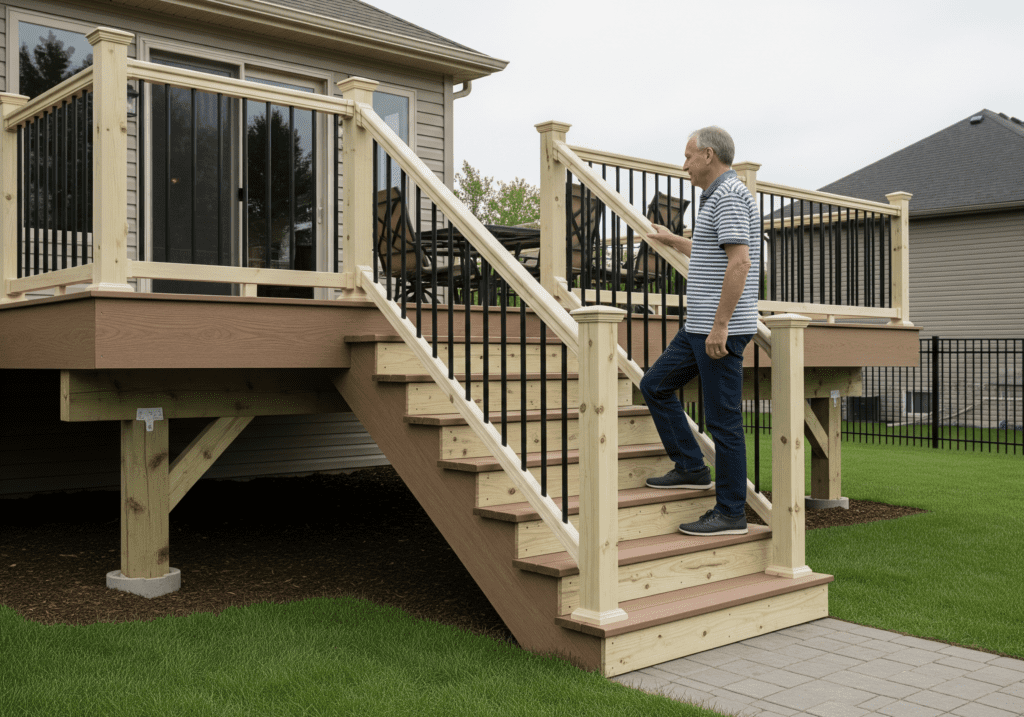
When they’re planned separately, you often end up with awkward transitions, weak posts, or code issues. When they’re planned together, everything feels solid, natural, and intentional.
This article explains how to build deck steps and railings so that they work together structurally and visually.
It builds directly on How to Build Stairs on a Deck, How to Build a Deck Railing, and How to Build an Elevated Deck, tying those ideas into one coordinated approach.
To be fair, it teaches you how decks should be built, not how to build “your” deck in “your” yard. Every deck is different. Soil conditions vary. Lumber prices change by location. Codes aren’t the same everywhere.
For actionable, location-based bill of materials, cost estimates, and a pro-level PDF, you need the DeckMaster AI. Click on the image below to get it!

Use this guide and Best Practices on How to Build a Deck to learn the fundamentals. Use DeckMaster AI to build “your” deck with confidence.
Table of Contents
Why Steps and Railings Should Be Planned Together
Steps and railings share loads, connections, and space. When designed together, they:
- Share reinforced posts
- Meet code more easily
- Look cleaner and more intentional
- Feel safer under daily use
Treating them as one system avoids rework later.
When Deck Steps and Railings Are Required
Not every deck needs both, but many do.
Height and Code Requirements
Most building codes require:
- Stairs when there is a change in elevation
- Railings when the deck is 30 inches or more above grade
- Handrails on stairs with four or more risers
Always confirm local requirements before building.
Special Situations
Steps and railings are almost always required on:
- Elevated decks
- Balcony decks
- Rooftop decks
- Multi-level decks
These scenarios are covered in How to Build an Elevated Deck and How to Build a Covered Deck.
How to Build Deck Steps and Railings: Start With Layout
Layout determines everything that follows.
Step Location and Traffic Flow
Choose stair locations that:
- Feel natural to approach
- Don’t block doors or seating
- Allow space for railings on both sides if needed
Steps should guide people, not interrupt the deck.
Railing Post Placement
Railing posts must align with:
- Stair stringers
- Deck framing
- Corners and transitions
Poor post placement leads to weak connections and awkward rail angles.
Building the Deck Steps First
Steps usually go in before railings.
Measuring Rise and Run
Measure from:
- Finished deck surface
- To finished ground or landing
Use consistent riser heights and tread depths to avoid trip hazards.
Stringer Installation
Common stringer options include:
- Notched wood stringers
- Engineered metal stringers
Stringers must be securely attached to the deck frame, following guidance from How to Build Stairs on a Deck.
Supporting the Bottom of the Steps
The base of the steps must not move.
Concrete Landings
Concrete pads are the most reliable option. They:
- Prevent settlement
- Keep riser heights consistent
- Improve long-term stability
Landings should be sized to code.
Ground-Level Transitions
For low decks, steps may meet grade directly. In those cases:
- Compact soil properly
- Use gravel or pavers
- Maintain drainage away from the stairs
Movement at the base causes failures over time.
How to Build Railings That Integrate With Steps
Railings should feel continuous and secure.
Railing Posts at Stairs
Stair railing posts experience higher forces. They should:
- Be through-bolted to framing
- Use blocking or tension hardware
- Align with stringers below
Never attach stair rail posts to decking alone.
Handrails vs Guardrails
Handrails:
- Are required on most stair runs
- Must be easy to grip
- Must be continuous from top to bottom
Guardrails protect open edges and are usually taller.
Building Railings on the Deck Surface
Once steps are in place, deck railings follow.
Post Attachment Methods
The strongest method is:
- Through-bolting posts to the deck frame
- Adding blocking between joists
This mirrors best practices from How to Build a Deck Railing.
Baluster and Infill Installation
Most codes require:
- Openings no larger than 4 inches
- Consistent spacing
- Secure attachment top and bottom
This applies to wood, metal, and cable systems.
Material Choices for Steps and Railings
Material choice affects safety and maintenance.
Wood Systems
Wood steps and railings:
- Are affordable
- Match traditional decks
- Require sealing and inspection
Pressure-treated lumber is the most common option.
Composite and PVC Systems
Low-maintenance options offer:
- Consistent appearance
- Slip-resistant treads
- Pre-engineered railing kits
They work well for high-traffic stairs.
Metal and Cable Railings
Metal systems provide:
- Clean lines
- High durability
- Minimal visual obstruction
Cable systems require precise installation and tensioning.
Steps and Railings on Elevated Decks
Higher decks demand stronger construction.
Increased Load and Movement
Elevated stairs experience:
- More sway
- Greater wind exposure
- Higher fall risk
Posts, fasteners, and connections must be upgraded accordingly.
Landings and Breaks
For tall decks:
- Intermediate landings improve safety
- Long stair runs feel less intimidating
- Railings become easier to manage
These ideas align with How to Build an Elevated Deck.
Lighting and Visibility
Good lighting improves safety.
Stair Lighting Options
Popular options include:
- Riser lights
- Post cap lights
- Under-rail lighting
Lighting helps prevent missteps at night.
Planning Electrical Early
Plan wiring before:
- Installing treads
- Closing railing systems
- Finishing posts
Retrofits are harder and more expensive.
Common Mistakes With Deck Steps and Railings
Avoid these frequent problems:
- Inconsistent riser heights
- Weak stair post connections
- Skipping blocking
- Ignoring code spacing rules
Most issues come from rushing layout or attachment.
Inspection and Long-Term Maintenance
Steps and railings need regular attention.
What to Inspect
Check periodically for:
- Loose fasteners
- Cracked posts
- Movement at stair connections
- Worn treads or handrails
Small fixes prevent big repairs.
Ongoing Care
Maintenance depends on material:
- Wood needs sealing and inspection
- Metal needs corrosion checks
- Composite needs cleaning only
Choose materials based on how much upkeep you want.
Final Thoughts
Deck steps and railings work best when they’re designed as one system. Steps guide movement. Railings protect people. Together, they define how the deck is used and how safe it feels.
By combining stair-building principles from How to Build Stairs on a Deck with proper post attachment and railing design from How to Build a Deck Railing, you can build deck steps and railings that feel solid, look clean, and meet code without compromise.