How to Build Cascading Stairs for a Deck: Magical Transition!
Cascading deck stairs change how a deck meets the landscape. Instead of a narrow run straight down, the stairs spread outward in wide, shallow steps.
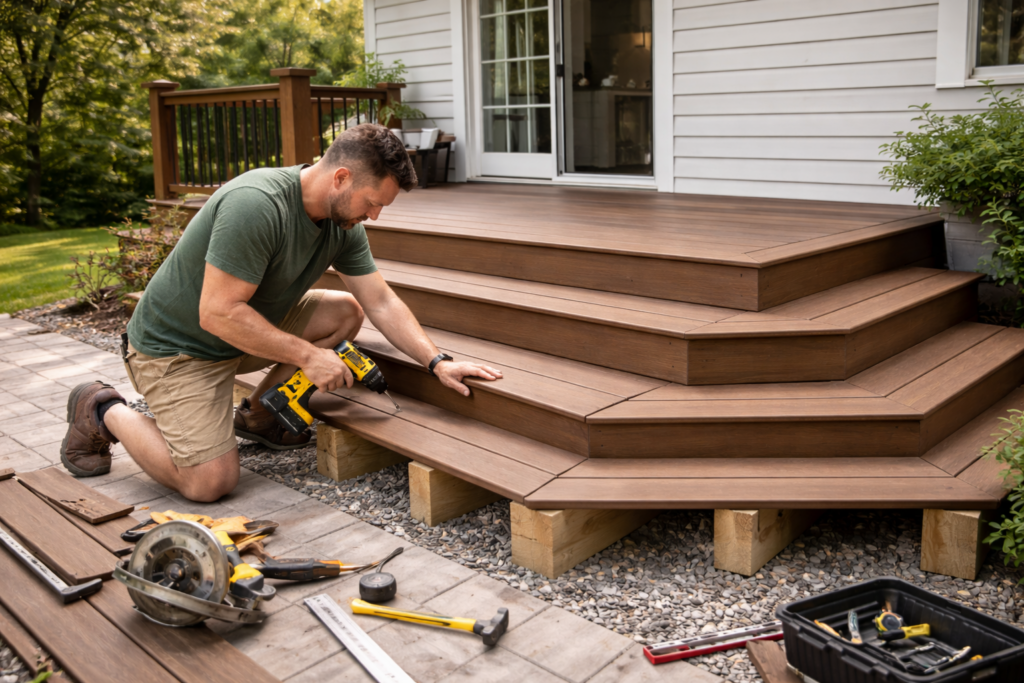
They feel welcoming, grounded, and intentional. When done well, they look less like stairs and more like a transition from deck to yard.
This guide explains how to build cascading stairs for a deck that feel solid and looks grand and magical. Cascading stairs are especially effective on low to mid-height decks.
This guide pairs naturally with designs and concepts discussed in How to Build Stairs on a Deck, How to Build a Ground-Level Deck, and How to Build a Multi-Level Deck.
For actionable, location-based bill of materials, cost estimates, and a pro-level PDF, you need the DeckMaster AI. Click on the image below to get it!

Use this guide and Best Practices on How to Build a Deck to learn the fundamentals. Use DeckMaster AI to build “your” deck with confidence.
Table of Contents
What Are Cascading Stairs for a Deck?
Cascading stairs are wide, flared steps that extend across much of the deck’s width. Each step steps back slightly, creating a layered effect.
How Cascading Stairs Differ From Standard Stairs
Traditional stairs:
- Are narrow and linear
- Focus on efficiency
- Emphasize vertical movement
Cascading stairs:
- Are wide and open
- Emphasize flow and access
- Blend structure into the yard
They invite people onto the deck rather than funneling them.
When Cascading Stairs Make Sense
Cascading stairs work best when:
- The deck is 12 to 36 inches above grade
- There’s enough yard space
- You want multiple entry points
They are less suitable for tall, elevated decks.
Planning Cascading Stairs for a Deck
Planning is more important here than with standard stairs.
Measure Rise and Step Count
Start with the total rise, measured from the deck surface to the finished grade. Then decide:
- Number of steps
- Riser height per step
- Step depth
Cascading stairs often use shorter risers and deeper treads for comfort.
Layout Width and Shape
Decide early whether the stairs will:
- Span the full deck width
- Taper outward
- Wrap around corners
Symmetry usually looks best, especially on rectangular decks.
How to Build Cascading Stairs for a Deck
This is where structure matters most.
Structural Approach
Cascading stairs are typically built as:
- A series of tiered platforms
- Framed like small decks
- Supported by footings or ground contact
Think of them as stacked landings rather than one long stair run.
Framing the First Step
The top step ties directly into the deck frame. Best practices include:
- Attaching framing to the deck rim or beam
- Using joist hangers or blocking
- Keeping the step perfectly level
Any error here carries through the rest of the stairs.
Footings and Ground Support
Support must be consistent across the width.
Concrete Footings
Footings may be required when:
- The deck is attached to the house
- Soil conditions are poor
- Frost depth applies
Footings keep the steps from settling unevenly.
Ground-Level Support Options
For very low decks, steps may rest on:
- Compacted gravel
- Pavers
- Concrete pads
Drainage is critical to prevent movement.
Framing Each Cascading Step
Each step is framed independently.
Platform-Style Framing
Each tier uses:
- A perimeter frame
- Joists running front to back
- Blocking for stiffness
This approach mirrors techniques used in How to Build a Ground-Level Deck.
Step Depth and Proportion
Deeper steps:
- Feel safer
- Works well for seating
- Reduce the visual drop
Many cascading stairs double as informal seating.
Integrating Cascading Stairs With Deck Design
The stairs should feel like part of the deck, not an add-on.
Alignment With Deck Boards
Align stair decking with:
- Deck board direction
- Picture-frame borders
- Fascia lines
Clean alignment elevates the entire project.
Connection to Multi-Level Decks
Cascading stairs are a natural fit for tiered designs.
They work especially well with concepts from How to Build a Multi-Level Deck, where levels step down gradually.
Materials for Cascading Deck Stairs
Material choice affects both appearance and durability.
Wood Options
Common choices include:
- Pressure-treated lumber
- Cedar
- Redwood
Wood feels natural but requires maintenance.
Composite and PVC Options
Low-maintenance materials offer:
- Consistent appearance
- Better slip resistance
- Longer lifespan
These pair well with modern deck designs.
Railings and Code Considerations
Cascading stairs often reduce the need for railings.
When Railings Are Not Required
Many codes allow no handrails when:
- Risers are short
- Total rise is low
- Step width is generous
Always confirm with local code officials.
Optional Railings for Safety
Some homeowners add:
- Side railings at edges
- Low accent rails
- Integrated planters
These guide movement without closing things in.
Drainage and Long-Term Performance
Water management is critical.
Preventing Water Traps
Design steps so water:
- Runs off, not under
- Does not pool between tiers
- Drains away from the deck
Standing water leads to rot and movement.
Maintenance Considerations
Inspect regularly for:
- Settlement
- Loose fasteners
- Rot or decay at ground contact
Early fixes are simple fixes.
Common Mistakes With Cascading Stairs
Avoid these issues:
- Treating them like standard stairs
- Skipping proper footings
- Ignoring drainage
- Poor alignment with deck framing
Most failures come from underestimating complexity.
Final Thoughts
Cascading stairs turn a deck into a natural extension of the yard. They feel open, relaxed, and inviting. When framed correctly, they are just as strong as traditional stairs, with far more visual impact.
By applying stair fundamentals from How to Build Stairs on a Deck and framing concepts from How to Build a Ground-Level Deck and How to Build a Multi-Level Deck, you can build cascading stairs that look intentional, feel solid, and age gracefully with the landscape.