How to Build a Roof Deck: Important Considerations
As an Amazon Associate, I earn from qualifying purchases.
A roof deck is a terrific way to turn unused space into the best seat in the house. But it’s also one of the easiest ways to cause serious damage if it’s built wrong.
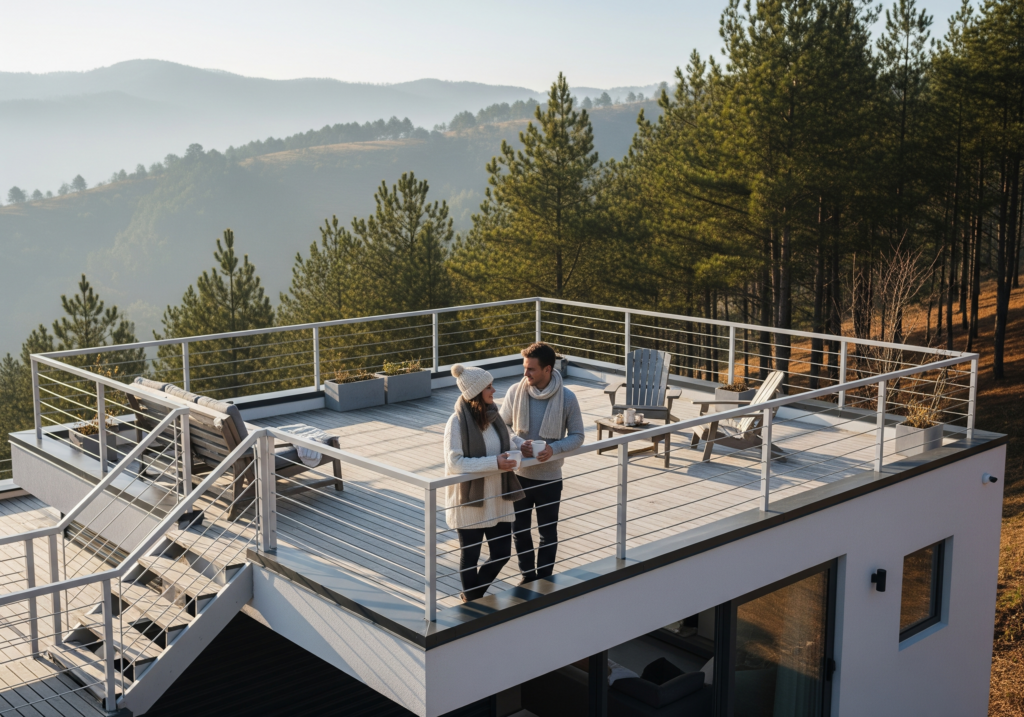
Unlike a ground-level deck, such as a pool deck, mistakes here don’t just sag or rot. They leak. They rot the framing below. They lead to expensive repairs.
That doesn’t mean roof decks are a bad idea. It means they demand more planning, better materials, and careful execution.
This guide walks you through the basics of how to build a roof deck from start to finish.
However, for actionable, location-based bill of materials, cost estimates, and a pro-level PDF, you need the DeckMaster AI. Click on the image below to get it!

Use this guide and Best Practices on How to Build a Deck to learn the fundamentals. Use DeckMaster AI to build “your” deck with confidence.
Table of Contents
Is Your Roof Suitable for a Deck?
Before design or materials, you need to answer one question. Can the roof safely support a deck and people?
Structural Load Considerations
Most roofs are not designed for regular foot traffic. They’re built to shed water and snow, not host furniture and gatherings.
You need to confirm:
- The roof structure can handle additional live load
- Joists, beams, and walls below are adequate
- Any required reinforcement is identified early
In many cases, this means consulting a structural engineer. It’s not optional. It’s protection.
Flat Roof vs Sloped Roof Designs
Flat roofs are the most common candidates for roof decks. They allow sleepers or raised framing to sit level.
Sloped roofs are possible, but more complex. They usually require a full structural platform built above the roof surface, not attached directly to it.
Either way, the deck should never rely on roofing materials for support.
Permits and Engineering Requirements
Roof decks almost always require permits. Many also require stamped drawings.
Building Codes for Roof Decks
Codes typically address:
- Live load requirements
- Guardrail height and spacing
- Stair and access design
- Fire separation and egress
Local codes vary widely. Some cities restrict roof deck size or location entirely. Always verify before spending money on design or materials.
When to Hire a Structural Engineer
If the deck is:
- Over living space
- Larger than a small landing
- Supporting stairs or heavy features
You need an engineer. This protects you and simplifies inspections later.
Waterproofing and Drainage
Waterproofing is the most critical part of a roof deck. It’s also where most failures happen.
Roof Membranes and Protection Layers
The roof membrane must remain intact and serviceable.
Common approaches include:
- Installing a new membrane rated for pedestrian traffic
- Adding protection boards over the membrane
- Using sleeper systems that don’t penetrate the roof
Never fasten framing directly through the membrane unless the system is designed for it.
Preventing Leaks and Water Damage
Plan for water to move freely.
That means:
- Maintaining existing roof drains
- Avoiding low spots where water can pool
- Keeping framing elevated off the membrane
If water can’t escape, it will find a way in.
How to Build a Roof Deck: Compared
Roof deck framing must support the weight without damaging the roof.
Sleeper Systems vs Elevated Framing
Sleeper systems rest directly on protection layers over the membrane. They’re lower profile and often used on flat roofs.
Elevated framing sits on pedestals or posts that transfer load to structural points below. This approach allows better drainage and airflow but it costs more.
The right choice depends on roof design, load capacity, and the local code requirements.
Protecting the Roof Surface
Regardless of method:
- Use rubber pads or protection boards
- Avoid sharp edges or pressure points
- Never drag materials across the membrane
A small tear can lead to major leaks.
Installing Deck Boards
Roof decks face more sun and heat than ground decks. Material choice matters.
Lightweight Decking Options
Heavier materials increase structural demands.
Common choices include:
- Composite decking designed for rooftop use
- PVC decking for heat resistance
- Aluminum decking in some applications
Solid hardwoods are rarely ideal due to weight and movement.
Heat and Sun Exposure
Roof decks get hot. Very hot.
To manage this:
- Choose lighter-colored boards
- Allow for proper expansion gaps
- Avoid trapping heat between boards and framing
Comfort matters just as much as durability.
Railings and Access
Roof decks are elevated spaces. Guardrails are non-negotiable.
Code-Compliant Guardrails
Most codes require:
- Minimum 42-inch-high guardrails
- Specific baluster spacing
- Structural attachment capable of resisting lateral loads
Railing posts often need blocking or steel reinforcement built into the frame.
Stairs, Hatches, and Entry Points
Access options vary by building and code.
Common solutions include:
- Interior stairways leading to the roof
- Exterior stair towers
- Roof hatches with ladders
Each option affects layout, safety, and cost. Plan access early.
Finishing Touches
Once the structure is sound, you can think about comfort and use.
Built-In Seating and Planters
Built-ins add weight. Always account for this in the design.
Use lightweight materials and avoid trapping water beneath benches or planters. Drainage still matters, even for furniture.
Lighting and Utilities
Low-voltage lighting improves safety at night. Avoid hardwiring unless properly permitted and inspected.
Keep penetrations through the roof to an absolute minimum.
Maintenance and Long-Term Care
Roof decks require regular inspection. Ignoring them is costly.
Routine Checks
At least once a year:
- Inspect decking and fasteners
- Check railings for movement
- Look for signs of water pooling
Catch problems early.
Protecting the Roof Below
The roof membrane still has a lifespan. Make sure the deck design allows future access for repairs or replacement.
A roof deck should never make the roof unserviceable.
Common Mistakes to Avoid
Most roof deck failures come from shortcuts.
Avoid:
- Skipping structural analysis
- Penetrating the roof without proper detailing
- Blocking drainage paths
- Overloading the deck with heavy features
When in doubt, slow down and verify.
A well-built roof deck feels solid, drains properly, and stays dry below. It should add usable space without creating constant worry.
If you respect the structure, protect the roof, and follow code from the start, a roof deck can be a smart and lasting upgrade, not a potential liability.