How to Build a Pool Deck: Easy Step-by-Step Guide
As an Amazon Associate, I earn from qualifying purchases.
Table of Contents
How to Build a Pool Deck?
Building a pool deck is not the same as building a standard backyard deck. Water changes everything. Materials behave differently. Safety rules are stricter. And mistakes show up fast.
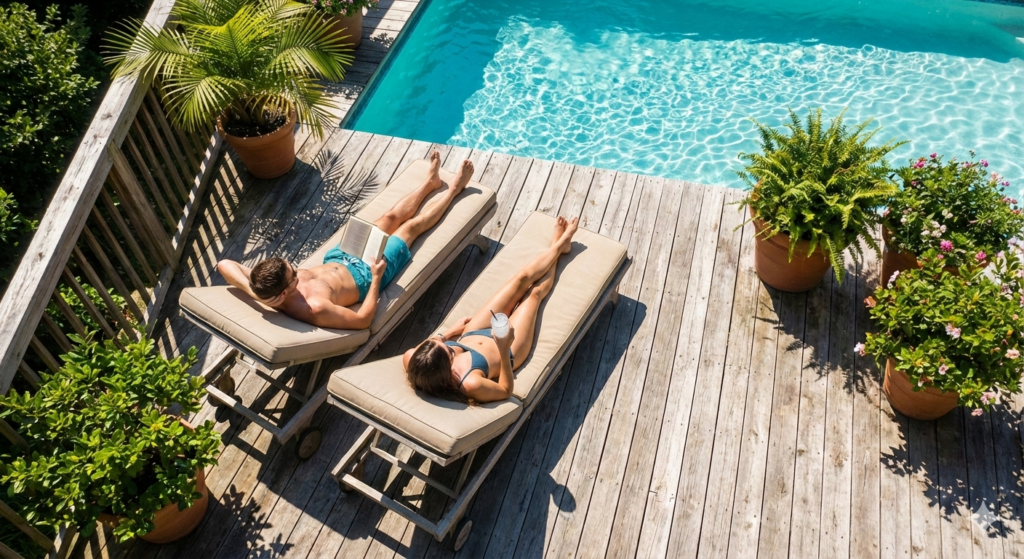
A well-built pool deck should feel solid underfoot, stay comfortable in the sun, and drain water without turning slick. It should also meet local pool safety codes without looking bulky or overbuilt.
This guide walks you through the basics of how to build a pool deck from start to finish.
However, for actionable, location-based bill of materials, cost estimates, and a pro-level PDF, you need the DeckMaster AI. Click on the image below to get it!

Use this guide and Best Practices on How to Build a Deck to learn the fundamentals. Use DeckMaster AI to build “your” deck with confidence.
Planning Your Pool Deck
Good planning saves time, money, and frustration. Pool decks leave very little room for error.
Choosing the Right Deck Material for Pool Areas
Pool decks are constantly exposed to water, chemicals, and bare feet. That combination limits your material choices.
Common options include:
- Composite decking, which resists moisture and stays stable
- PVC decking, which offers excellent slip resistance
- Pressure-treated wood, if properly sealed and maintained
Each option has trade-offs. Composite and PVC cost more up front but require less maintenance. Pressure-treated wood is cheaper initially but needs regular sealing. Avoid smooth hardwoods or interior-grade materials. They become slippery and wear quickly.
Pool Deck Size, Shape, and Layout
Start with how the deck will actually be used. People need space to walk, sit, and enter the pool safely.
Most building codes require:
- Clear walking paths around the pool
- Adequate space at ladders and steps
- Minimum distances between the pool wall and framing
Curved or round pools require extra planning. Framing must stay consistent so deck boards don’t end up uneven or unsupported.
Always confirm local pool deck regulations before finalizing your layout.
Tools and Materials Needed
Having everything on hand before you start makes the build smoother and safer.
Essential Tools
- Circular saw for framing and decking
- Drill and impact driver for fasteners
- Level and string line for accuracy
- Post hole digger or power auger
- Tape measure and framing square
These are standard deck-building tools. There’s nothing specialized, but accuracy matters more around a pool.
Recommended Materials for Pool Decks
- Pressure-treated lumber for framing
- Concrete for footings
- Stainless or hot-dipped galvanized fasteners
- Exterior-rated joist hangers and post bases
Moisture eats cheap hardware. Don’t cut corners here.
Preparing the Site
A pool deck is only as good as the ground under it.
Ground Preparation and Drainage
Remove grass, roots, and organic material. These hold moisture and shift over time.
Next, address drainage:
- Slope the soil away from the pool
- Add gravel in low spots
- Avoid trapping water under the deck
Standing water leads to rot, mold, and uneven settling. Fix drainage now, not later.
Marking the Deck Layout
Use stakes and string to outline the deck. Measure twice. Check diagonals to keep everything square.
This step helps you spot problems early. If something looks tight or awkward on paper, it will be worse in real life.
Building the Deck Frame
The frame does the heavy lifting. Build it strong and straight.
Installing Footings and Posts
Footings must extend below frost depth in cold climates. This prevents heaving and movement.
Best practices include:
- Pouring concrete footings
- Using post bases to keep wood off the concrete
- Keeping posts plumb and aligned
Never bury wood posts directly in the ground near a pool. Moisture will destroy them.
Framing Around the Pool
Pool decks often require framing in sections, especially around curves.
Keep these points in mind:
- Maintain consistent spacing from the pool wall
- Allow for deck board overhang without contact
- Use blocking to stiffen the frame
A tight, well-supported frame prevents bounce and squeaks later.
Installing Deck Boards
Deck boards are what people see and feel. Take your time here.
Board Spacing for Water Drainage
Water needs a place to go. Tight boards trap moisture and grow mildew.
Follow manufacturer spacing guidelines. Composite and PVC often require specific gaps. Wood boards typically need room for expansion and drainage.
Slip-Resistant Surface Tips
Pool decks should be safe when wet.
Helpful practices include:
- Running boards perpendicular to traffic paths
- Avoiding glossy finishes
- Using textured or grooved boards when possible
Comfort matters, too. Dark boards can get hot in direct sun.
Railings, Stairs, and Safety Features
Pool safety is not optional. Inspections are strict for a reason.
Pool Code Railing Requirements
Most areas require:
- Guardrails between 36 and 42 inches high
- Balusters spaced to prevent child access
- Gates that self-close and self-latch
Check local code. Pool regulations vary more than standard deck rules.
Stairs and Entry Points
Stairs should feel natural and solid.
Pay attention to:
- Consistent rise and run
- Non-slip stair treads
- Secure handrails
Poor stair construction is a common inspection failure and a real safety risk.
Finishing and Maintenance
A finished deck still needs care.
Sealing and Protecting the Deck
Wood decks should be sealed once dry. Choose products designed for wet environments.
Composite and PVC don’t need sealing, but they still benefit from regular cleaning.
Long-Term Pool Deck Maintenance
Plan for basic upkeep:
- Wash the deck annually
- Inspect fasteners and railings
- Address loose boards early
Small problems are easy fixes if you catch them in time.
Common Mistakes to Avoid
Many pool deck issues come from rushing or guessing.
Watch out for:
- Poor drainage planning
- Interior-grade fasteners
- Framing too close to the pool wall
- Ignoring local pool safety codes
When in doubt, slow down and double-check.
A well-built pool deck should feel effortless to use. It should drain well, stay cool enough to walk on, and feel solid everywhere you step.
If you build with water, safety, and durability in mind from the start, you’ll end up with a deck that looks good and performs even better.
If you liked this article, you may also like to check out How to Build a Roof Deck