How to Build a Deck on a Slope: Smart Solutions for Uneven Ground
Sloped yards are common, and they often come with great views. The challenge is figuring out how to build usable outdoor space without massive excavation or constant drainage problems.
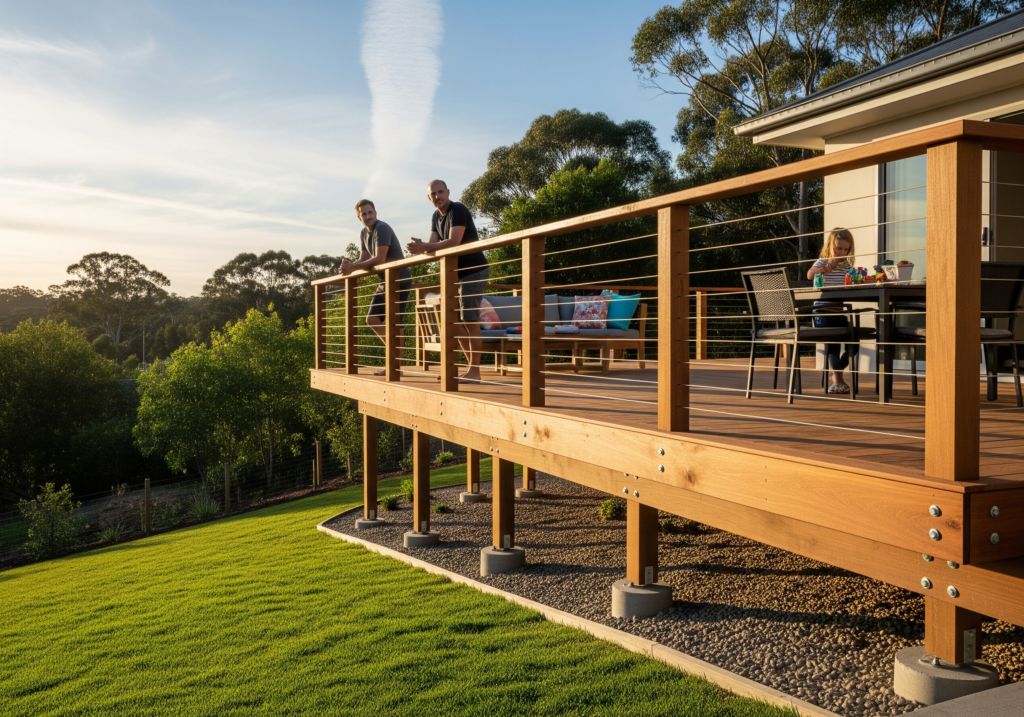
A deck on a slope solves that problem while creating a level, comfortable area that feels intentional instead of forced.
Building on uneven ground requires more planning than a flat-yard deck. Footings matter more. Load paths are critical. Visual balance plays a big role.
This guide walks through how to build a deck on a slope safely and efficiently, using methods that hold up over time.
Many of the ideas here connect directly with How to Build an Elevated Deck and How to Build a Multi-Level Deck, since slope conditions often push designs in those directions.
For actionable, location-based bill of materials, cost estimates, and a pro-level PDF, you need the DeckMaster AI. Click on the image below to get it!

Use this guide and Best Practices on How to Build a Deck to learn the fundamentals. Use DeckMaster AI to build “your” deck with confidence.
Table of Contents
When a Sloped Deck Is the Right Choice
Not every slope needs to be regraded.
Benefits of Building on a Slope
A deck is often the best solution when:
- The yard drops off quickly
- You want to preserve natural drainage
- Excavation would be expensive
- You want to capture views
Decks work with the land instead of fighting it.
Understanding Slope Severity
Before design begins, determine:
- How steep the slope is
- How much height change exists
- Whether the slope is uniform or irregular
Gentle slopes allow simpler framing. Steep slopes demand stronger structure and deeper footings.
Planning and Design Considerations
Slope decks fail when planning is rushed.
Layout and Orientation
Think carefully about:
- How the deck relates to the house
- Where stairs will land
- How people will move through the space
Long, narrow decks often feel more natural on slopes than wide platforms.
Permits and Engineering
Sloped decks often trigger additional requirements. Expect:
- Deeper footings
- More inspections
- Guardrail requirements at lower heights
Local codes take slopes seriously for good reason.
How to Build a Deck on a Slope Using Proper Footings
Footings are the foundation of the entire project.
Why Footings Matter More on Slopes
On sloped ground:
- Soil pressure is uneven
- Water moves faster
- Frost effects can vary
Shallow or poorly placed footings lead to shifting and failure.
Footing Placement Strategies
Best practices include:
- Stepping footings down the slope
- Keeping footing tops level
- Reaching below frost depth at every location
Never use “average” footing depths on a slope.
Framing a Deck on Uneven Ground
Framing adapts the deck to the terrain.
Post and Beam Construction
Post-and-beam framing works well on slopes. Advantages include:
- Adjustable heights
- Clear load paths
- Easier leveling
Posts should be braced properly during construction and permanently.
Joist Layout on Sloped Sites
Joists typically remain level even when the ground is not. Pay attention to:
- Consistent joist height
- Proper beam sizing
- Blocking for lateral stability
Slopes increase side-to-side forces.
Deck Height, Railings, and Safety
Height changes quickly on a slope.
Guardrail Requirements
Most codes require guardrails when:
- The deck is 30 inches or more above grade
- The drop-off is steep near edges
Slope decks often require railings even when parts of the deck are low.
Visual Balance and Rail Design
Railings should:
- Match the deck style
- Avoid blocking views unnecessarily
- Feel proportional to the height
Cable or glass rails are common on slope decks with views.
Stairs and Access on Sloped Decks
Stairs deserve special attention.
Stair Layout Options
Depending on layout, stairs may:
- Run parallel to the slope
- Switch back with landings
- Drop straight down to grade
Long stair runs often feel safer and more natural.
Landing and Transition Areas
Every stair run needs:
- Stable landings
- Proper drainage
- Consistent riser heights
Slope changes can complicate this quickly.
Drainage and Erosion Control
Water always moves downhill.
Managing Runoff Under the Deck
Protect the area below by:
- Using gravel under the deck
- Installing landscape fabric
- Directing water away from footings
Ignoring drainage leads to erosion and instability.
Preventing Soil Movement
On steeper slopes:
- Retaining walls may be needed
- Plantings can help stabilize soil
- Footings may need additional depth or width
Decks don’t stop erosion on their own.
Connecting a Sloped Deck to the House
Attachment details matter more on uneven ground.
Ledger Boards on Slopes
If attaching to the house:
- Ledger boards must remain level
- Flashing is critical
- Load paths must be clear
Follow the same attachment standards outlined in How to Build an Attached Deck.
Freestanding Sloped Decks
Freestanding designs are common on slopes. They work well when:
- The house wall is difficult to attach to
- Height differences are significant
- You want flexibility in layout
Freestanding does not mean less structure.
Decking Materials for Sloped Decks
Material choice affects maintenance and performance.
Best Decking Options
Good choices include:
- Composite decking
- PVC decking
- Pressure-treated lumber
Choose materials that handle moisture and temperature swings well.
Board Orientation
Deck boards can:
- Run parallel to the house
- Run perpendicular to the slope
- Emphasize views or movement paths
Orientation changes how the deck feels.
Common Mistakes to Avoid
Slope decks magnify errors. Avoid:
- Shallow footings
- Inadequate bracing
- Ignoring lateral loads
- Underestimating stair complexity
Most problems show up years later.
Maintenance and Long-Term Performance
Slope decks need periodic checks.
What to Inspect Regularly
Focus on:
- Footings and posts
- Bracing connections
- Stair attachments
Movement is easier to spot early than late.
Managing Vegetation Below the Deck
Keep plants:
- From trapping moisture
- Away from structural members
- Managed to allow airflow
Good airflow extends deck life.
Final Thoughts
Building a deck on a slope is one of the most rewarding deck projects when done correctly. It turns challenging terrain into usable outdoor space while preserving the natural character of the yard.
By applying the structural discipline used in How to Build an Elevated Deck and the design flexibility found in How to Build a Multi-Level Deck, a sloped deck can feel stable, intentional, and visually striking for decades to come.