How to Build a Deck Railing: Safety, Strength, and Style
A deck railing does more than meet code. It keeps people safe, defines the edge of the deck, and shapes how the whole space looks.

A weak or poorly planned railing makes even a well-built deck feel unfinished. A solid railing, on the other hand, adds confidence the moment you lean on it.
This guide explains how to build a deck railing that is safe, durable, and visually consistent with the rest of the project.
This article naturally connects with ideas and concepts from How to Build an Elevated Deck, How to Build Stairs on a Deck, and How to Build a Covered Deck, since railing requirements often change with height, stairs, and roof structures.
To be fair, it teaches you how decks should be built, not how to build “your” deck in “your” yard. Every deck is different. Soil conditions vary. Lumber prices change by location. Codes aren’t the same everywhere.
For actionable, location-based bill of materials, cost estimates, and a pro-level PDF, you need the DeckMaster AI. Click on the image below to get it!

Use this guide and Best Practices on How to Build a Deck to learn the fundamentals. Use DeckMaster AI to build “your” deck with confidence.
Table of Contents
Why Deck Railings Matter More Than You Think
Railings are one of the most heavily used parts of a deck. They must:
- Resist lateral force
- Protect against falls
- Meet strict spacing rules
- Hold up to weather and movement
A railing that flexes or loosens over time is both unsafe and frustrating.
When a Deck Railing Is Required
Not every deck needs a railing, but many do.
Height Requirements
Most building codes require railings when:
- The deck surface is 30 inches or more above grade
- There is a drop-off near the stairs or landings
Always measure to the finished grade, not soil that may change.
Special Conditions
Railings may also be required on:
- Elevated stairs
- Balcony decks
- Rooftop or covered decks
These scenarios are discussed in How to Build an Elevated Deck and How to Build a Balcony Deck.
How to Build a Deck Railing That Meets Code
Code compliance comes first. Style comes second.
Railing Height and Load Requirements
Typical code requirements include:
- 36-inch minimum height for residential decks
- Ability to resist a 200-pound lateral load
- No excessive deflection
These are not optional.
Baluster Spacing Rules
Most codes require:
- No opening larger than 4 inches
- Consistent spacing across the entire railing
This applies to vertical balusters, cable systems, and panels.
Planning Your Deck Railing Layout
A good layout prevents awkward posts and weak connections.
Post Placement
Railing posts should:
- Align with deck framing
- Be spaced according to railing system limits
- Avoid landing directly on decking boards
Posts must connect to the structure, not surface materials.
Transitions and Corners
Plan carefully for:
- Inside corners
- Outside corners
- Stair transitions
These areas experience the most stress.
Installing Railing Posts Correctly
Post attachment is the most critical step.
Through-Bolted Posts
The strongest method is:
- Through-bolting posts to the deck frame
- Using blocking or tension hardware
- Avoiding lag screws alone
This method minimizes movement.
Surface-Mount Systems
Some systems allow surface mounting. These are acceptable only when:
- Approved by the manufacturer
- Installed exactly as specified
- Supported by adequate framing
Never assume surface mount equals structural strength.
Building Wood Deck Railings
Wood railings are common and versatile.
Traditional Wood Railings
These typically include:
- Pressure-treated posts
- Top and bottom rails
- Vertical balusters
They are affordable but require maintenance.
Cedar and Redwood Railings
Premium wood options:
- Look warmer and more refined
- Resist rot better than treated lumber
- Require sealing to maintain color
They pair well with natural wood decks.
Alternative Deck Railing Materials
Modern railing systems offer low maintenance.
Composite and PVC Railings
These systems:
- Resist rot and insects
- Maintain consistent color
- Often come as complete kits
They work well with composite and PVC decks.
Metal and Cable Railings
Metal options include:
- Aluminum balusters
- Stainless steel cable systems
- Steel panel inserts
Cable railings require precise tensioning and inspection.
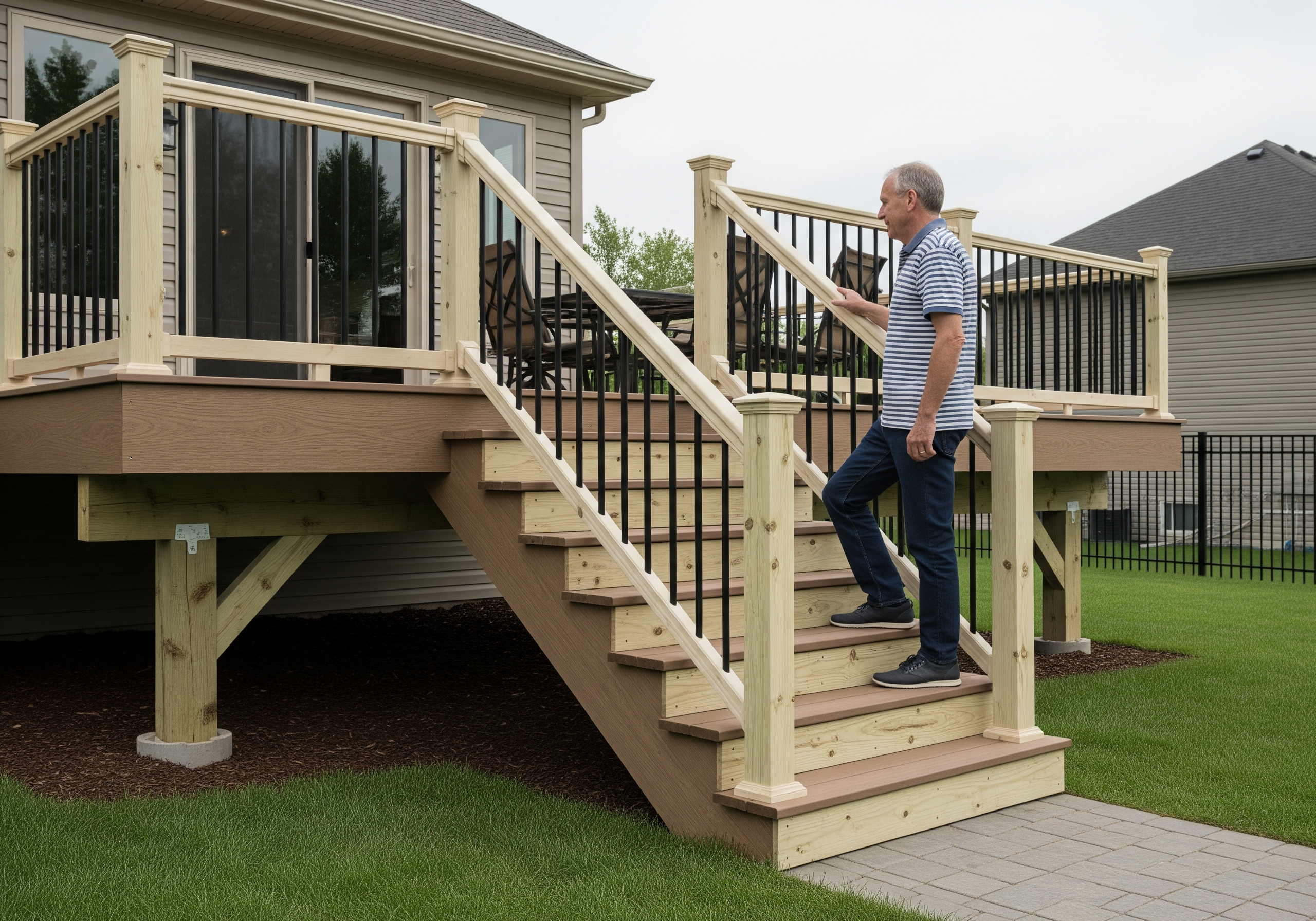
How to Build a Deck Railing on Stairs
Stair railings have extra rules.
Handrails vs Guardrails
Handrails:
- Must be easy to grip
- Must be continuous
- Often required on stairs with four or more risers
Guardrails protect open edges and may be taller.
Stair Post Reinforcement
Stair posts experience more force. They often need:
- Extra blocking
- Heavier fasteners
- Reinforced connections
This aligns with best practices from How to Build Stairs on a Deck.
Railings for Covered and Elevated Decks
Roofed and elevated decks raise the stakes.
Covered Deck Railings
Covered decks often encourage leaning. Railings must:
- Feel solid
- Resist lateral sway
- Integrate with posts supporting the roof
Refer back to How to Build a Covered Deck when planning connections.
Elevated Deck Railings
Higher decks demand:
- Stronger posts
- Closer inspection
- Cleaner load paths
Movement is more noticeable at height.
Finishing Touches That Improve Railings
Small details matter.
Top Rail Options
Popular choices include:
- Wide cap rails
- Drink-rail systems
- Flat composite tops
A comfortable top rail invites use.
Lighting and Accessories
Railing systems often support:
- Post cap lights
- Under-rail lighting
- Integrated planters
Plan wiring early if adding lighting.
Maintenance and Inspection
Railings need regular checks.
What to Inspect
Look for:
- Loose fasteners
- Cracked posts
- Rust or corrosion
- Cable tension loss
Fix issues early to avoid major repairs.
Long-Term Care
Different materials require different care:
- Wood needs sealing or staining
- Metal needs corrosion checks
- Composite needs cleaning only
Match material to your maintenance tolerance.
Common Deck Railing Mistakes
Avoid these frequent problems:
- Attaching posts to decking only
- Ignoring code spacing rules
- Using undersized posts
- Skipping blocking or reinforcement
Most railing failures start at the posts.
Final Thoughts
A deck railing is not just a finishing detail. It’s a safety system. When built correctly, it feels solid, secure, and intentional. When rushed or underbuilt, it becomes a liability.
By following proper attachment methods, respecting code requirements, and applying lessons from How to Build an Elevated Deck and How to Build Stairs on a Deck, you can build a deck railing that looks good, feels safe, and lasts as long as the deck itself.