How to Build a PVC Deck: Zero Rot, Easy to Clean!
PVC decking is all about consistency. No wood fibers. No moisture absorption. No rot. It’s one of the most stable decking materials available, especially in wet, coastal, or high-sun environments.
But that stability doesn’t mean you can cut corners. PVC has its own rules, and ignoring them leads to movement, noise, and premature wear.
This guide explains how to build a PVC deck the right way.
It builds on structural principles covered in How to Build a Composite Deck, How to Build an Attached Deck, and How to Build an Elevated Deck, while focusing on what makes PVC different.
For actionable, location-based bill of materials, cost estimates, and a pro-level PDF, you need the DeckMaster AI. Click on the image below to get it!

Use this guide and Best Practices on How to Build a Deck to learn the fundamentals. Use DeckMaster AI to build “your” deck with confidence.
Table of Contents
What Is PVC Decking?
PVC decking is made entirely from synthetic materials. There is no wood content.
How PVC Differs From Composite and Wood
PVC behaves differently from other decking materials. Key differences include:
- No moisture absorption
- High resistance to mold and mildew
- Significant thermal expansion
- Lighter weight than hardwood, heavier than some composites
Because it doesn’t absorb water, PVC performs well in harsh climates.
When PVC Is the Right Choice
PVC decking is ideal when:
- Moisture exposure is constant
- Low maintenance is critical
- Color consistency matters
- Long-term performance outweighs upfront cost
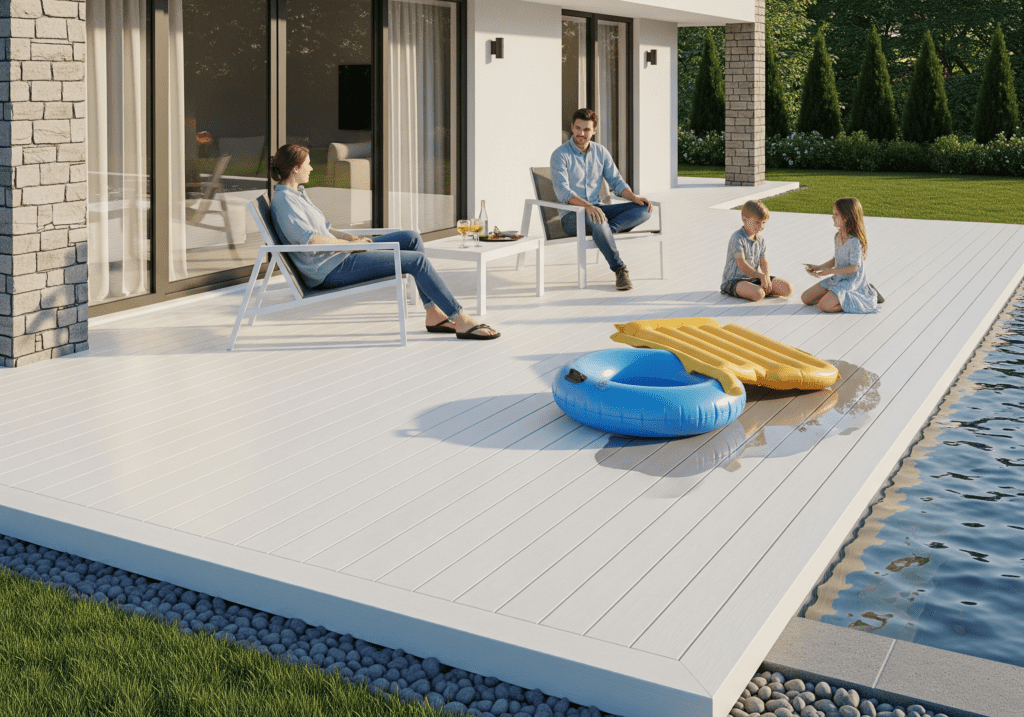
It’s common for pool decks, rooftop decks, and coastal homes.
Planning a PVC Deck
Planning mistakes show up fast with PVC.
Budget and Material Costs
PVC decking sits at the higher end of pricing. Plan for:
- Premium decking materials
- Manufacturer-specific fasteners
- Extra framing lumber
PVC saves money long-term, but only if installed correctly.
Layout and Design Decisions
PVC boards are uniform and unforgiving. Before framing, decide:
- Board direction
- Seam placement
- Border and picture-frame details
PVC looks best with clean, intentional layouts.
How to Build a PVC Deck With Proper Framing
Framing quality directly affects PVC performance.
Joist Spacing Requirements
PVC boards need tight, consistent support. Most manufacturers recommend:
- 16 inches on center for straight installations
- 12 inches on center for diagonal layouts
Always follow the product’s installation guide.
Flatness and Blocking
PVC highlights framing flaws more than wood. Take time to:
- Crown and straighten joists
- Add blocking where boards meet
- Check level frequently
A flat frame prevents bounce and visual distortion.
Attaching a PVC Deck to a House
PVC decks are often attached, especially at higher elevations.
Ledger Board Installation
Follow best practices from How to Build an Attached Deck. That includes:
- Structural fasteners into house framing
- Proper flashing above and behind the ledger
- Drainage space between deck and siding
PVC decking does not reduce ledger requirements.
Allowing for Movement Near the House
PVC expands and contracts with temperature. Leave:
- Proper gaps at walls
- Clearance at door thresholds
- Space for debris and airflow
Tight installations cause noise and buckling.
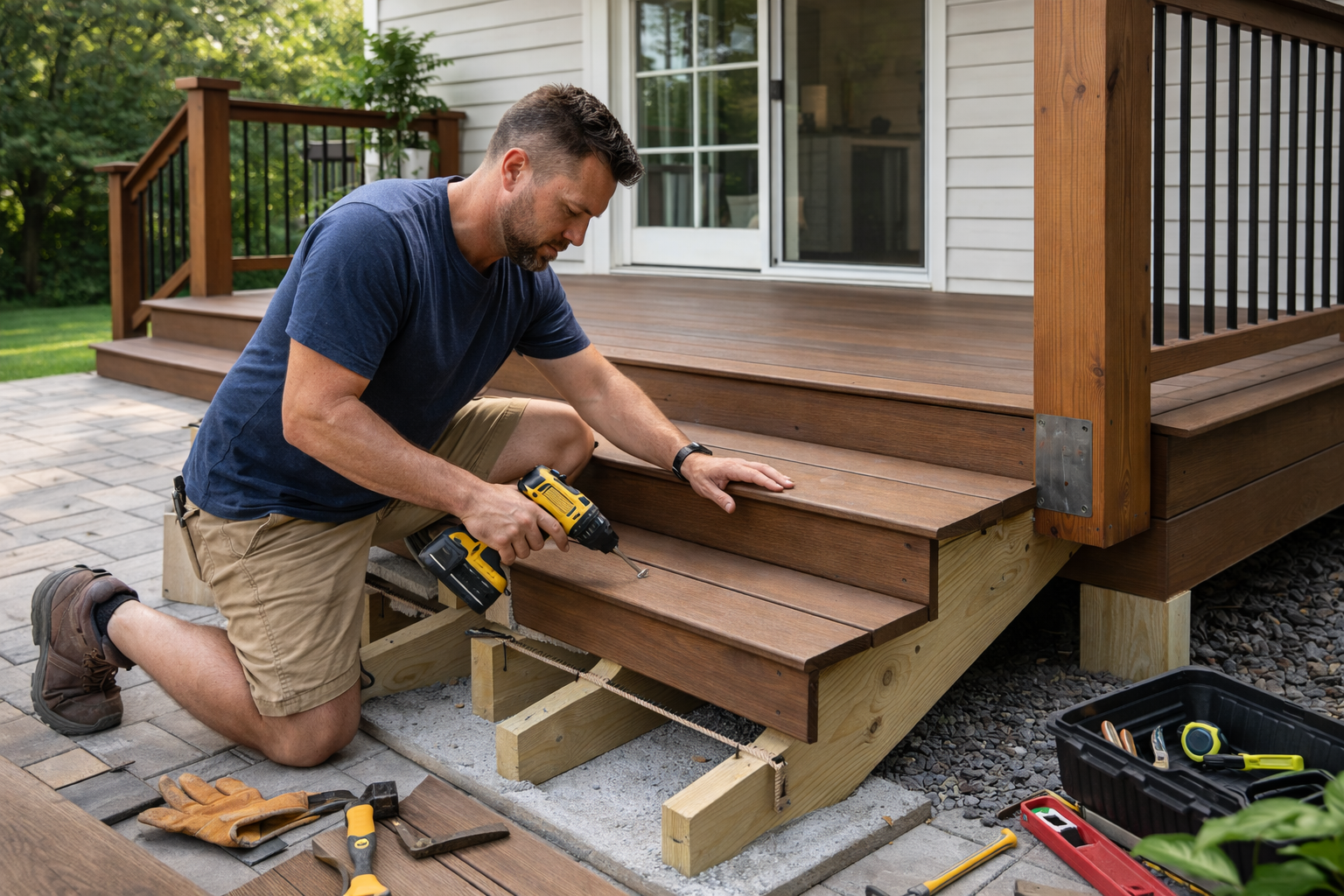
Installing PVC Deck Boards
Installation details matter more than speed.
Fastening Systems
PVC decking usually requires approved fastening systems. Common options include:
- Hidden clip systems
- Color-matched surface screws
- Grooved-edge fasteners
Never mix fastening systems unless the manufacturer allows it.
Expansion and Spacing Rules
PVC expands more than composite or wood. Account for:
- Temperature during installation
- End-to-end spacing
- Side gap requirements
Cold-weather installs need larger gaps than warm-weather installs.
Edge Details and Trim Work
Finish work defines the final look.
Picture Framing With PVC
Picture framing works extremely well with PVC. Benefits include:
- Clean edges
- Hidden board ends
- Improved visual symmetry
Extra framing is required under borders.
Fascia and Skirting
PVC fascia resists moisture and insects. Best practices include:
- Allowing airflow behind fascia
- Using recommended fastener spacing
- Avoiding ground contact
Never trap water behind trim boards.
Railings for PVC Decks
Railings must match both style and function.
PVC-Compatible Railing Systems
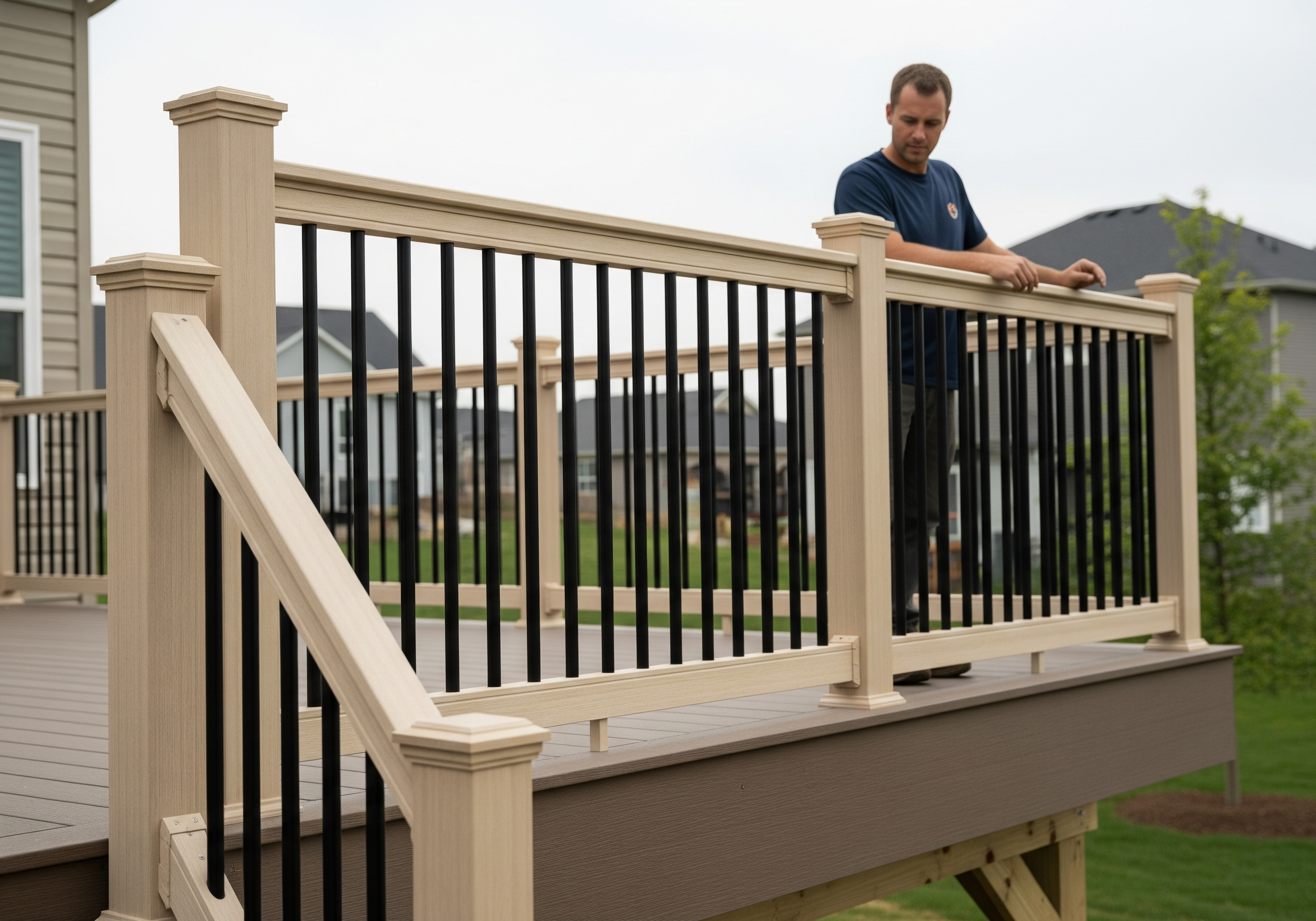
Many manufacturers offer matching railing lines. These systems:
- Match deck color and texture
- Simplify installation
- Meet code when installed properly
Avoid mixing incompatible materials.
Structural Rail Post Attachment
Rail posts must connect to framing, not decking. This applies whether the deck is:
- Ground-level
- Elevated
- A rooftop or balcony deck
Structural attachment is not optional.
PVC Decks in Different Applications
PVC performs well across many deck types.
Elevated and Rooftop PVC Decks
PVC is popular for elevated installations. It works well in:
- Elevated Decks
- Balcony Deck
- Roof Decks with proper drainage
Weight is manageable, but movement must be planned.
Ground-Level and Poolside Decks
PVC excels near water. For low decks:
- Ensure airflow underneath
- Maintain clearance from soil
- Prevent heat buildup in direct sun
Lighter colors help reduce surface temperature.
Maintenance and Long-Term Care
PVC decks are low maintenance, not maintenance-free.
Routine Cleaning
Plan to:
- Wash the deck periodically
- Remove debris from gaps
- Clean spills promptly
PVC resists stains, but neglect still shows.
Preventing Common Issues
Avoid:
- Using non-approved cleaners
- Blocking drainage paths
- Placing reflective items that trap heat
Follow manufacturer care guidelines closely.
Common PVC Deck Mistakes
Most PVC problems come from shortcuts. Avoid:
- Ignoring expansion rules
- Installing on uneven framing
- Skipping manufacturer instructions
- Treating PVC like wood
PVC demands precision, not improvisation.
Final Thoughts
A PVC deck delivers consistent appearance, excellent moisture resistance, and long-term durability. But it only performs as well as the structure beneath it.
Framing quality, spacing accuracy, and fastening discipline matter more with PVC than almost any other decking material.
By combining solid structural practices from How to Build a Composite Deck and How to Build an Attached Deck with PVC-specific installation rules, you can build a deck that stays quiet, flat, and attractive for decades. Build it once. Build it right.