How to Build a Hardwood Deck: Best Material Option!
Hardwood decks have a look and feel that’s hard to match. The boards are dense, smooth, and rich in color.
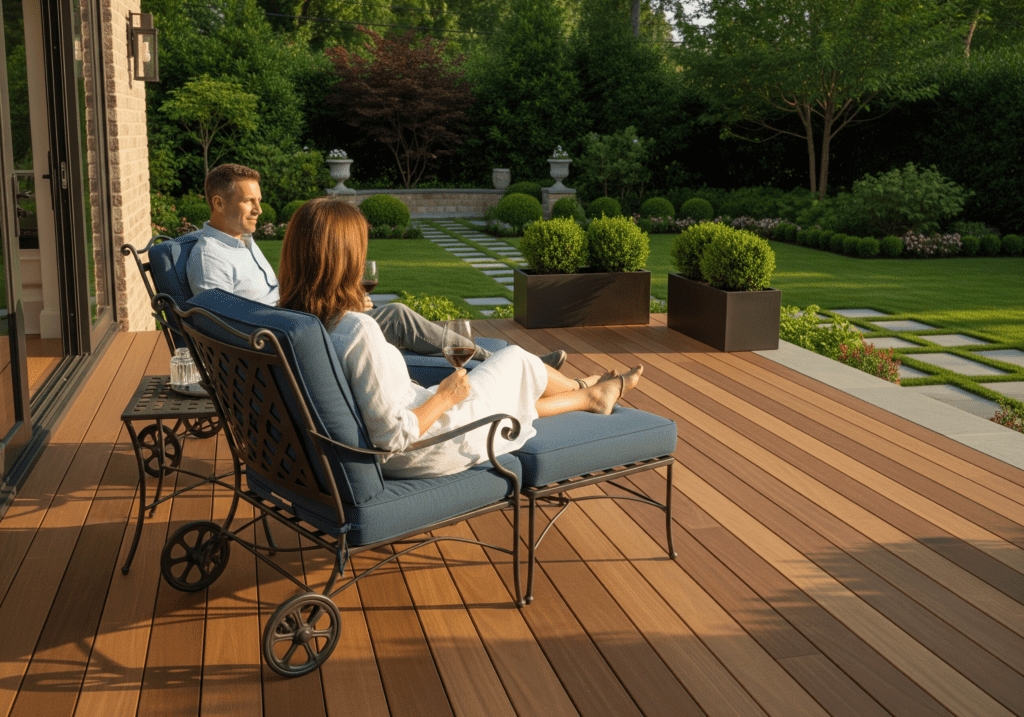
When installed correctly, a hardwood deck feels solid underfoot and ages beautifully. But hardwood is not forgiving. It’s heavy, expensive, and demands precision.
This guide walks you through how to build a hardwood deck properly. The focus is on planning, structure, fastening, and long-term performance.
Many of the framing principles are the same as in How to Build a Composite Deck or How to Build an Elevated Deck, but hardwood adds its own set of rules.
For actionable, location-based bill of materials, cost estimates, and a pro-level PDF, you need the DeckMaster AI. Click on the image below to get it!

Use this guide and Best Practices on How to Build a Deck to learn the fundamentals. Use DeckMaster AI to build “your” deck with confidence.
Table of Contents
What Is Hardwood Decking?
Hardwood decking is typically made from dense, slow-growing tree species.
Common Hardwood Deck Materials
Popular options include:
- Ipe
- Cumaru
- Garapa
- Tigerwood
- Mahogany (true hardwood varieties)
These woods are naturally resistant to rot and insects, but their density changes how you build.
Why Builders Choose Hardwood
Hardwood is chosen for:
- Exceptional durability
- Premium appearance
- Tight grain and smooth finish
- Long service life when installed correctly
It’s often used for high-end homes, rooftop decks, and feature outdoor spaces.
Planning a Hardwood Deck
Planning mistakes are costly with hardwood.
Budget and Material Costs
Hardwood decking is expensive. Plan for:
- Higher material cost
- Extra blades and drill bits
- Longer labor time
Waste adds up fast, so measure carefully and design efficiently.
Deck Design and Layout
Hardwood boards are stiff and heavy. Design considerations include:
- Straight board runs where possible
- Thoughtful seam placement
- Clean edge details
Complex layouts increase labor and risk.
How to Build a Hardwood Deck With Proper Framing
Strong framing is critical.
Joist Spacing for Hardwood Decks
Hardwood boards are dense but can still flex. Typical spacing is:
- 16 inches on center for straight runs
- 12 inches on center for diagonal layouts
Check species-specific recommendations before framing.
Flatness and Structural Support
Hardwood highlights uneven framing. Take time to:
- Plane or shim joists
- Add blocking where needed
- Check level often
A flat frame makes installation smoother and cleaner.
Attaching a Hardwood Deck to a House
Many hardwood decks are attached structures.
Ledger Board Installation
Follow the same best practices outlined in How to Build an Attached Deck. That includes:
- Structural fasteners into house framing
- Proper flashing above and behind the ledger
- Drainage space between deck and siding
Hardwood weight increases the importance of correct attachment.
Load Considerations
Hardwood is heavier than composite or softwood. Make sure:
- Beams are sized appropriately
- Posts and footings meet load requirements
- Local codes are followed closely
Do not undersize structural components.
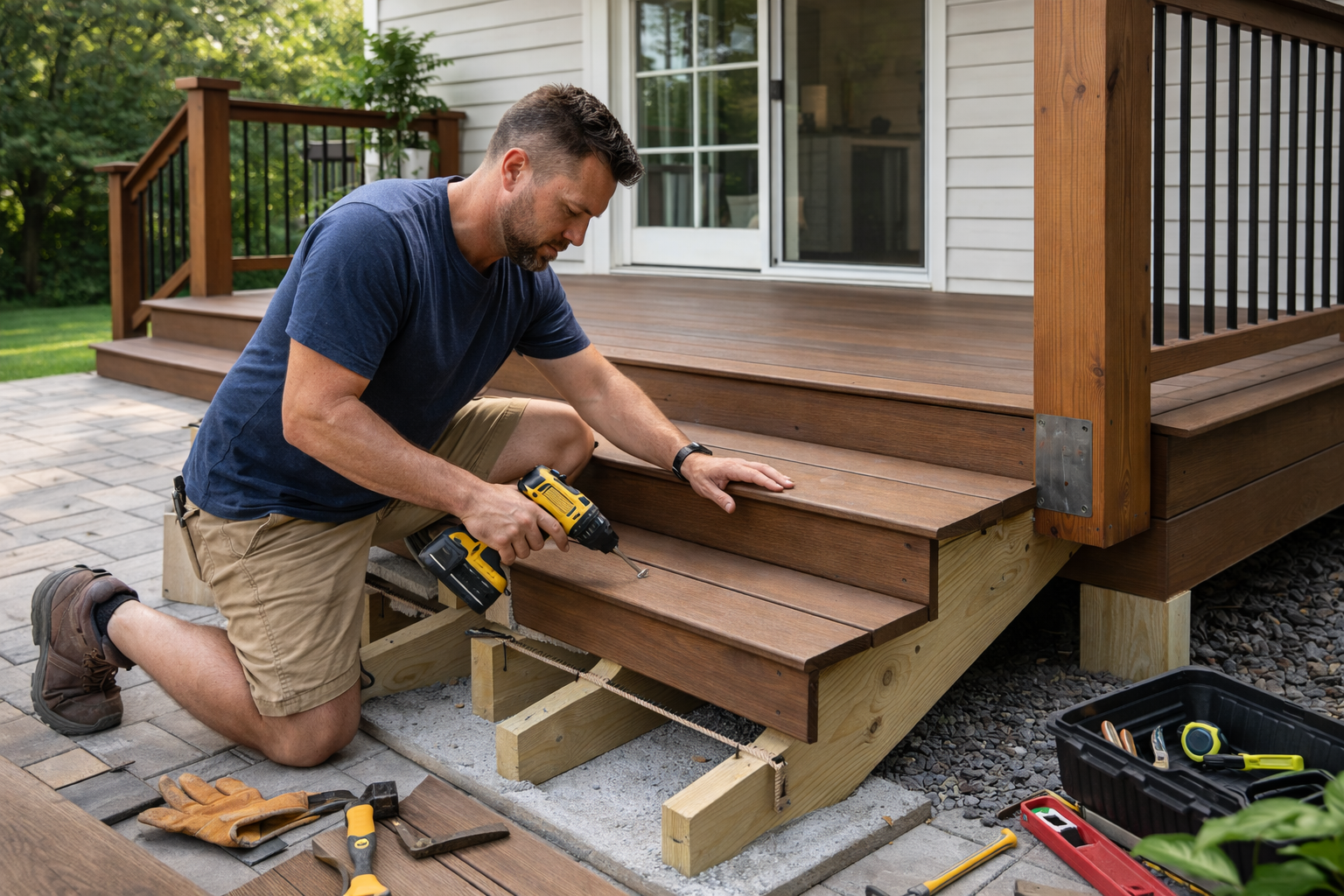
Installing Hardwood Deck Boards
This is where hardwood demands patience.
Pre-Drilling and Fastening
Most hardwoods require pre-drilling. Fastening options include:
- Stainless steel screws
- Hidden fastening systems designed for hardwood
- Plug systems for a clean surface
Never force fasteners without pre-drilling.
Board Spacing and Acclimation
Hardwood moves less with moisture but still needs space. Before installation:
- Allow boards to acclimate on site
- Follow spacing recommendations for your climate
- Account for seasonal movement
Improper spacing leads to cracking or buckling.
Edge Details and Finish Work
Finish details separate good decks from great ones.
Picture Framing and Borders
Picture framing works especially well with hardwood. Benefits include:
- Hiding cut ends
- Adding visual structure
- Protecting exposed edges
Borders require extra framing support underneath.
Fascia and Stair Details
Hardwood fascia creates a refined look. Best practices:
- Use stainless fasteners
- Pre-drill all holes
- Leave ventilation behind boards
Stairs should be solid, square, and well-supported.
Railings for Hardwood Decks
Railings must match both style and strength.
Railing Material Options
Hardwood decks pair well with:
- Matching hardwood railings
- Metal cable systems
- Powder-coated aluminum rails
Choose systems that meet code and complement the deck.
Structural Rail Post Installation
Rail posts must attach to framing, not decking. This applies whether the deck is:
- Ground-level
- Elevated
- A rooftop deck
Safety always comes first.
Finishing and Protecting Hardwood
Hardwood needs finishing to maintain its appearance.
Oil Finishes vs Natural Weathering
You have two main options:
- Apply penetrating oil to preserve color
- Let the wood weather to a silver-gray patina
Both approaches are valid, but consistency matters.
Ongoing Maintenance
Hardwood is durable, not maintenance-free. Plan to:
- Clean the surface periodically
- Reapply oil if maintaining color
- Inspect fasteners annually
Regular care extends the deck’s life.
Hardwood Decks in Different Applications
Hardwood works across many deck types.
Elevated and Rooftop Hardwood Decks
Hardwood is common in premium elevated decks. It performs well in:
- How to Build an Elevated Decks
- How to Build a Balcony Decks
- Rooftop installations with proper drainage
Weight and drainage must be addressed early.
Ground-Level Hardwood Decks
Hardwood can be used close to grade. Extra care is needed for:
- Airflow beneath the deck
- Drainage and runoff
- Proper spacing from soil
Never let hardwood sit directly on the ground.
Common Hardwood Deck Mistakes
Hardwood failures usually come from shortcuts. Avoid:
- Skipping pre-drilling
- Using coated or non-stainless fasteners
- Inadequate framing
- Poor acclimation practices
Hardwood rewards precision and patience.
Final Thoughts
A hardwood deck is an investment. When built correctly, it delivers unmatched durability and visual impact. But hardwood demands respect. The material is strong, dense, and unforgiving of mistakes.
By combining solid structural practices from How to Build a Composite Deck and How to Build an Attached Deck with hardwood-specific installation methods, you can build a deck that feels substantial, looks refined, and performs for decades. Take your time, follow best practices, and let the material do what it does best.