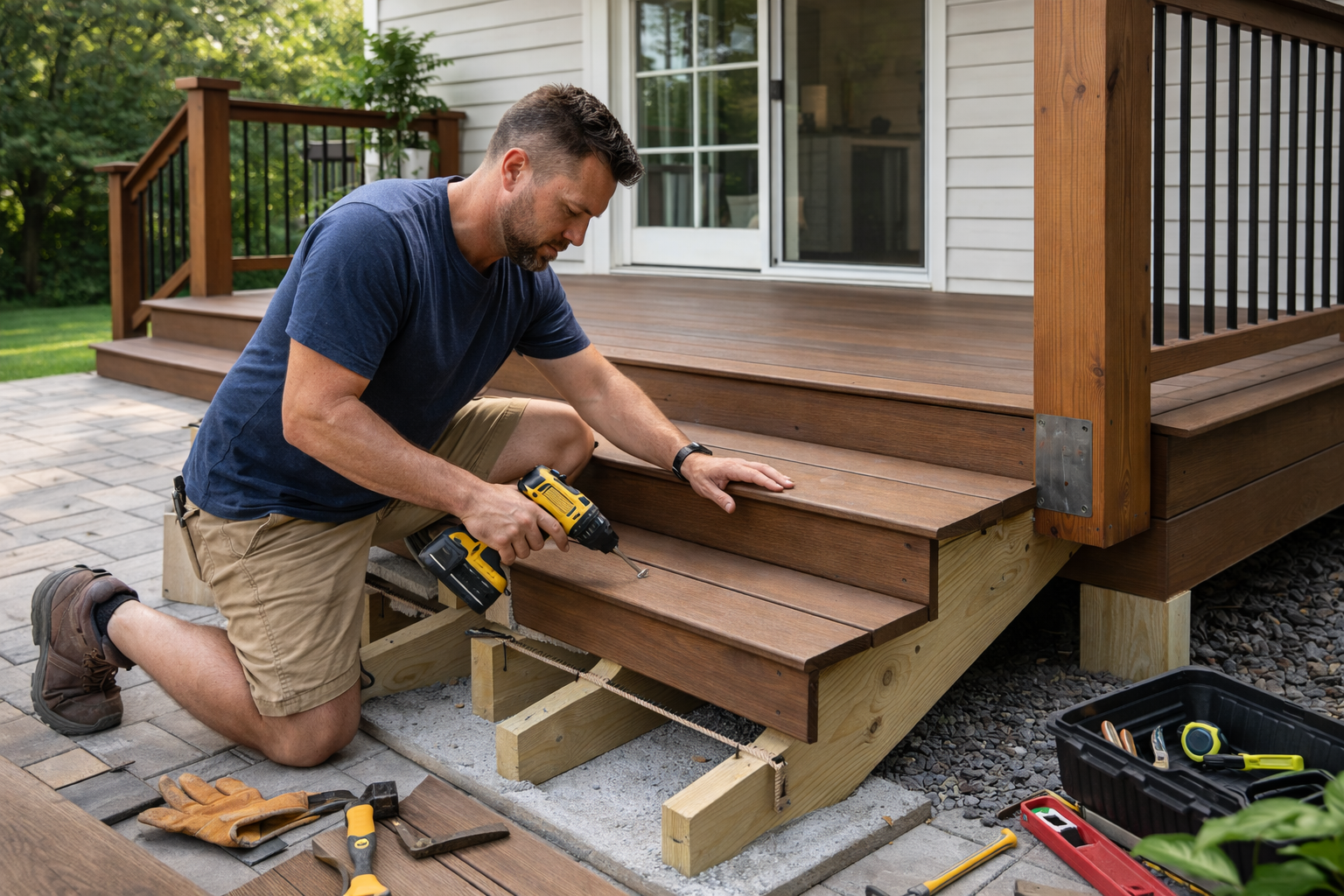
How to Build a Composite Deck: Super Low Maintenance!
Composite decking has become one of the most popular deck materials for a reason. It looks clean, lasts a long time, and requires far less upkeep than traditional wood.
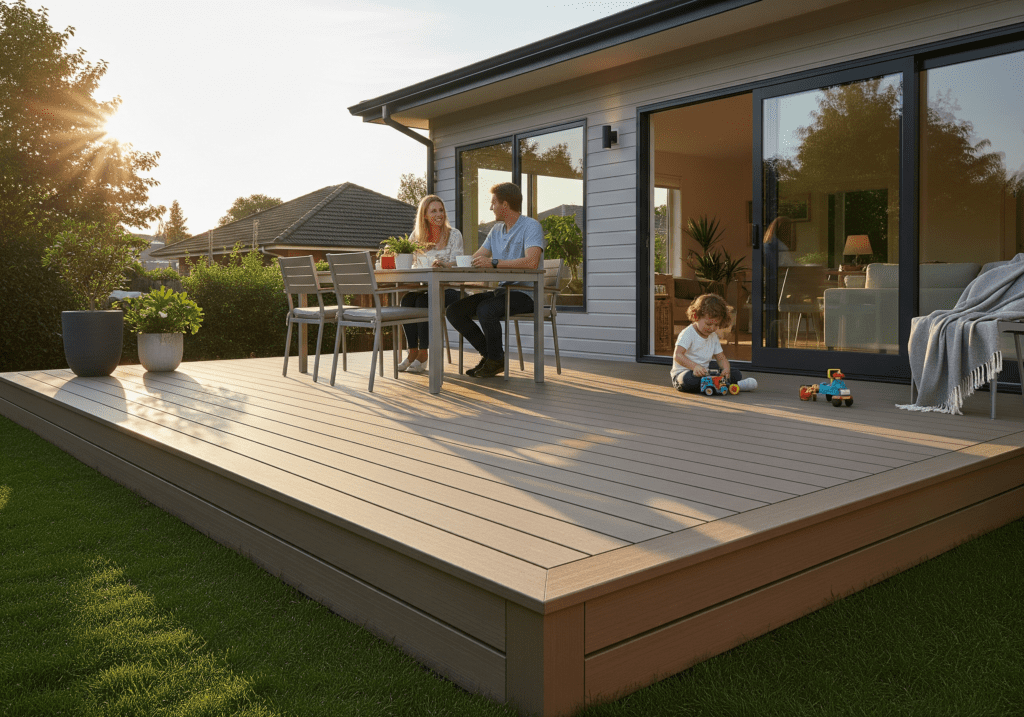
But composite decks are not built the same way as wood decks. The material behaves differently, expands more, and has stricter installation rules. If you treat composite like wood, you will have problems.
This guide explains how to build a composite deck correctly, from framing choices to fastening details, so it stays flat, comfortable, and attractive for years.
Many of the structural principles still follow what you’d use in How to Build an Attached Deck, How to Build an Elevated Deck, or How to Build a Ground-Level Deck, but composite materials demand extra precision.
For actionable, location-based bill of materials, cost estimates, and a pro-level PDF, you need the DeckMaster AI. Click on the image below to get it!

Use this guide and Best Practices on How to Build a Deck to learn the fundamentals. Use DeckMaster AI to build “your” deck with confidence.
Table of Contents
What Is Composite Decking?
Composite decking is made from a blend of wood fibers and plastic.
How Composite Decking Differs From Wood
Composite boards behave differently from lumber. Key differences include:
- Less moisture absorption
- More thermal expansion
- Heavier weight
- Uniform appearance
Composite doesn’t rot like wood, but its dimensions change with temperature changes.
When Composite Is a Good Choice
Composite decking works well when:
- Low maintenance is a priority
- The deck gets heavy use
- Consistent appearance matters
- You want long-term durability
It’s especially popular for family decks, rooftop decks, and high-traffic areas.
Planning a Composite Deck
Planning matters more with composite than with wood.
Budget and Material Selection
Composite costs more upfront. Plan for:
- Higher decking material costs
- Special fasteners or clips
- Additional framing lumber
The payoff comes in reduced maintenance over time.
Layout and Design Considerations
Composite boards come in fixed lengths and profiles. Design early around:
- Board direction
- Seam placement
- Picture framing or border details
Good planning minimizes waste and improves appearance.
How to Build a Composite Deck With the Right Framing
Framing is critical for composite performance.
Joist Spacing Requirements
Composite boards require tighter spacing. Most manufacturers recommend:
- 16 inches on center for straight runs
- 12 inches on center for diagonal layouts
Always follow the manufacturer’s guidelines, not guesswork.
Framing Materials and Flatness
Composite boards highlight imperfections. Use:
- Straight, high-quality pressure-treated lumber
- Extra blocking to keep joists aligned
- Careful leveling during framing
A flat frame is non-negotiable.
Attaching a Composite Deck to a House
Composite decks are often attached, but details matter.
Ledger Boards and Flashing
Ledger installation should follow best practices from How to Build an Attached Deck. That includes:
- Structural fasteners into framing
- Proper flashing above and behind the ledger
- Adequate spacing for drainage
Composite decking does not change ledger requirements.
Allowing for Expansion Near the House
Composite boards must not be tight to walls. Leave:
- Manufacturer-recommended gaps
- Space for debris removal
- Access for inspection
Tight installations may cause buckling.
Installing Composite Deck Boards
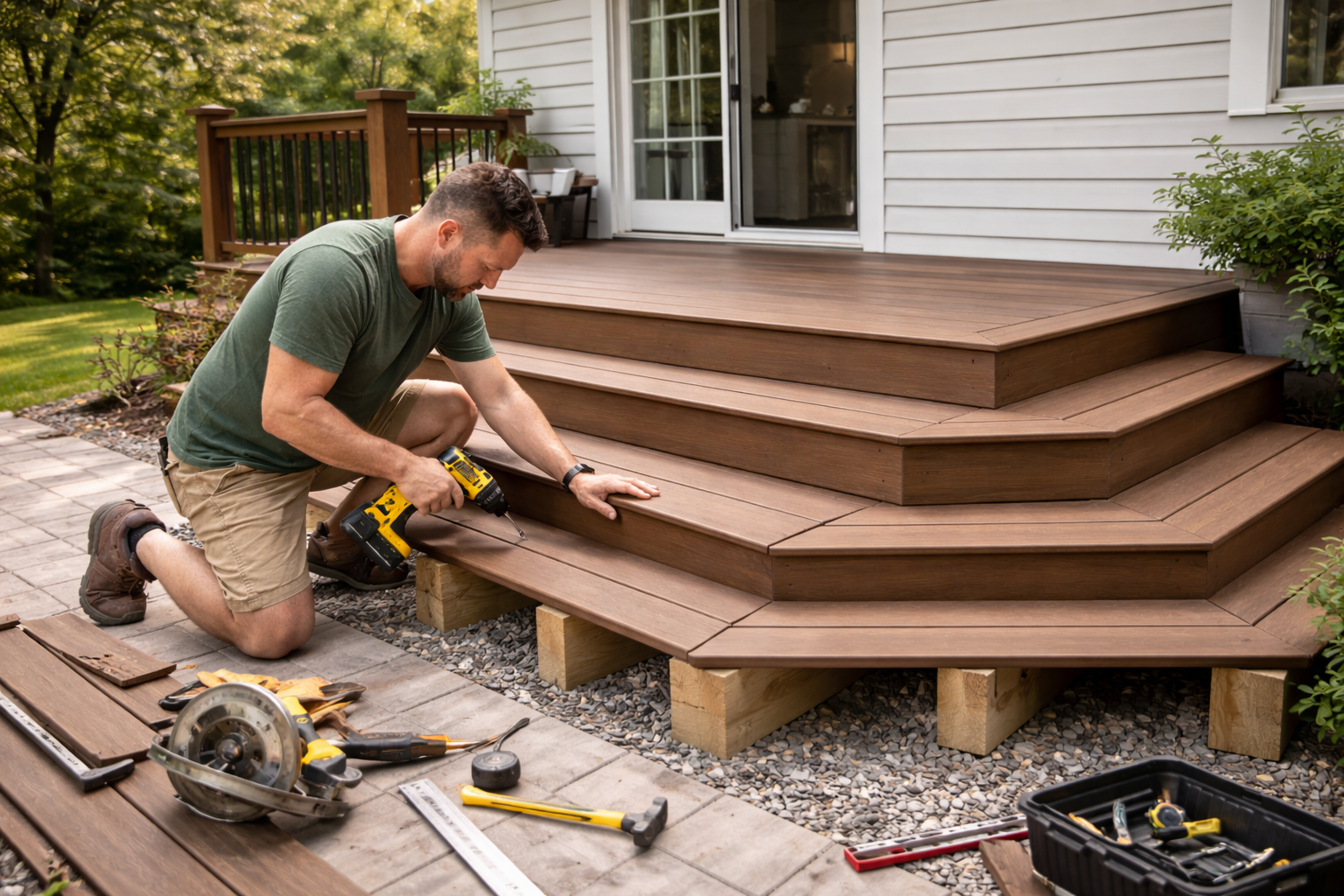
This is where composite differs most from wood.
Fastening Systems
Composite decking often uses hidden fasteners. Options include:
- Hidden clip systems
- Color-matched surface screws
- Manufacturer-specific hardware
Mixing systems usually causes problems.
Spacing and Expansion Gaps
Composite expands and contracts with temperature. Pay close attention to:
- End gaps
- Side-to-side spacing
- Installation temperature
Boards installed too tightly will push against each other at a later date.
Edges, Picture Framing, and Trim
Composite decks benefit from clean edges.
Picture Frame Borders
Picture framing hides cut ends and adds structure. It also:
- Improves visual balance
- Protects edges
- Requires extra framing support
Plan framing for borders from the start.
Fascia and Skirting
Composite fascia boards provide a finished look. Best practices include:
- Proper ventilation behind the fascia
- Fastening patterns that allow movement
- Avoiding contact with soil
Never trap moisture behind trim.
Railings for Composite Decks
Railings complete the deck visually and functionally.
Composite Railing Systems
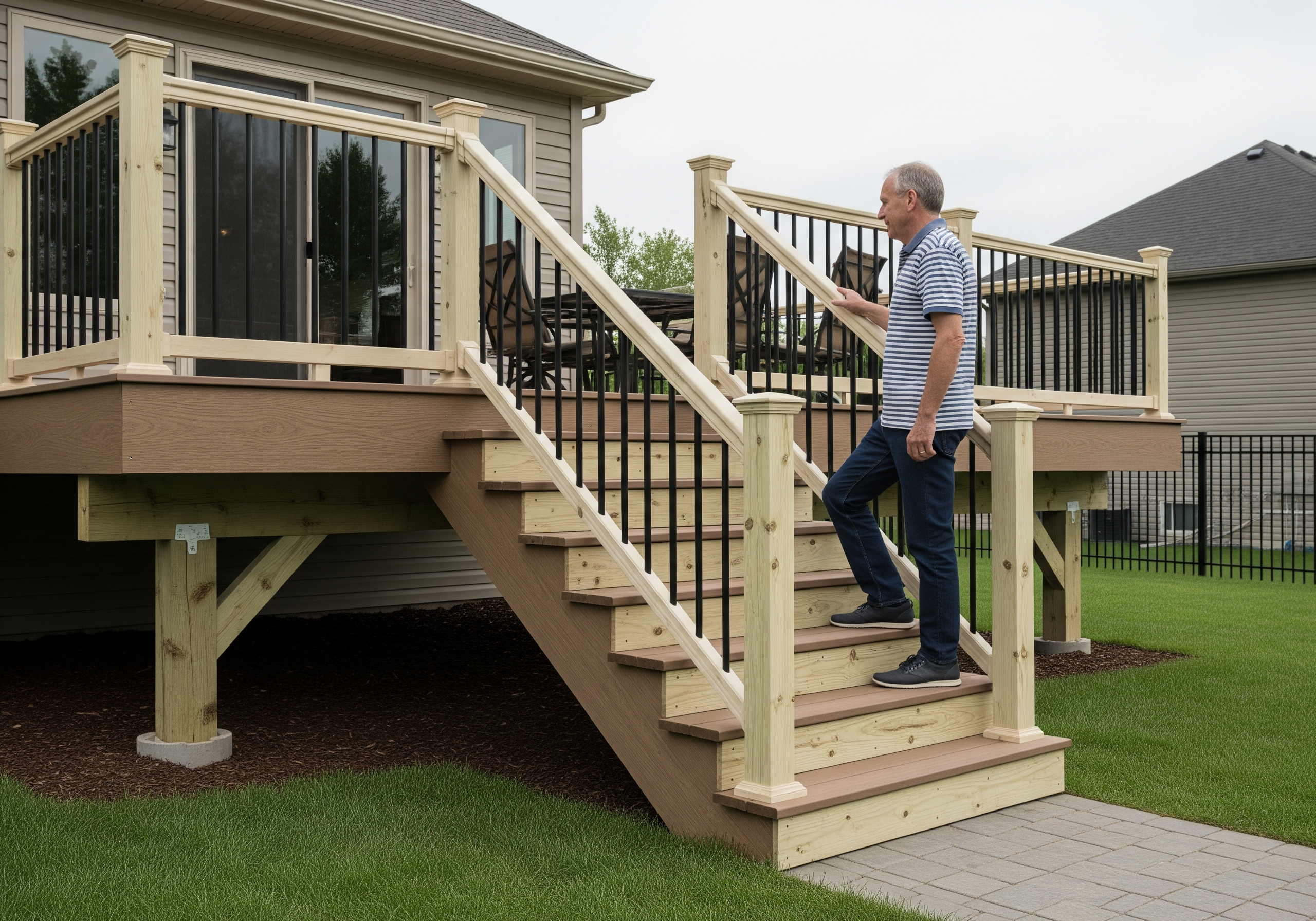
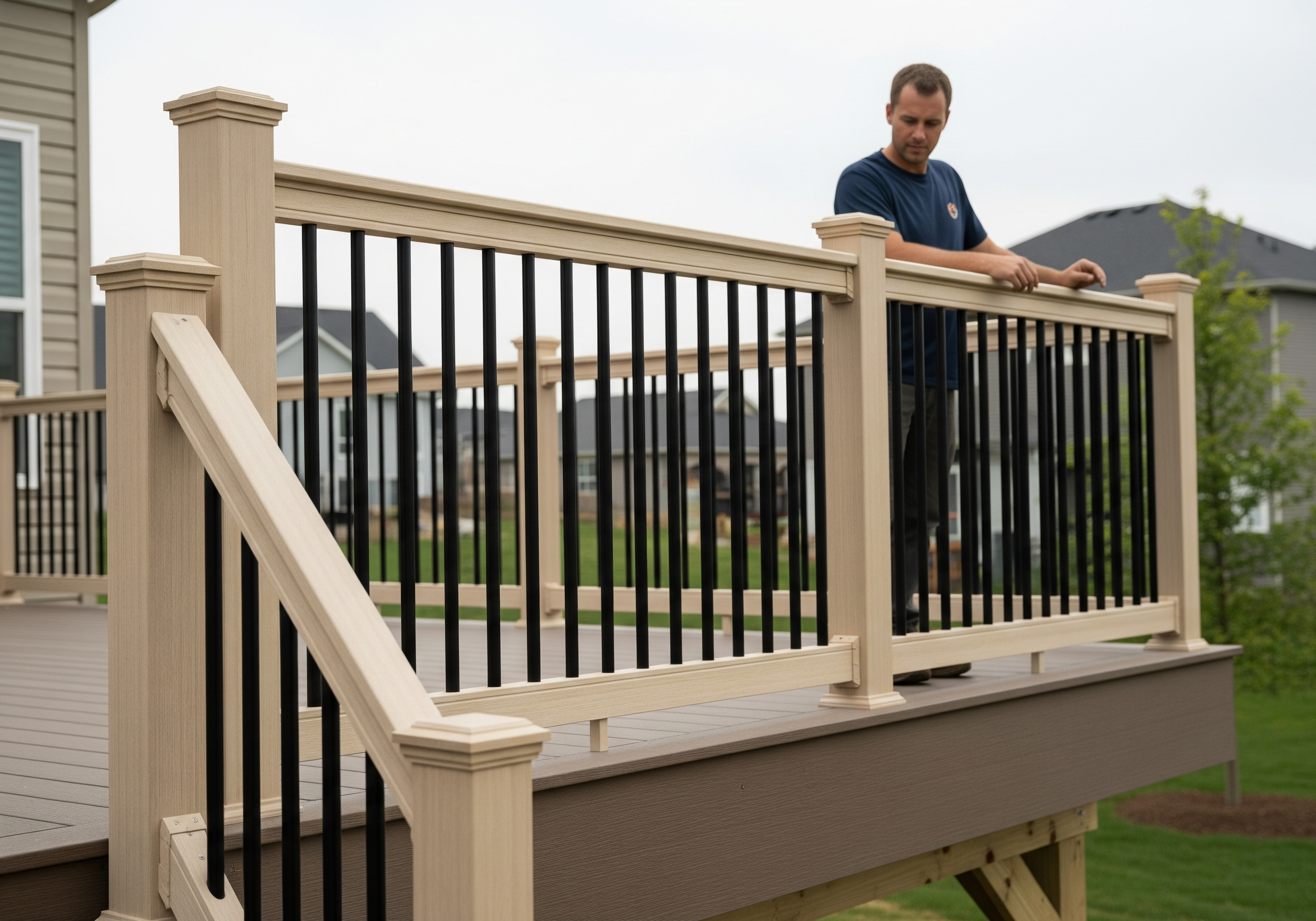
Many manufacturers offer matching railings. These systems:
- Simplify installation
- Maintain a consistent appearance
- Meet code when installed correctly
Always follow railing-specific instructions.
Structural Rail Post Attachment
Rail posts must connect to framing, not decking. This applies whether the deck is:
- Ground-level
- Elevated
- On a slope
Safety does not change with material choice.
Maintenance and Care
Composite decks are “low maintenance”, not “no maintenance“.
Routine Cleaning
Plan to:
- Wash the deck periodically
- Clear debris from gaps
- Clean spills promptly
Dirt and pollen still accumulate.
Preventing Common Issues
Avoid:
- Trapping heat-reflective items on the deck
- Blocking drainage paths
- Using harsh chemicals not approved by the manufacturer
Simple care keeps the surface looking new.
Composite Decks in Different Applications
Composite works well across many deck types.
Elevated and Rooftop Composite Decks
Composite is popular for elevated decks. Its stability and durability suit:
Just remember weight and framing requirements.
Ground-Level and Low-Profile Decks
Composite also works for low decks. Extra attention is needed for:
- Ventilation
- Drainage
- Heat buildup
Low decks benefit from lighter-colored boards.
Common Mistakes to Avoid
Most composite deck failures are installation-related. Avoid:
- Using wood spacing rules
- Skipping manufacturer instructions
- Installing on uneven framing
- Forgetting expansion gaps
Composite rewards precision.
Final Thoughts
A composite deck offers long-term durability, consistent appearance, and reduced maintenance, but only when built correctly. The material is forgiving in some ways and unforgiving in others.
By combining solid framing practices from How to Build an Attached Deck and How to Build an Elevated Deck with manufacturer-specific composite guidelines, you can build a deck that looks clean, stays flat, and performs well for decades.
The key is respecting how composite behaves and building to suit it, not the other way around.