How to Build a Floating Deck on a Slope: Clean & Simple!
A floating deck on a slope is a smart solution when you want a level outdoor space without digging deep footings or attaching anything to the house.
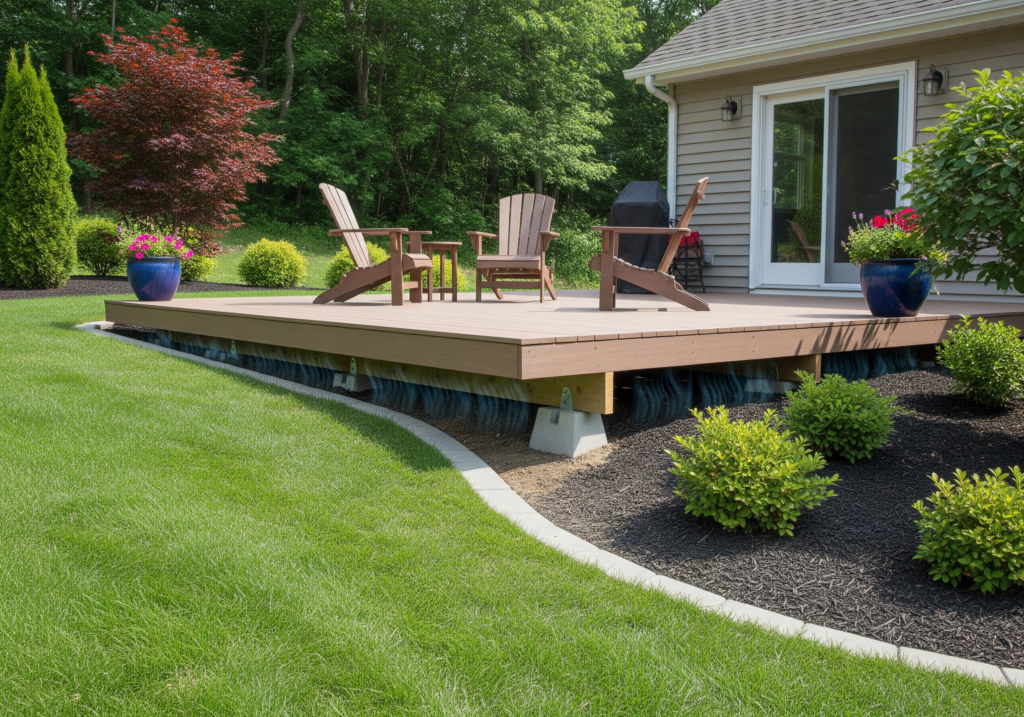
It works with uneven ground, preserves natural drainage, and keeps the project simpler than a full elevated or post-and-beam deck.
Despite the name, a floating deck doesn’t actually float. It rests on the ground using deck blocks, pads, or shallow foundations. On a slope, that means careful planning, solid base preparation, and smart height control.
This guide explains how to build a floating deck on a slope so it stays stable, drains properly, and looks intentional.
Many of the principles here overlap with How to Build a Deck on a Slope and How to Build a Ground-Level Deck, but floating decks have their own rules.
For actionable, location-based bill of materials, cost estimates, and a pro-level PDF, you need the DeckMaster AI. Click on the image below to get it!

Use this guide and Best Practices on How to Build a Deck to learn the fundamentals. Use DeckMaster AI to build “your” deck with confidence.
Table of Contents
What Is a Floating Deck?
A floating deck is a freestanding deck that is not attached to a house or set on deep footings.
How Floating Decks Differ From Standard Decks
Floating decks:
- Do not use ledger boards
- Sit low to the ground
- Rely on surface supports or shallow bases
- Are often easier to permit or exempt
On sloped ground, the lack of attachment adds flexibility, but also requires precision.
When a Floating Deck on a Slope Makes Sense
This design works well when:
- The slope is moderate, not extreme
- You want to avoid major excavation
- House attachment is impractical
- The deck will remain relatively low
If the slope is steep or the deck will sit high above grade, a traditional elevated deck may be safer.
Planning and Site Evaluation
Good planning prevents movement later.
Evaluating the Slope
Before design begins, determine:
- Total height change across the site
- Soil type and drainage behavior
- Areas where water naturally flows
Floating decks depend on uniform support. Uneven soil causes settling.
Permits and Local Rules
Some areas allow floating decks without permits, others do not. Check for rules related to:
- Maximum height above grade
- Distance from property lines
- Use of deck blocks or surface footings
Never assume exemptions apply on a slope.
How to Build a Floating Deck on a Slope With Proper Support
Support is the most critical factor.
Choosing the Right Foundation System
Common support options include:
- Concrete deck blocks
- Precast concrete pads
- Shallow-poured footings
- Adjustable deck supports
Adjustable supports are especially helpful on slopes, allowing fine-tuning during leveling.
Stepping the Deck With the Slope
Rather than forcing everything flat at the base:
- Step supports down the slope
- Keep the deck frame level above
- Avoid tall stacks of blocks or shims
Shorter supports are more stable than tall ones.
Ground Preparation and Base Work
Floating decks still need a solid base.
Excavation and Leveling
Prepare each support location by:
- Removing organic material
- Excavating to firm soil
- Creating level bearing surfaces
Never place supports directly on loose soil.
Gravel and Drainage Layers
A gravel base improves stability. Use:
- Crushed stone or gravel
- Landscape fabric beneath
- Proper compaction
Gravel helps distribute loads and shed water.
Framing a Floating Deck on Uneven Ground
Framing ties everything together.
Frame Design and Layout
Floating deck frames should be:
- Rigid and square
- Built with pressure-treated lumber
- Designed with conservative spans
Overbuilding slightly adds long-term stability.
Blocking and Bracing
Sloped sites introduce lateral forces. Reduce movement by:
- Adding blocking between joists
- Using perimeter framing
- Keeping the frame tight and well-fastened
Movement feels worse on uneven terrain.
Managing Deck Height and Edges
Height changes quickly on a slope.
Keeping the Deck Low
Most floating decks perform best when:
- The highest point stays under 24 inches
- Guardrails are not required
- Steps are minimal
If the deck rises higher, reconsider the design.
Edge Treatments on Slopes
Deck edges should look intentional. Options include:
- Stepped fascia boards
- Open edges for drainage
- Simple transitions to grade
Avoid skirting that traps water or debris.
Stairs and Access
Even low decks may need steps.
Simple Step Solutions
On a slope, steps may:
- Be built into the frame
- Follow the natural grade
- Use wide, shallow treads
Keep riser heights consistent for safety.
Transitions to Yard or Pathways
Ensure:
- Stable landing areas
- Proper drainage at step bases
- No tripping hazards where deck meets soil
Transitions matter more on uneven ground.
Decking Installation
Deck boards finish the surface and affect performance.
Choosing Decking Materials
Floating decks on slopes benefit from durable materials. Good options include:
- Composite decking
- Pressure-treated lumber
- PVC decking
Choose materials that handle moisture and temperature changes well.
Board Spacing and Fastening
Proper spacing is essential. Follow these rules:
- Use manufacturer-recommended gaps
- Avoid tight joints at edges
- Use corrosion-resistant fasteners
Deck boards must dry efficiently after rain.
Drainage and Erosion Control
Water always moves downhill.
Protecting the Area Below the Deck
Control erosion by:
- Using gravel beneath the deck
- Directing runoff away from supports
- Avoiding solid barriers that trap water
Floating decks should not block natural drainage.
Preventing Soil Movement
On moderate slopes:
- Add additional support points
- Spread loads evenly
- Monitor soil after heavy rains
Early adjustments are easier than repairs.
Maintenance and Long-Term Stability
Floating decks require observation.
Routine Checks
At least once a year:
- Check supports for settling
- Re-level if adjustable systems are used
- Inspect framing for moisture issues
Small shifts are common and manageable.
When to Re-Level or Reinforce
Watch for:
- Uneven deck boards
- Gaps opening at edges
- Noticeable bounce or movement
Address issues before they worsen.
Common Mistakes to Avoid
Floating decks fail when simplicity is mistaken for ease. Avoid:
- Stacking deck blocks excessively
- Skipping ground preparation
- Building too high for a floating system
- Ignoring drainage paths
Slope conditions magnify small mistakes.
Final Thoughts
A floating deck on a slope offers a clean, flexible way to create usable outdoor space without heavy construction. When designed within its limits, it can be stable, attractive, and cost-effective.
By applying the terrain-aware planning from How to Build a Deck on a Slope and the low-profile strategies from How to Build a Ground-Level Deck, a floating deck can feel intentional rather than improvised. The key is respecting gravity, water flow, and the limits of surface-supported construction.