How to Build a Rooftop Deck on a Sloped Roof for Wonderful Views!
A sloped roof isn’t an obvious place for a deck, but with the right design, it can become one of the most impressive outdoor spaces on a home.
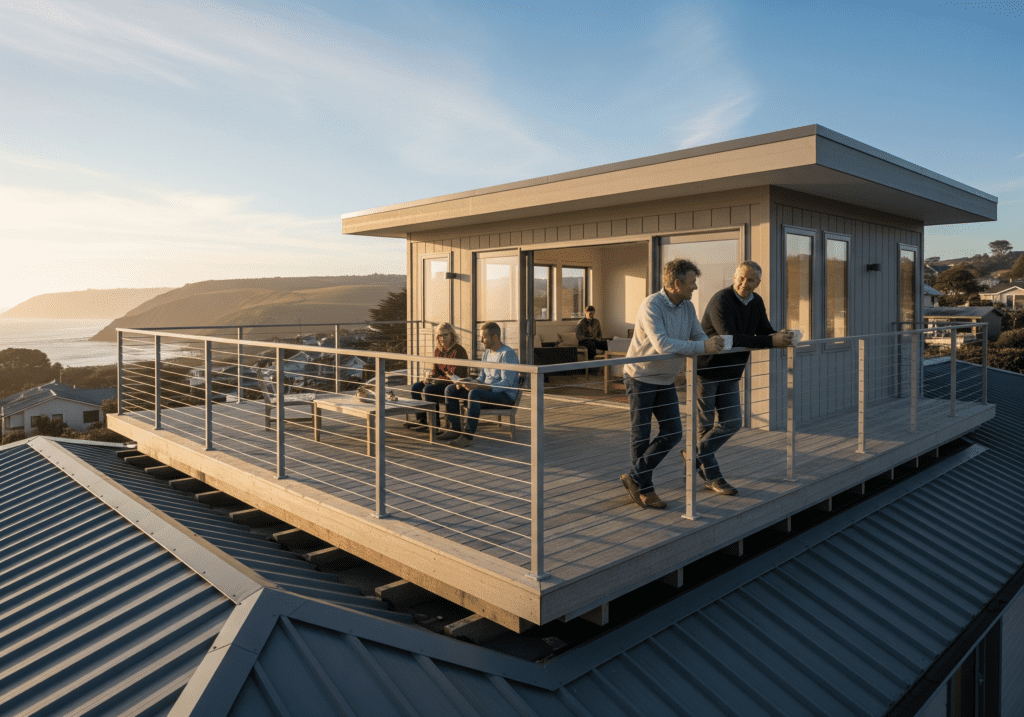
Rooftop decks on sloped roofs are common in urban areas, coastal homes, and modern designs, where land is limited but views are highly valued.
This guide explains how to build a rooftop deck on a sloped roof correctly, with a strong focus on structure, drainage, and long-term protection.
Many of the principles here build on How to Build a Roof Deck, How to Build an Elevated Deck, and How to Build a Deck on a Slope, but rooftop conditions raise the stakes even further.
This type of project sits at the intersection of deck building and roofing. Structural loads, waterproofing, and safety requirements all increase. Mistakes don’t just affect the deck. They affect the living space below.
For actionable, location-based bill of materials, cost estimates, and a pro-level PDF, you need the DeckMaster AI. Click on the image below to get it!

Use this guide and Best Practices on How to Build a Deck to learn the fundamentals. Use DeckMaster AI to build “your” deck with confidence.
Table of Contents
What Is a Rooftop Deck on a Sloped Roof?
This design involves creating a level deck surface above an existing pitched roof.
How Sloped Roof Decks Differ From Flat Roof Decks
The slope changes everything. Sloped roof decks:
- Require leveling systems
- Cannot rely on the roof for structural support
- Demand advanced waterproofing
- Must preserve roof drainage paths
You are building above the roof, not on it.
When This Type of Deck Makes Sense
A rooftop deck on a sloped roof works well when:
- Views are a major priority
- Yard space is limited
- The roof structure can be reinforced
- Local codes allow rooftop occupancy
This is never a casual retrofit.
Planning, Permits, and Engineering
This project almost always requires professional input.
Structural Engineering Requirements
Most jurisdictions require:
- Engineered drawings
- Load calculations
- Attachment details
- Waterproofing plans
Expect a higher level of review than with standard decks.
Evaluating the Existing Roof
Before design begins, confirm:
- Roof framing size and spacing
- Condition of roofing materials
- Age and expected lifespan of the roof
It rarely makes sense to build over an aging roof.
How to Build a Rooftop Deck on a Sloped Roof Safely
This section outlines the core construction approach.
Never Load the Roof Directly
The roof itself is not designed to carry deck loads. Instead:
- Loads must transfer to structural walls or beams
- Support posts often pass through the roof
- Steel or engineered supports are common
The roof remains a weather barrier, not a structural platform.
Creating a Level Deck Above a Slope
Leveling systems typically include:
- Adjustable pedestals
- Framed sleeper grids
- Steel support frames
These systems allow the deck to sit level while preserving the roof pitch below.
Waterproofing and Drainage
Water protection is the most critical element.
Protecting the Roof Membrane
The roof must remain intact. That means:
- No unnecessary penetrations
- Approved flashing systems at all supports
- Continuous waterproof membranes
Any failure here affects the interior living space.
Preserving Roof Drainage
Sloped roofs exist to shed water. Deck construction must:
- Allow water to flow freely below
- Avoid blocking valleys or gutters
- Prevent debris buildup
Never trap water under a rooftop deck.
Framing a Rooftop Deck Over a Sloped Roof
Framing must be strong, stable, and precise.
Framing Materials and Systems
Common framing solutions include:
- Pressure-treated lumber on pedestals
- Aluminum framing systems
- Steel substructures
Material choice depends on span, weight limits, and exposure.
Controlling Movement and Vibration
Movement feels worse at height. To reduce flex:
- Use conservative span limits
- Add blocking and bracing
- Avoid long cantilevers
A rooftop deck should feel solid underfoot.
Decking Materials for Rooftop Use
Material choice affects weight and durability.
Best Decking Options
Rooftop decks often use:
- Aluminum decking
- PVC decking
- Lightweight composite boards
- Porcelain pavers on pedestals
Traditional wood decking is less common due to concerns about moisture and weight.
Heat and Exposure Considerations
Rooftops receive intense sun. Choose materials that:
- Resist UV damage
- Stay cooler underfoot
- Handle thermal expansion well
Comfort matters as much as structure.
Guardrails, Safety, and Code Compliance
Safety requirements are strict at rooftop height.
Guardrail Requirements
Most codes require:
- Taller guardrails than standard decks
- Higher load resistance
- Minimal deflection
Railings must be anchored into structural framing, not surface materials.
Wind and Fall Protection
At height, wind matters. Design should account for:
- Wind loads on railings
- Secure furniture placement
- Privacy or wind screens if needed
Comfort improves usability.
Access and Egress
Getting to the deck safely is essential.
Stair and Door Access
Access may include:
- Interior stairways
- Roof hatches
- Penthouse access structures
All access points must meet code for headroom and safety.
Emergency Egress Considerations
Some jurisdictions require:
- Secondary egress paths
- Fire-rated assemblies
- Clear access routes
Confirm requirements early in design.
Maintenance and Long-Term Care
Rooftop decks demand attention.
Routine Inspections
At least once a year:
- Inspect flashing and penetrations
- Check pedestal stability
- Clear debris from drainage paths
Small issues become big problems quickly.
Planning for Roof Replacement
Eventually, the roof will need replacement. Design the deck so:
- Sections can be removed
- Waterproofing can be accessed
- Repairs don’t require full demolition
Future access saves money.
Common Mistakes to Avoid
Failures are usually predictable. Avoid:
- Loading the roof structure directly
- Blocking roof drainage
- Skipping engineered design
- Treating sloped roofs like flat roofs
Roof decks tolerate no shortcuts.
Final Thoughts
A rooftop deck on a sloped roof is one of the most complex deck projects you can undertake, but it can also be one of the most rewarding. When built correctly, it creates premium outdoor space where none seemed possible.
By combining the structural discipline of How to Build an Elevated Deck, the waterproofing focus of How to Build a Roof Deck, and the leveling strategies used in How to Build a Deck on a Slope, this type of deck can perform safely and beautifully for years.
The key is respecting the roof first and the deck second.