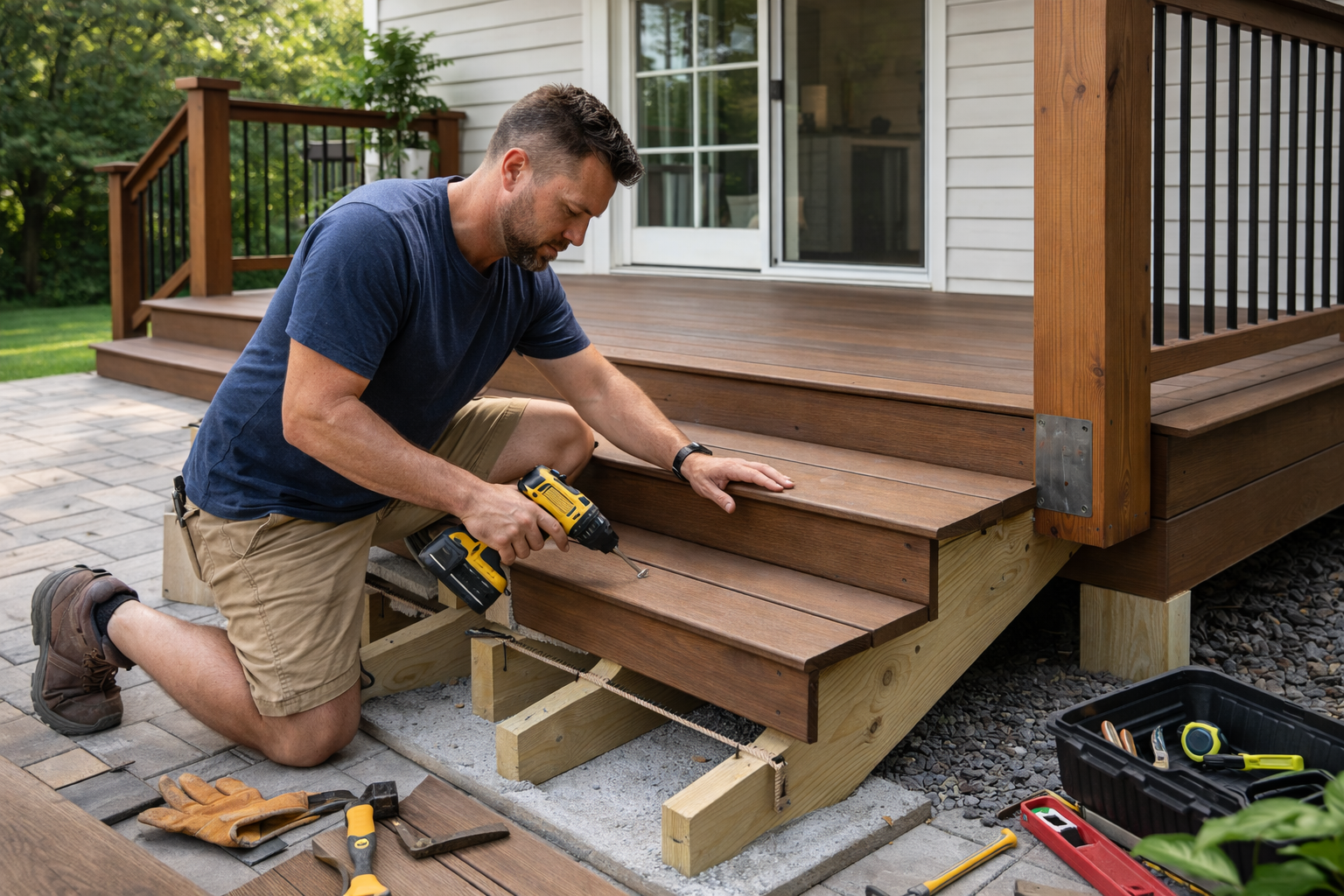
How to Build a Deck Over Concrete: Strong & Aesthetic!
A concrete patio or slab can be a solid foundation, but it’s not always comfortable or attractive. Cracks, stains, poor drainage, or outdated finishes are common complaints.
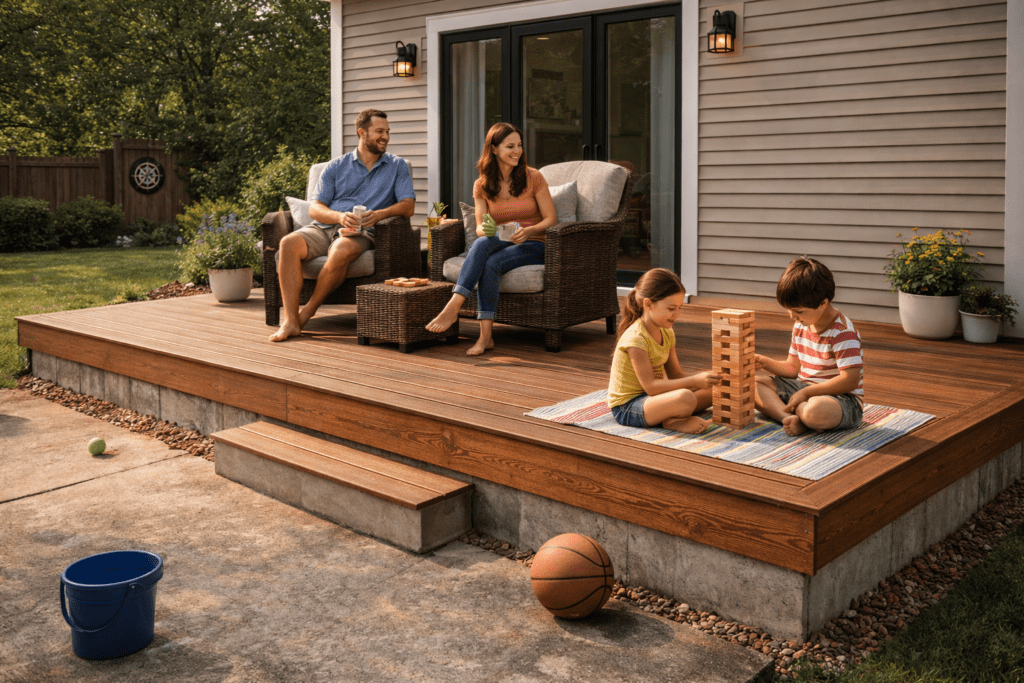
Building a deck over concrete is a smart way to upgrade the space without tearing everything out and starting over.
That said, concrete brings its own challenges. Moisture gets trapped. Heights change quickly. Fastening options are limited.
This guide explains how to build a deck over concrete correctly, with a focus on drainage, attachment methods, and long-term durability.
Many of the ideas presented here are closely connected to “How to Build a Ground-Level Deck” and “How to Build a Flush Ground-Level Deck,” as height and moisture control are critical in all three designs.
For actionable, location-based bill of materials, cost estimates, and a pro-level PDF, you need the DeckMaster AI. Click on the image below to get it!

Use this guide and Best Practices on How to Build a Deck to learn the fundamentals. Use DeckMaster AI to build “your” deck with confidence.
Table of Contents
When It Makes Sense to Build Over Concrete
Not every slab is a good candidate for a deck.
Evaluating the Condition of the Concrete
Before planning anything, inspect the slab. It should be:
- Structurally sound
- Mostly level or correctable
- Free of major settling or heaving
- Sloped away from the house or capable of being managed
A deck will hide cosmetic flaws, but it won’t fix structural failure below.
Situations Where Decking Over Concrete Works Well
This approach works best when:
- You want to upgrade an existing patio
- The slab sits near ground level
- Removing concrete would be expensive or disruptive
- The area already has good drainage
If water pools heavily on the slab, address that first.
Planning and Permits
A deck over concrete is still a deck in the eyes of most building departments.
Permit and Code Considerations
Depending on height and attachment:
- A permit may be required
- Footings may still be necessary
- Ledger connections may trigger inspections
Never assume concrete eliminates code requirements.
Finished Height and Transitions
Height adds up quickly. When planning:
- Account for sleepers, decking, and ventilation space
- Check door thresholds carefully
- Ensure steps or transitions are safe and comfortable
Poor height planning is one of the most common mistakes.
How to Build a Deck Over Concrete Without Trapping Moisture
Moisture management is the defining challenge of this project.
Why Moisture Gets Trapped
Concrete absorbs and releases moisture. When you place wood directly on it:
- Drying is slowed
- Rot risk increases
- Mold and mildew form more easily
The solution is separation and airflow.
Creating a Drainage and Air Gap
Best practice includes:
- Elevating framing above the slab
- Using spacers or sleepers designed for this purpose
- Allowing water to move freely underneath
Even small air gaps dramatically improve performance.
Framing Options Over Concrete
Framing methods depend on height and load.
Sleeper Systems
Sleepers are boards laid flat over concrete. They work well when:
- Height is limited
- The slab is relatively level
- The deck will be low-profile
Sleepers must be:
- Pressure-treated
- Spaced to allow drainage
- Isolated from standing water
Never trap sleepers in puddles.
Raised Framing Over Concrete
If more height is needed, build a raised frame. This may include:
- Shims or adjustable deck supports
- Beams set on concrete piers or pads
- Partial freestanding framing
This approach improves airflow and leveling control.
Attaching a Deck Over Concrete to a House
Some decks over concrete are attached, others are not.
When to Use a Ledger Board
Use a ledger when:
- The deck aligns with interior floors
- Structural support from the house is required
- Proper flashing can be installed
Ledger details should follow the same standards outlined in How to Build an Attached Deck.
Freestanding Alternatives
Freestanding decks avoid house attachment entirely. They are often safer when:
- Flashing details are complicated
- The slab sits against finished siding
- You want to reduce moisture risk at the wall
Freestanding does not mean unsupported. Loads still need a clear path to the ground.
Decking Installation
Deck boards finish the surface but also affect drying.
Choosing Decking Materials
Some materials perform better over concrete. Good options include:
- Composite decking
- PVC decking
- Aluminum decking
These materials resist moisture better than standard wood.
Board Spacing and Fastening
Spacing matters more over concrete. Best practices include:
- Following manufacturer spacing guidelines
- Avoiding tight joints
- Using corrosion-resistant fasteners
Boards need room to dry after rain.
Edges, Skirting, and Transitions
The perimeter is where problems usually start.
Managing the Deck Edge
Avoid sealing the deck tightly to the slab. Instead:
- Leave gaps for drainage
- Avoid solid skirting against concrete
- Use vented or open edging when possible
Water must have an escape path.
Transitions to Yard or Walkways
Decks over concrete often meet other surfaces. Make sure:
- Edges are easy to clean
- Debris can be removed
- Materials don’t trap water between them
Clean transitions reduce maintenance.
Maintenance and Inspection
Decks over concrete need awareness, not constant work.
Routine Maintenance Tasks
Plan to:
- Clear debris from edges and gaps
- Wash the deck periodically
- Inspect framing annually where visible
Problems tend to start out of sight.
Watching for Warning Signs
Keep an eye out for:
- Persistent damp smells
- Soft spots in decking
- Mold growth near edges
Early action prevents major repairs.
Common Mistakes to Avoid
Most failures are avoidable. Avoid:
- Placing wood directly on concrete
- Blocking drainage paths
- Ignoring finished height
- Assuming concrete eliminates moisture problems
Concrete solves some issues and creates others.
Final Thoughts
Building a deck over concrete is a practical way to upgrade an existing space without demolition. When done correctly, it adds comfort, warmth, and visual appeal while extending the life of the area below.
If you apply the moisture-control lessons from How to Build a Ground-Level Deck and the precision required for How to Build a Flush Ground-Level Deck, a deck over concrete can perform just as well as one built over soil.
The key is respecting water, airflow, and height from the very beginning.