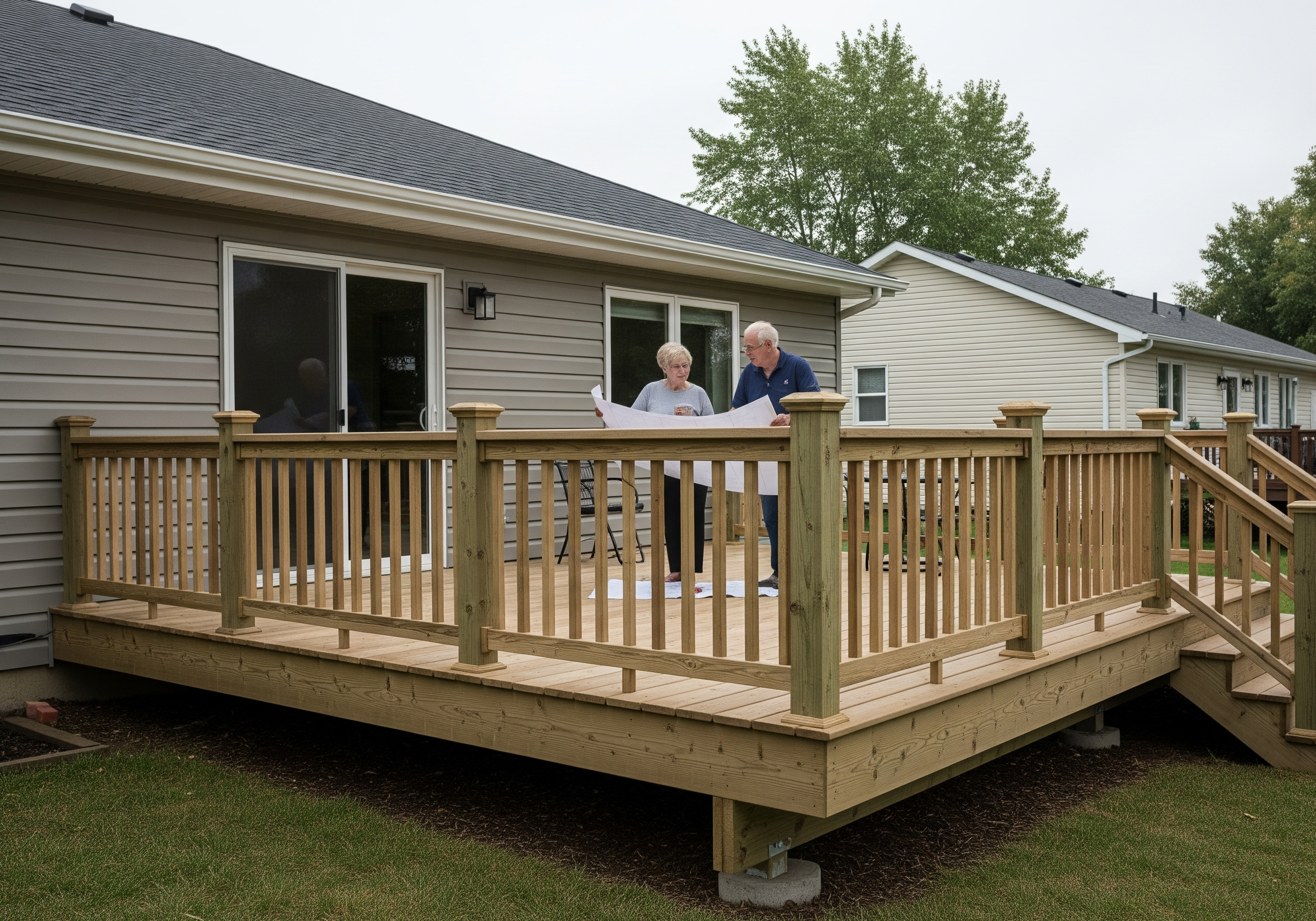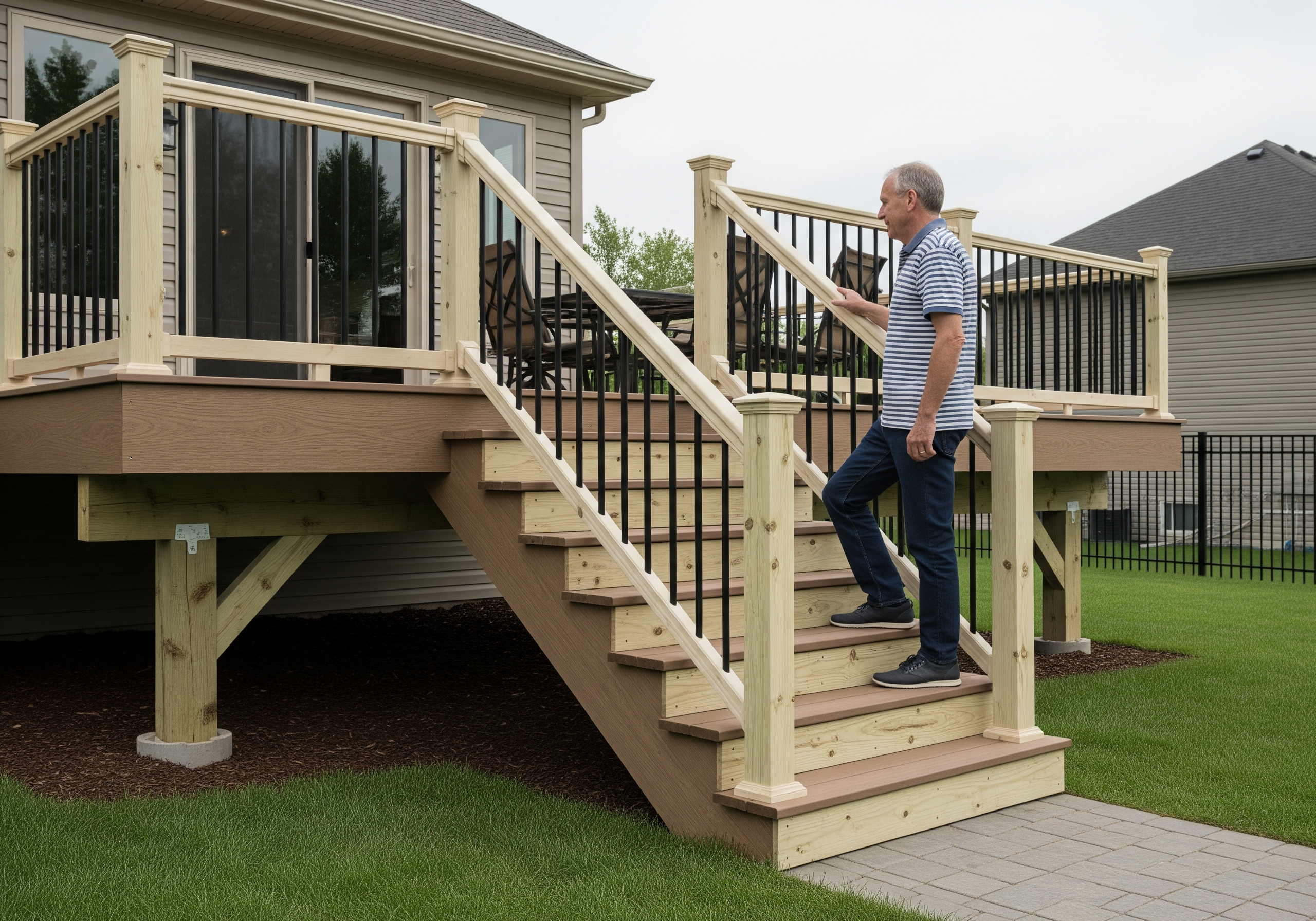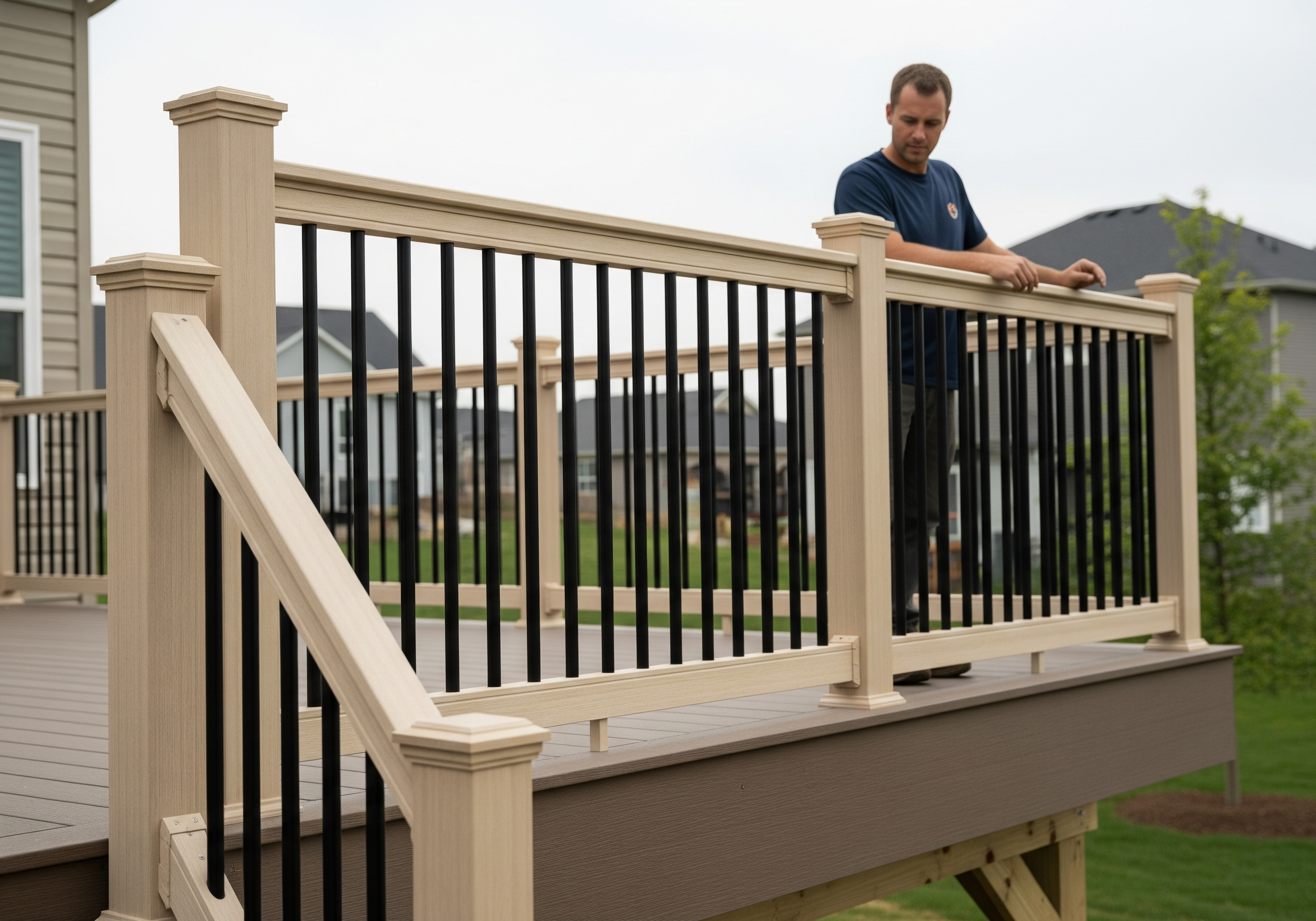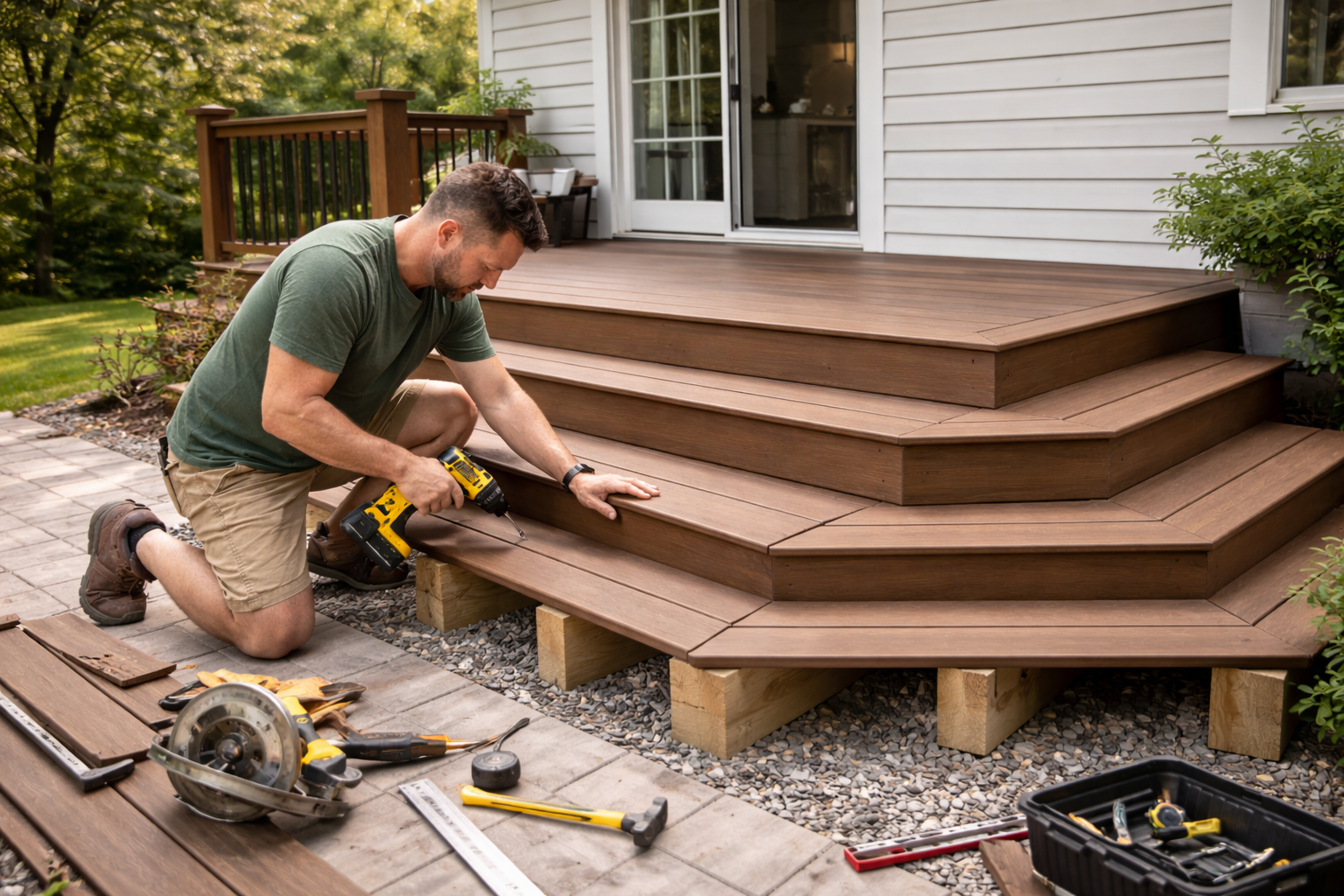
How to Build a Balcony Deck: Serious Structural Demands
A balcony deck creates outdoor living space where ground-level options aren’t possible. Condos, apartments, urban homes, and second-story rooms all benefit from a well-built balcony deck.
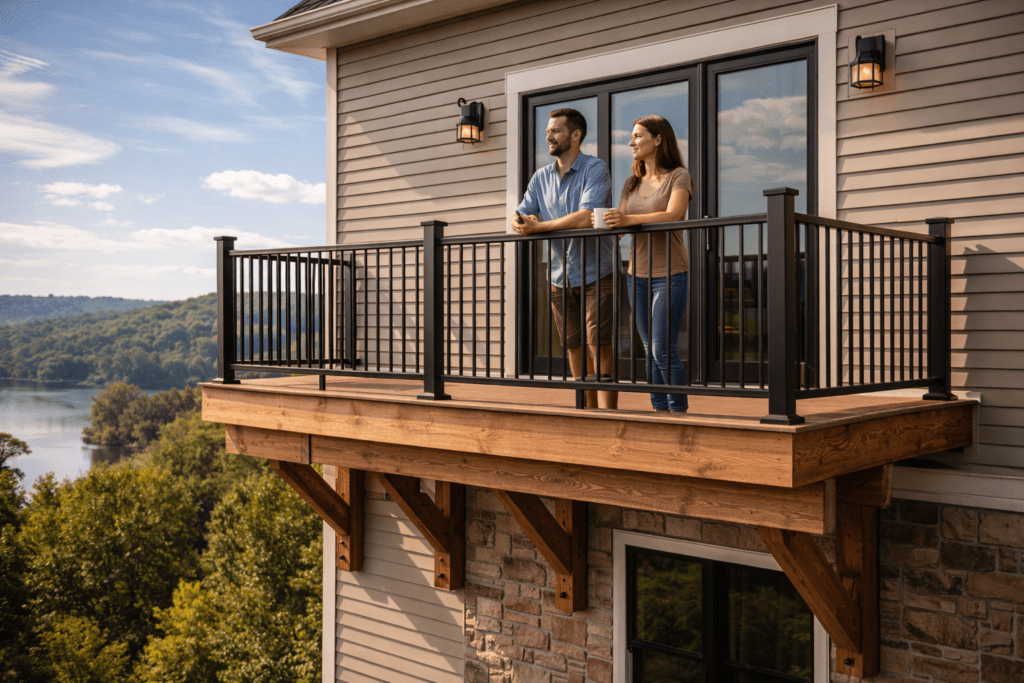
When done right, it feels solid, safe, and connected to the building. When done wrong, it becomes a liability very quickly.
Balcony decks are not casual projects. They carry people, furniture, and snow loads while hanging above open air. Waterproofing failures can damage living space below. Structural mistakes can be dangerous.
This guide explains how to build a balcony deck properly, with a strong focus on structure, drainage, and safety.
Many of the framing principles here build on How to Build an Elevated Deck, but balcony decks raise the stakes even further.
For actionable, location-based bill of materials, cost estimates, and a pro-level PDF, you need the DeckMaster AI. Click on the image below to get it!

Use this guide and Best Practices on How to Build a Deck to learn the fundamentals. Use DeckMaster AI to build “your” deck with confidence.
Table of Contents
What Is a Balcony Deck?
A balcony deck is an elevated platform attached to a building, typically above finished living space.
How Balcony Decks Differ From Elevated Decks
While both are raised, balcony decks are more demanding. Balcony decks:
- Are often supported by the building itself
- Sit over interior space
- Require advanced waterproofing
- Have limited tolerance for movement
Mistakes that might be repairable on a standard elevated deck can cause interior damage on a balcony.
When a Balcony Deck Makes Sense
A balcony deck is a good option when:
- Ground-level outdoor space is limited
- The deck connects to an upper-floor room
- Views are a priority
- The structure is designed to support it
They are common in urban homes, vacation properties, and multi-story buildings.
Planning and Permits
Balcony decks almost always require permits and professional review.
Structural Engineering and Code Review
Most jurisdictions require:
- Engineered drawings
- Load calculations
- Detailed waterproofing plans
- Multiple inspections
This is not a design to improvise. Confirm requirements before finalizing plans.
Evaluating the Existing Structure
Before building, verify:
- Floor framing can support added loads
- Attachment points are accessible
- The wall assembly can be properly flashed
If the structure wasn’t designed for a deck, reinforcement may be required.
How to Build a Balcony Deck Safely and Correctly
This section covers the core principles that protect both people and the building.
Load Ratings and Structural Support
Balcony decks must handle:
- Live loads from people and furniture
- Snow and environmental loads
- Concentrated loads at railings and posts
Support may include:
- Cantilevered framing
- Steel brackets
- Posts extending to foundation
- Hybrid support systems
Never assume the building alone can carry the load.
Attachment Methods
Common attachment approaches include:
- Ledger boards tied into structural framing
- Steel connectors or brackets
- Through-bolted connections
Surface attachment to sheathing or siding is never acceptable.
Waterproofing and Drainage
Water management is the most critical part of a balcony deck.
Waterproof Membranes and Systems
Balcony decks require a continuous waterproof layer. This may include:
- Liquid-applied membranes
- Sheet membranes
- Integrated aluminum or PVC deck systems
The waterproofing system must extend under walls and door thresholds.
Sloping and Drainage Control
Balcony decks must slope away from the building. Best practices include:
- Built-in slope during framing
- Clear drainage paths at edges
- No low spots where water can pond
Water should never move toward the structure.
Framing a Balcony Deck
Framing must be exact and rigid.
Framing Materials
Depending on design, framing may include:
- Pressure-treated lumber
- Steel framing
- Engineered wood products
Material choice depends on span, exposure, and building requirements.
Vibration and Deflection Control
Movement feels worse at height. To reduce bounce:
- Use conservative span limits
- Add blocking or stiffening
- Avoid long unsupported cantilevers
A balcony deck should feel solid underfoot at all times.
Decking Installation
Decking choices affect drainage and comfort.
Choosing the Right Decking Material
Balcony decks often use:
- Aluminum decking
- PVC decking
- Waterproof deck panels
- Tile systems designed for exterior use
Traditional wood decking is less common due to moisture risk.
Installation and Transitions
Pay close attention to:
- Door thresholds
- Expansion gaps
- Drainage edges
Transitions between deck and building must allow movement without breaking waterproof seals.
Railings and Guardrails
Railings are mandatory on balcony decks.
Guardrail Height and Strength
Most codes require:
- Taller guardrails than standard decks
- Specific load resistance
- Minimal deflection under force
Railings must be anchored into structure, not just deck boards.
Railing Style Considerations
Common balcony railing options include:
- Metal pickets
- Glass panels
- Cable systems
Visibility, wind exposure, and privacy all matter at height.
Maintenance and Inspection
Balcony decks demand regular attention.
Routine Inspection Areas
At least once a year:
- Inspect waterproofing transitions
- Check railing attachments
- Look for signs of water intrusion below
Early detection prevents interior damage.
Long-Term Care
Watch for:
- Cracked coatings or membranes
- Loose railings
- Blocked drainage paths
Maintenance is easier than repair on balcony decks.
Common Mistakes to Avoid
Balcony deck failures are usually predictable. Avoid:
- Skipping engineered design
- Treating balcony decks like standard decks
- Poor waterproofing integration
- Ignoring slope and drainage
Height and water are unforgiving.
Final Thoughts
A balcony deck adds valuable outdoor space, especially where land is limited. But it also combines the challenges of elevated decks, attached decks, and waterproof roof systems into one structure.
If you understand the principles outlined in How to Build an Elevated Deck and apply even stricter standards for waterproofing and structural support, a balcony deck can be safe, durable, and deeply rewarding to use.
The key is respecting the complexity and building it right from the start.