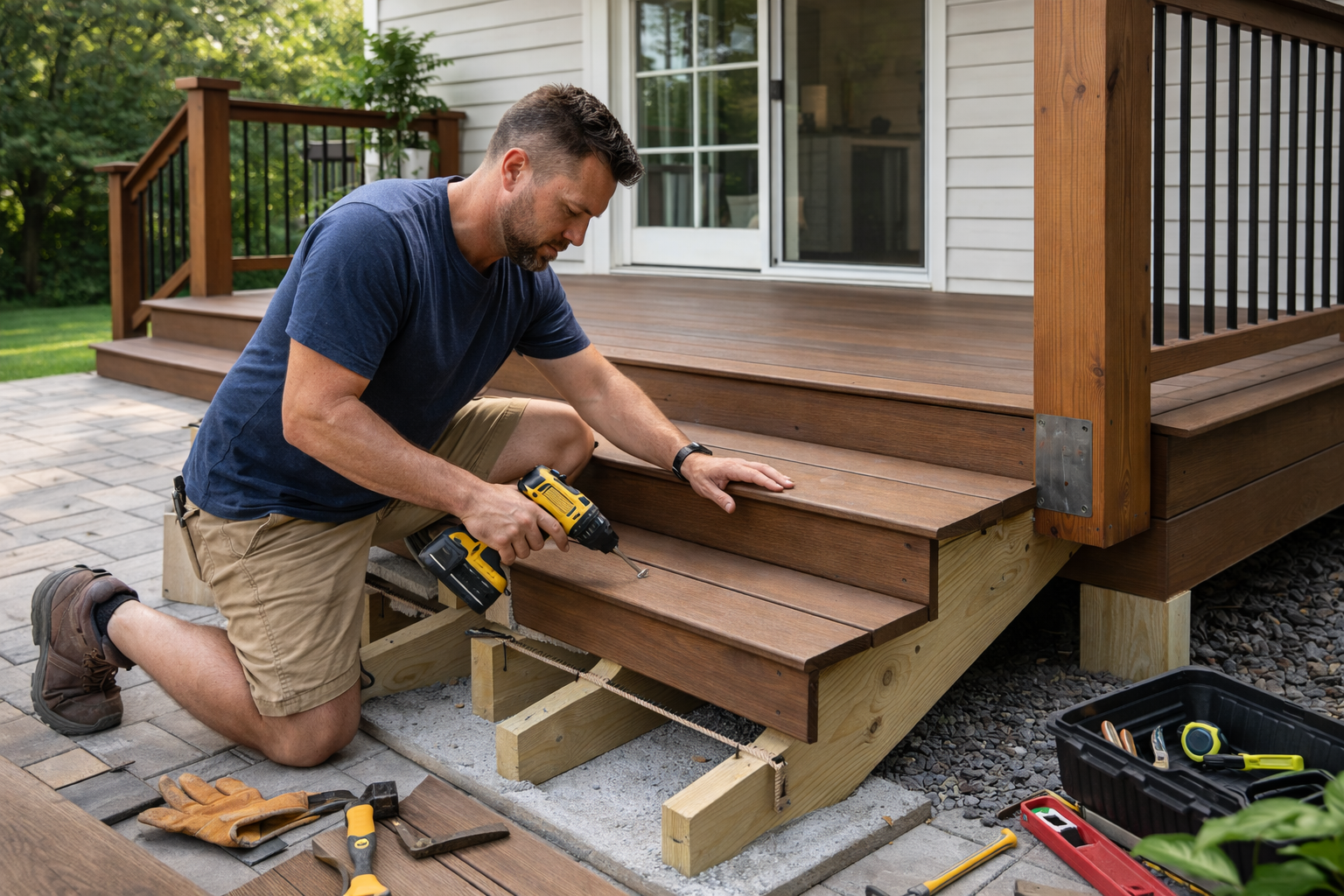
How to Build a Ground-Level Deck Attached to a House: A Terrific Option!
A ground-level deck attached to a house looks simple. It sits low, often doesn’t need railings, and feels like a natural extension of the home. Because it’s close to the ground, many people assume it’s easier and safer than an elevated deck.

In reality, this type of deck combines two risk factors. It’s close to soil and moisture, and it connects directly to the house. If drainage, flashing, or attachment details are wrong, problems don’t stay small. They spread into the structure.
This guide explains how to build a ground-level deck attached to a house safely, with special attention to ledger details, moisture control, and long-term durability.
If you haven’t already, it helps to review How to Build a Ground-Level Deck and How to Build a Flush Ground-Level Deck, since those principles apply here with added complexity.
For actionable, location-based bill of materials, cost estimates, and a pro-level PDF, you need the DeckMaster AI. Click on the image below to get it!

Use this guide and Best Practices on How to Build a Deck to learn the fundamentals. Use DeckMaster AI to build “your” deck with confidence.
Table of Contents
What Makes This Deck Type Different
This deck style blends features of both attached decks and low-profile decks.
Attached vs Detached Ground-Level Decks
The difference comes down to the house connection. An attached ground-level deck:
- Uses a ledger board fastened to the house
- Transfers some load into the home’s framing
- Requires flashing and waterproofing
- Puts framing close to the soil and splashback
A detached ground-level deck avoids the house connection but gives up direct access. Attaching to the house increases convenience and risk at the same time.
When This Design Makes Sense
A ground-level deck attached to a house works well when:
- The finished floor height aligns closely with grade
- You want step-free access from interior doors
- The site has good natural drainage
- The house structure is accessible and sound
It’s a poor choice where siding, brick veneer, or unknown framing prevents a proper ledger connection.
Planning and Permits
Low height does not mean low scrutiny.
Code and Permit Considerations
Many jurisdictions still regulate low decks. Depending on location:
- A permit may be required even without railings
- Ledger attachment must meet code
- Minimum clearance above soil may apply
Always confirm requirements before attaching anything to the house.
Evaluating the House Wall
Before design is finalized, confirm:
- The rim joist is accessible and in good condition
- There are no utilities in the ledger area
- The wall assembly can be properly flashed
If you can’t see the structure, open the wall. Guessing here is expensive.
How to Build a Ground-Level Deck Attached to a House
This section is the most important part of the project.
Ledger Board Placement and Height
The ledger sets the deck height and controls drainage. Best practices include:
- Keeping the ledger high enough to allow drainage below
- Avoiding contact between deck boards and siding
- Leaving room for flashing and inspection
Even on a low deck, never bury the ledger against soil.
Flashing and Waterproofing Details
Flashing is non-negotiable. Proper flashing should:
- Extend behind the house wrap
- Cover the top edge of the ledger
- Direct water away from the wall
Caulk alone is not waterproofing. It will fail.
Site Preparation Near the House
Ground-level decks put moisture right where you don’t want it.
Excavation and Base Preparation
Prepare the area thoroughly. That means:
- Removing all organic material
- Excavating for gravel and framing
- Sloping the base away from the house
The deck should never trap water against the foundation.
Managing Splashback and Drainage
Rainwater bounces off low decks. To manage this:
- Use gravel along the house edge
- Avoid solid borders that trap debris
- Keep downspouts redirected away from the deck
Water movement matters more here than appearance.
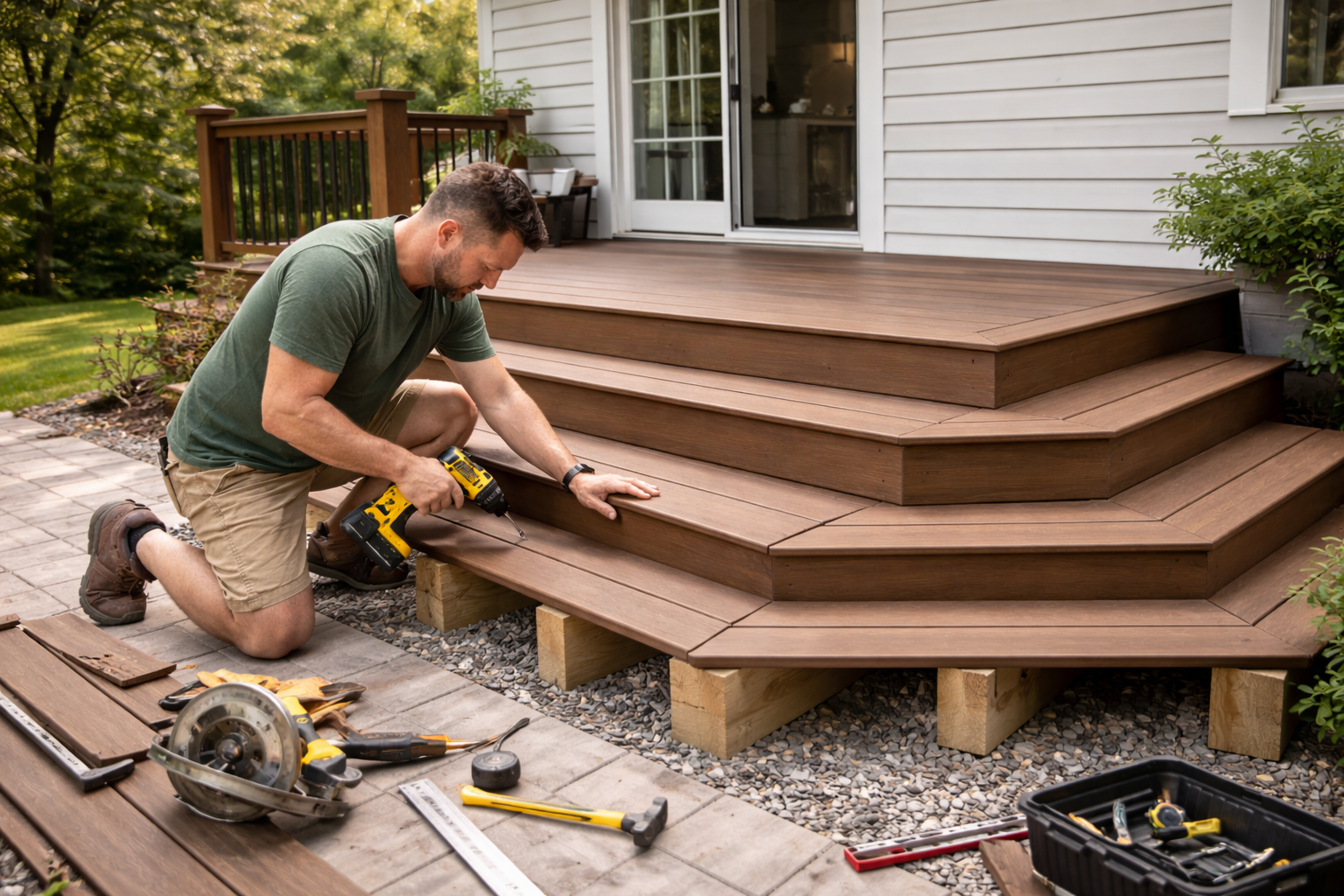
Framing a Low Attached Deck
Framing must be precise and moisture-resistant.
Framing Materials and Ratings
Use pressure-treated lumber rated for ground contact where required. That includes:
- Joists
- Beams
- Ledger board
- Blocking near grade
Standard treated lumber is often not enough this close to soil.
Joist Spacing and Clearance
Low decks exaggerate framing mistakes. Pay close attention to:
- Consistent joist spacing
- Flat framing planes
- Maintaining a slight clearance above the gravel
Even small sags create drainage problems.
Decking Installation
Deck boards affect both usability and drying time.
Board Layout at the House Connection
Never install deck boards tight to the house. Instead:
- Leave a clear gap between boards and siding
- Allow space for debris removal
- Make inspection possible
This gap protects the wall long-term.
Spacing and Fastening
Because airflow is limited:
- Use proper spacing between boards
- Avoid over-driving fasteners
- Follow manufacturer recommendations closely
Deck boards need room to dry after rain.
Optional Skirting and Edge Treatments
Skirting near a house must be handled carefully.
Skirting Without Trapping Moisture
If skirting is used:
- Choose vented or removable options
- Maintain airflow along the house
- Allow access for inspection
Solid skirting against a foundation is a common failure point.
Fascia and Transition Details
Fascia boards should:
- Hide framing cleanly
- Avoid contact with soil
- Allow water to escape freely
Clean transitions protect both the deck and the house.
Maintenance and Inspection
Attached ground-level decks require regular checks.
Routine Inspection Areas
At least once a year:
- Inspect ledger flashing
- Check for dampness near the house
- Clear debris from gaps and edges
Problems near the house escalate quickly if ignored.
Preventing Long-Term Damage
Watch out for:
- Soft spots near the ledger
- Mold or mildew on siding
- Persistent damp areas under the deck
Early action prevents structural repairs later.
Common Mistakes to Avoid
This deck type fails when risks are underestimated. Avoid:
- Attaching through siding
- Skipping flashing
- Building directly on soil
- Blocking drainage near the foundation
Low decks demand more preparation, not less.
Final Thoughts
A ground-level deck attached to a house can be comfortable, accessible, and visually seamless. But, it also places wood framing, fasteners, and decking right next to moisture and the house structure.
If you follow the core principles outlined in How to Build a Ground-Level Deck and apply the added care required for attachment details, this type of deck can perform just as well as taller designs.
Respect the house connection, manage water aggressively, and build with inspection and airflow in mind.