How to Build an Aluminum Deck: Low Maintenance, Excellent Performance
An aluminum deck is a smart option for homeowners who want durability without constant upkeep. It won’t rot, warp, crack, or attract insects. It sheds water easily and performs well in harsh climates. When installed correctly, an aluminum deck can last for decades with minimal maintenance.
That said, aluminum decks are different from wood decks in important ways. They require precise framing, manufacturer-specific systems, and careful planning.
This guide walks through how to build an aluminum deck properly, so it looks clean, performs well, and feels solid underfoot.
However, for actionable, location-based bill of materials, cost estimates, and a pro-level PDF, you need the DeckMaster AI. Click on the image below to get it!

Use this guide and Best Practices on How to Build a Deck to learn the fundamentals. Use DeckMaster AI to build “your” deck with confidence.
Table of Contents
Why Choose an Aluminum Deck?
Aluminum decking isn’t as common as wood or composite, but it solves problems those materials can’t.
Benefits of Aluminum Decking
Aluminum offers several clear advantages:
- Completely resistant to rot and insects
- Will not warp, crack, or splinter
- Fire resistant
- Excellent drainage and water management
- Minimal maintenance over time
It’s a terrific option in wet climates, elevated multi-level decks, and areas where moisture damage is a concern.
Potential Drawbacks to Consider
Aluminum isn’t for every project. Limitations include:
- Higher upfront cost
- Limited color and texture options
- Can feel louder underfoot without proper installation
- Requires manufacturer-approved framing and fasteners
Understanding these trade-offs helps set realistic expectations.
How to Build an Aluminum Deck: Start with a Good Plan
Good planning matters more with aluminum than with wood.
Budget and Material Planning
Aluminum decking costs more than most wood options. When budgeting, include:
- Decking panels or boards
- Trim and fascia systems
- Specialized fasteners
- Railings compatible with aluminum
Although the initial cost is higher, the long-term maintenance costs are significantly lower.
Choosing the Right Aluminum Deck System
Most aluminum decks are sold as systems, not individual boards. These systems typically include:
- Interlocking decking planks or panels
- Concealed fastening channels
- Matching fascia and trim
Follow the manufacturer’s system from start to finish. Mixing products creates problems.
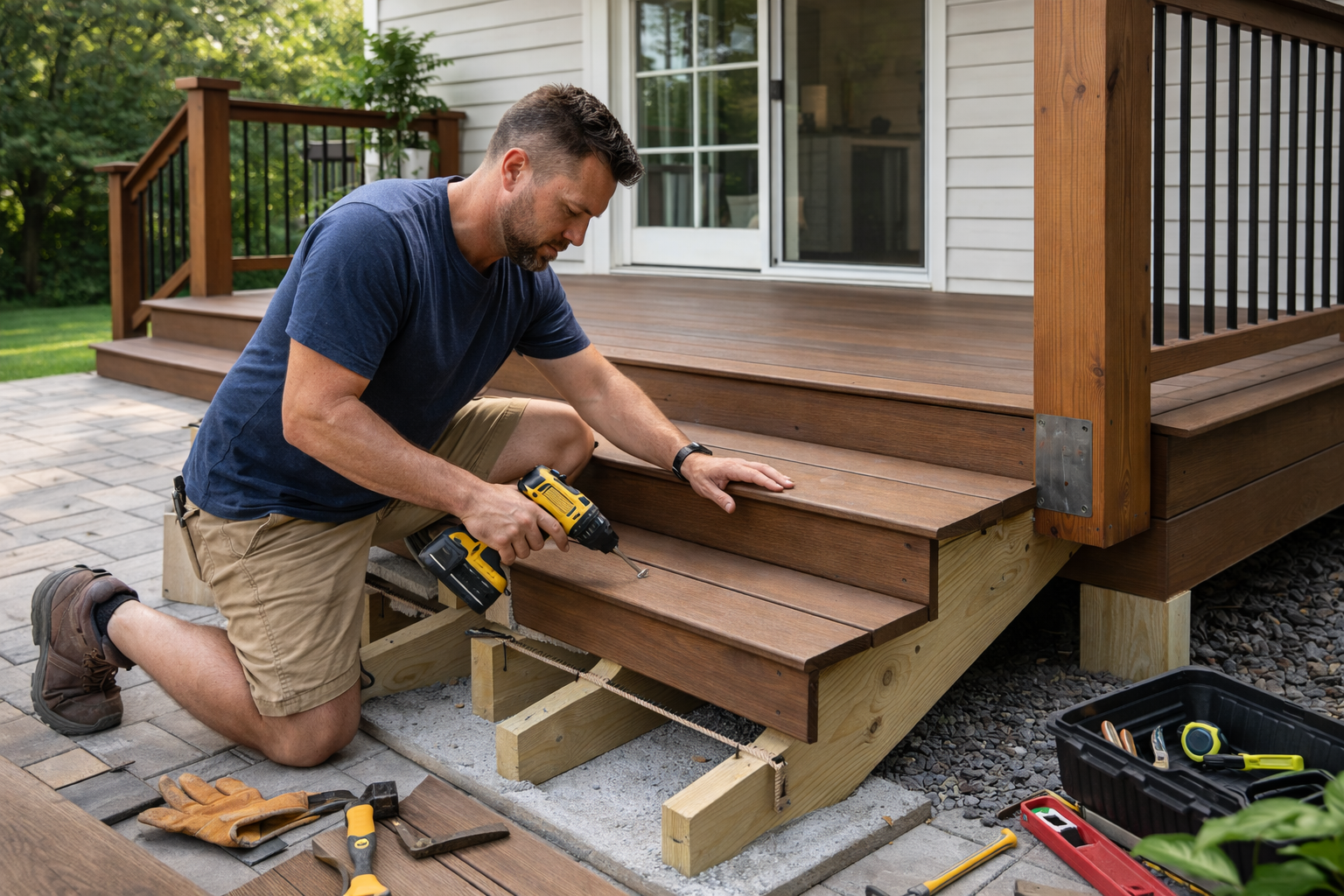
Framing Requirements for Aluminum Decks
Aluminum decking depends on a strong, accurate frame.
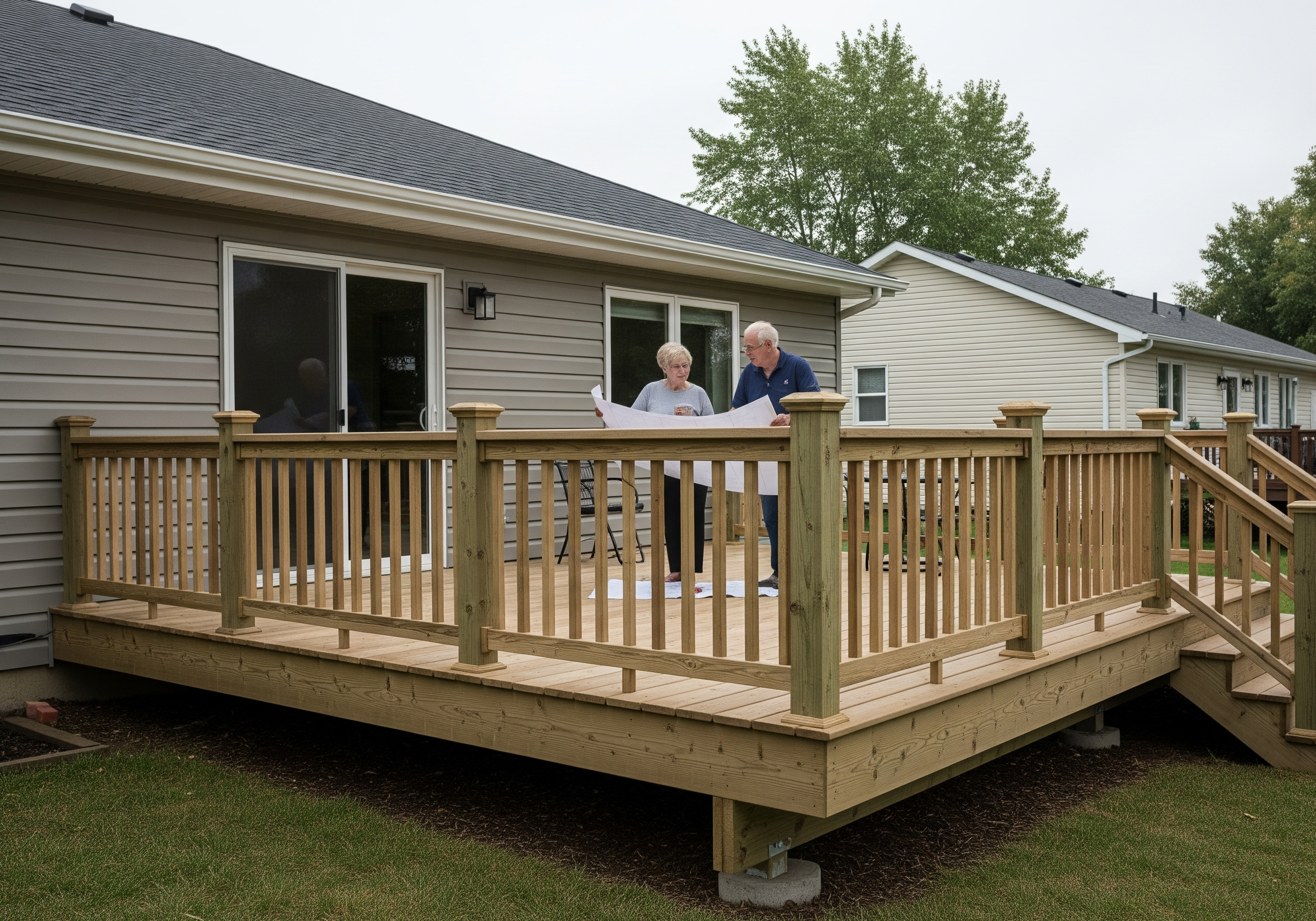
Using Pressure-Treated Framing
The structure below the deck is usually pressure-treated lumber or steel. Best practices include:
- Flat, level framing surfaces
- Proper joist sizing
- Correct beam and post placement
Aluminum will highlight framing errors. There is no forgiveness here.
Joist Spacing and Tolerances
Aluminum decking has strict spacing requirements. Most systems require:
- Closer joist spacing than wood
- Tight tolerances for flatness
- Consistent alignment across the frame
Check spacing with a tape and a level before installation begins.
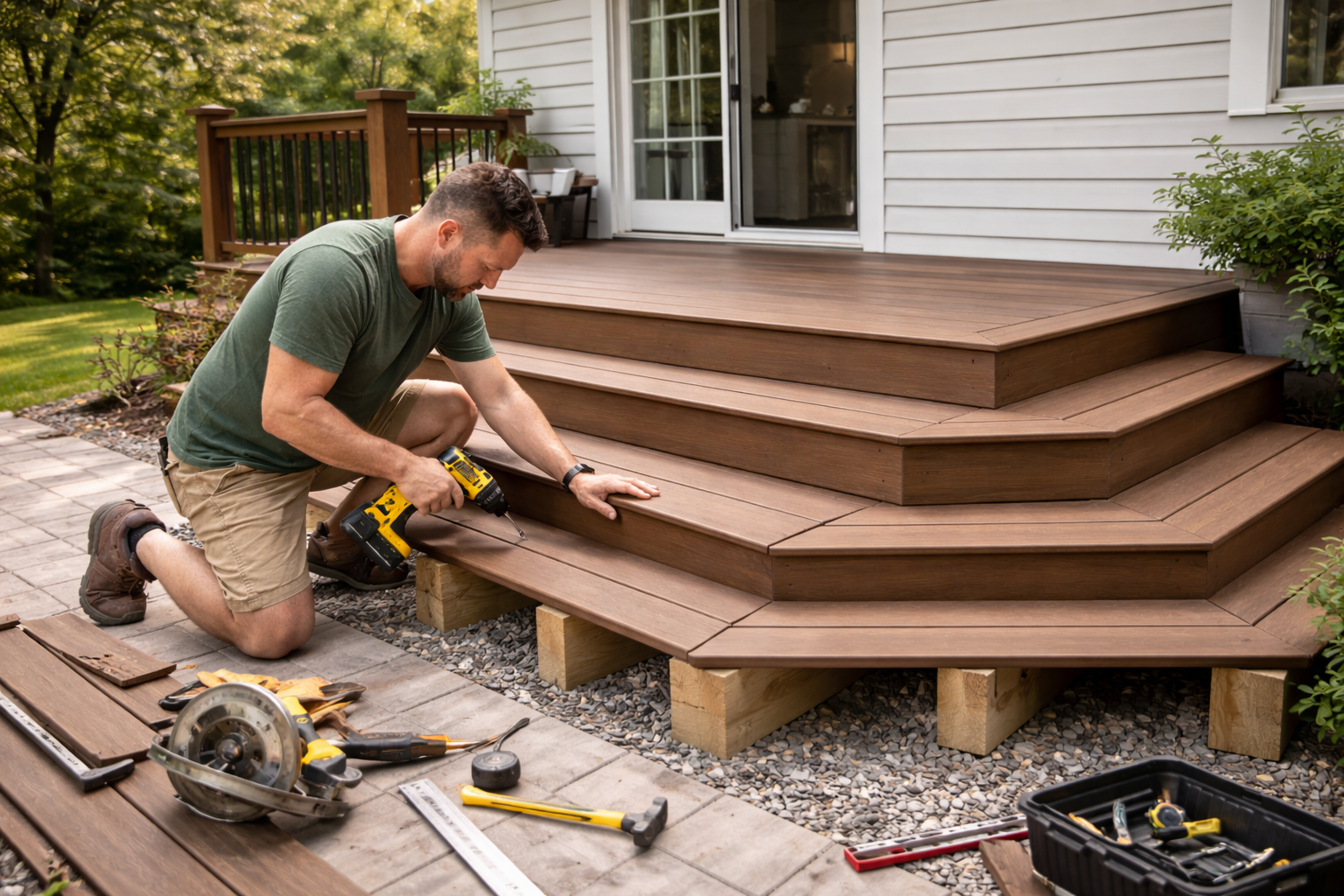
Installing Aluminum Decking
Installation is more technical than wood, but very predictable.
Layout and Starting Point
Start with a clean, square reference line. Before fastening:
- Dry-fit several panels
- Confirm overhang and edge alignment
- Verify slope for drainage if required
Small errors compound quickly with interlocking systems.
Fastening and Expansion
Aluminum expands and contracts with temperature changes. To manage movement:
- Use manufacturer-approved fasteners
- Follow expansion gap requirements
- Never force panels into place
Panels should lock together smoothly without stress.
Drainage and Waterproofing
One major advantage of aluminum is built-in water management.
Managing Water Below the Deck
Most aluminum systems shed water naturally. This makes them ideal for:
- Decks over the living space
- Walkout basements
- Storage areas below the deck
Some systems create a fully dry space underneath when installed correctly.
Sloping and Flashing Details
A proper slope keeps water moving. Key points include:
- Slight slope away from the house
- Proper flashing at walls and ledgers
- Clear drainage paths at deck edges
Water should never pool on or under the deck.
Railings and Accessories
Aluminum decks pair well with modern railing systems.
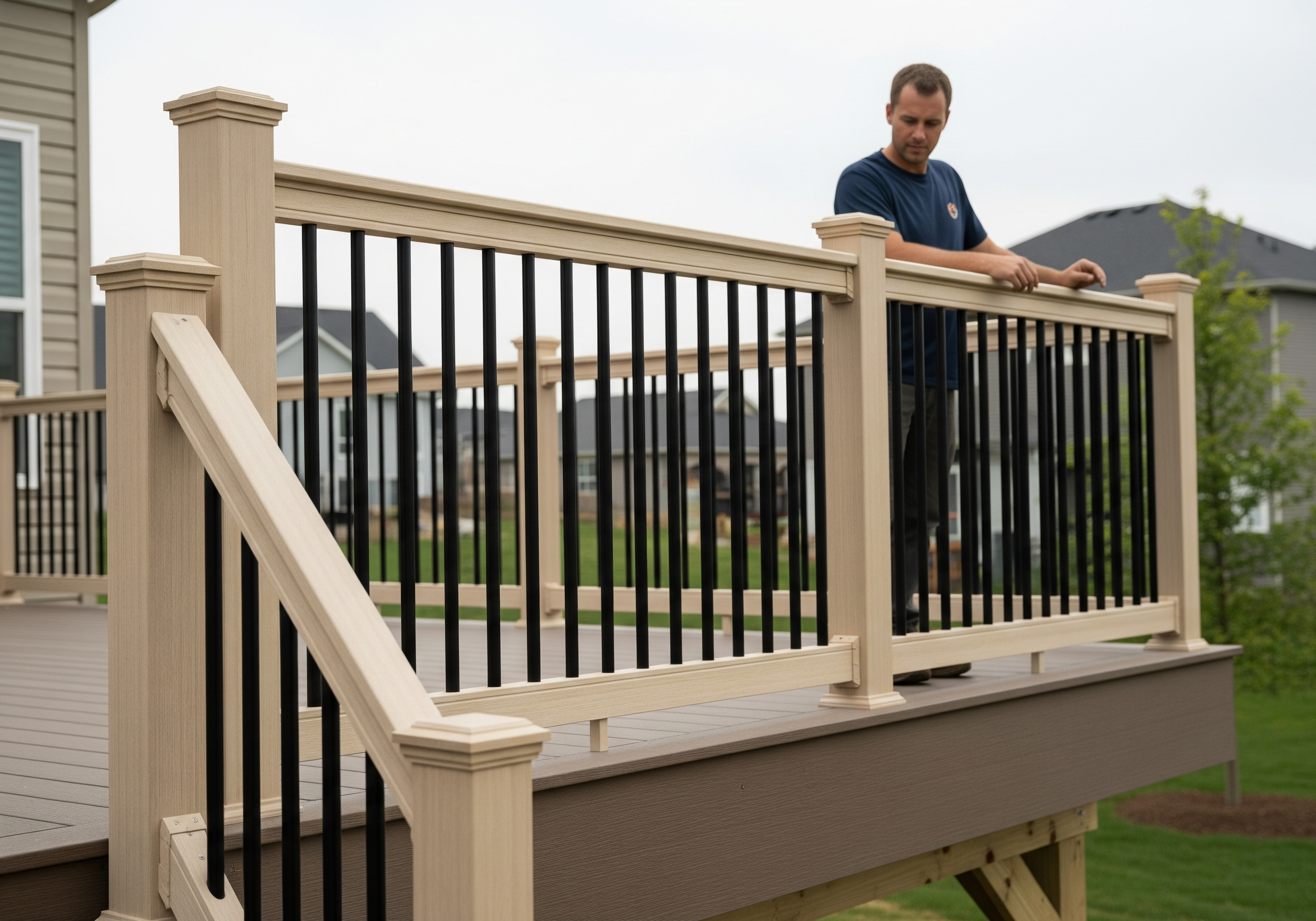
Railing Options
Popular choices include:
- Aluminum railings
- Glass panels
- Cable railing systems
Railings should be designed as part of the deck, not added later.
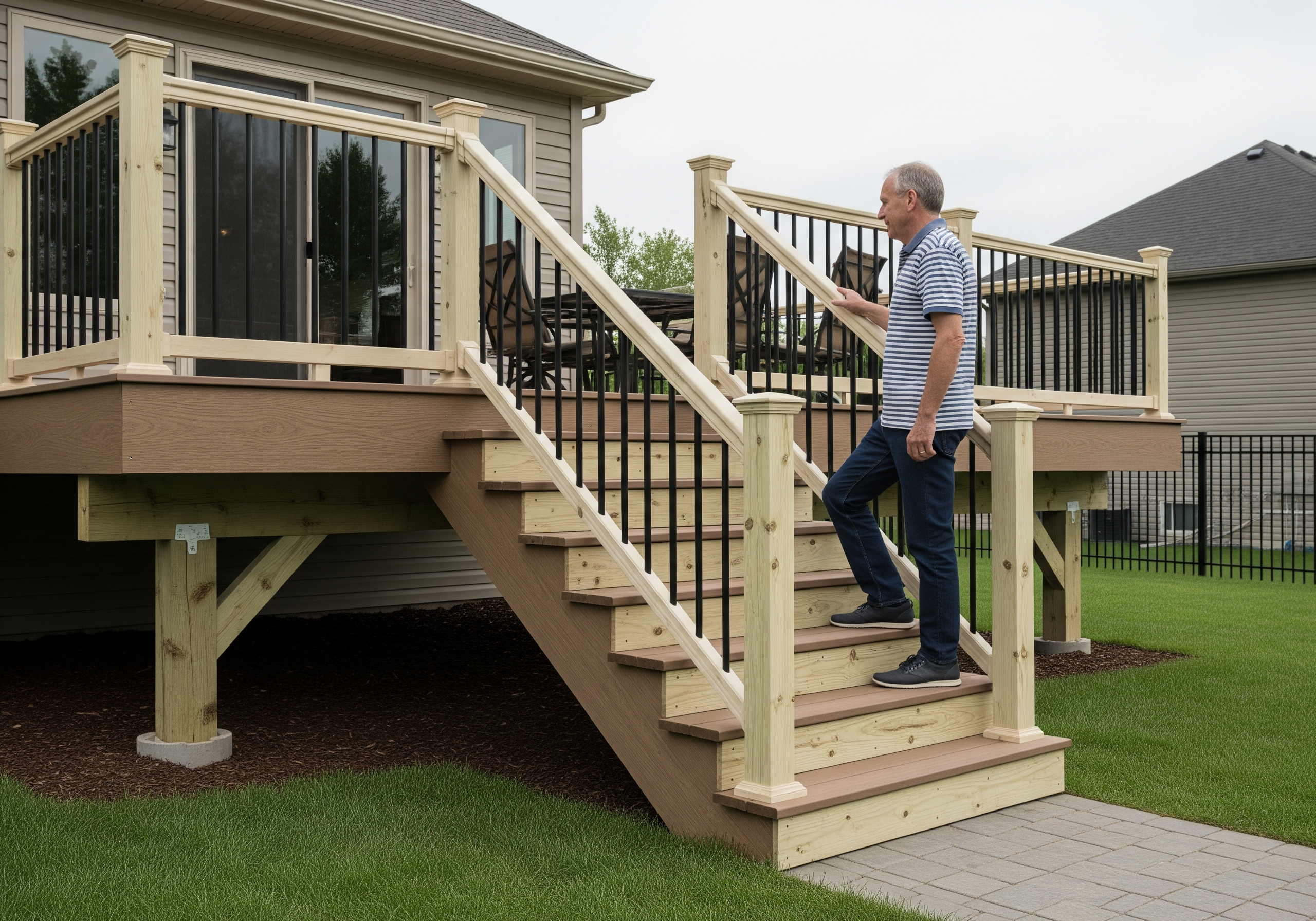
Stairs and Transitions
Stairs often use aluminum treads or wrapped framing. Pay attention to:
- Slip resistance
- Proper rise and run
- Secure attachment at landings
Transitions to doors or other surfaces should allow for movement.
Finishing Details
Aluminum decks rely on clean details, not surface treatments.
Fascia and Edge Trim
Fascia systems:
- Conceal framing
- Improve drainage control
- Create a finished appearance
Install fascia straight and consistent. Crooked lines stand out.
Noise Reduction Tips
Aluminum can sound hollow if installed poorly. To reduce noise:
- Ensure tight framing contact
- Use recommended isolation strips if provided
- Avoid unsupported spans
A solid frame makes a big difference.
Maintenance and Longevity
Maintenance is one of aluminum’s biggest advantages.
Routine Care
Most aluminum decks need only:
- Occasional washing
- Debris removal from joints
- Periodic fastener checks
There’s no staining, sealing, or sanding.
Long-Term Performance
Aluminum decks:
- Don’t absorb moisture
- Resist freeze-thaw damage
- Maintain consistent shape over time
Finish coatings typically last many years before showing wear.
Common Mistakes to Avoid
Aluminum decks fail when installers treat them like wood. Avoid:
- Ignoring framing tolerances
- Skipping manufacturer instructions
- Mixing incompatible products
- Rushing layout and alignment
Precision matters more than speed.
Final Thoughts
An aluminum deck is a long-term solution for homeowners who want performance and peace of mind. It’s clean, modern, and incredibly durable. While the upfront cost is higher, the payoff comes through low maintenance and long service life.
When built on a flat, well-planned frame and installed according to manufacturer guidelines, an aluminum deck becomes one of the most reliable outdoor structures you can build.