How to Build a Redwood Deck: Perfect Balance of Aesthetics & Performance
As an Amazon Associate, I earn from qualifying purchases.
Table of Contents
How to Build a Redwood Deck With Classic Looks!
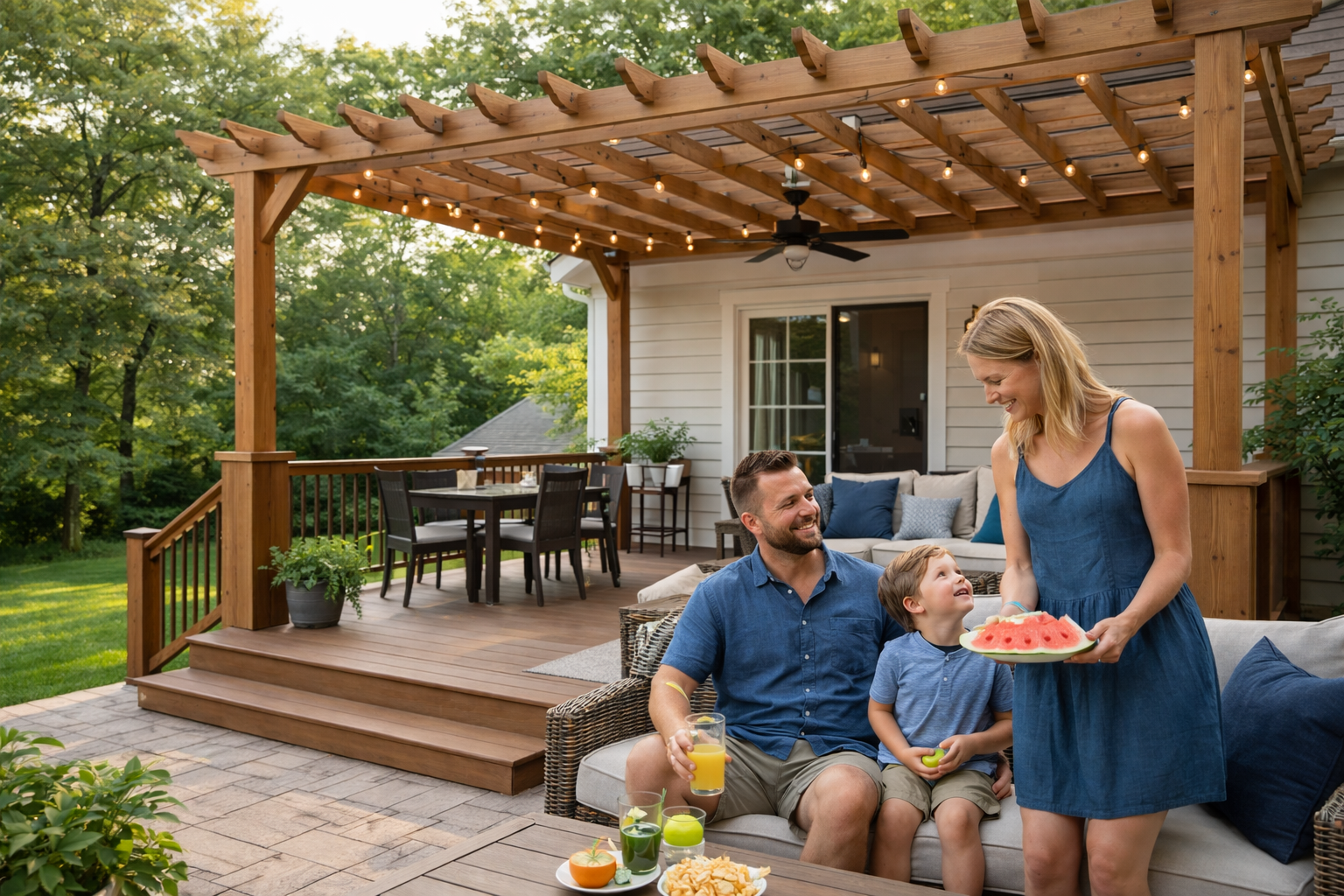
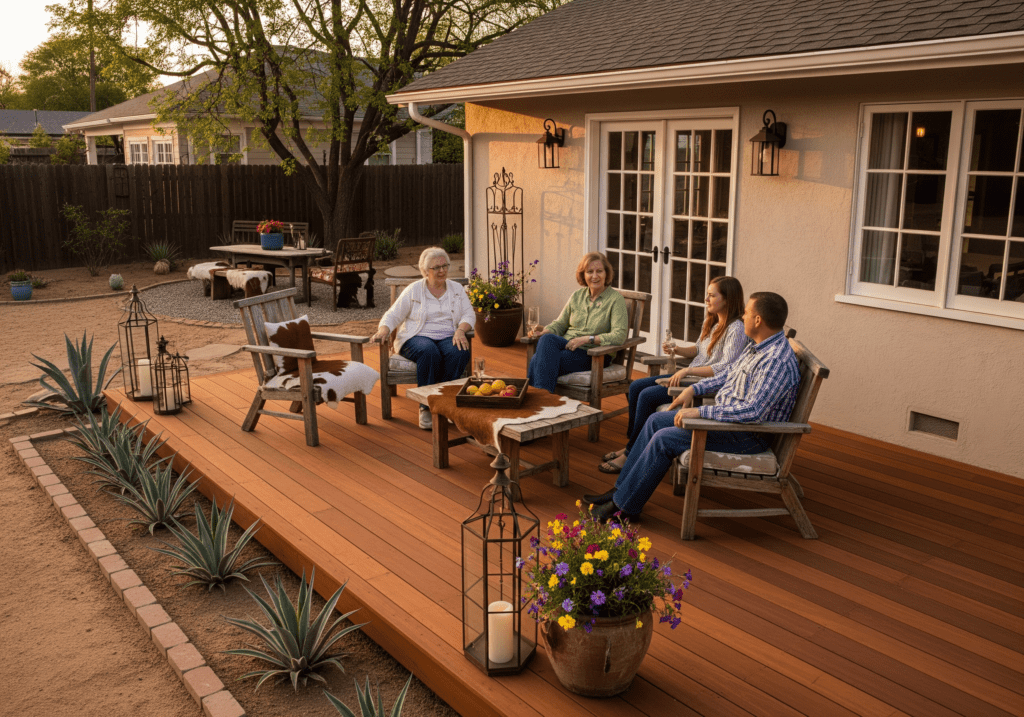
A redwood deck is a classic choice. It looks refined without feeling flashy, and it holds up well when built correctly.
Redwood is naturally resistant to rot and insects, and it stays more stable than many other softwoods. That combination makes it appealing for homeowners who want a high-end wood deck without going fully synthetic.
Still, redwood demands respect. It’s not cheap, it’s not structural lumber, and it requires the right fasteners and finishing approach.
This guide walks you through the basics of how to build a redwood deck from start to finish.
However, for actionable, location-based bill of materials, cost estimates, and a pro-level PDF, you need the DeckMaster AI. Click on the image below to get it!

Use this guide and Best Practices on How to Build a Deck to learn the fundamentals. Use DeckMaster AI to build “your” deck with confidence.
Why Choose Redwood for Your Deck?
Redwood has been used for outdoor construction for generations, especially in coastal and western climates.
Benefits of Redwood Decking
Redwood offers several practical advantages:
- Natural resistance to decay and insects
- Excellent dimensional stability
- Smooth surface that’s comfortable underfoot
- Rich color and straight grain
It also takes stain evenly, which makes finishing easier and more predictable.
Cost and Availability Considerations
Redwood is a premium material. Cost and availability vary by region. Before committing, consider:
- Local supply and grade options
- Waste factor for higher-end boards
- Whether the visual payoff fits your budget
Using redwood selectively, such as for decking and railings only, can help control costs.
Planning Your Redwood Deck
Redwood rewards careful planning. Mistakes are more noticeable with premium materials.
Choosing the Right Redwood Grade
Decking is typically sold in several grades. Common options include:
- Clear heart redwood, with minimal knots and consistent color
- Construction heart, which balances durability and appearance
- Knotty redwood, more rustic and budget-friendly
Use higher grades in high-visibility areas. Less visible sections can use lower grades without affecting performance.
Design and Layout Considerations
Redwood shines when the design is clean and intentional. Simple layouts:
- Highlight the grain and color
- Reduce waste and cutting
- Age more gracefully over time
Avoid overly complex patterns unless you’re confident in execution. Redwood mistakes are hard to hide.
Framing Requirements for a Redwood Deck
Like cedar, redwood is not structural lumber. The strength comes from the frame below.
Using Pressure-Treated Framing
Best practice is to:
- Use pressure-treated lumber for joists, beams, and posts
- Isolate redwood from direct contact with concrete or soil
- Install proper flashing where framing meets other structures
This approach protects the redwood and extends the life of the deck.
Joist Spacing and Support
Redwood is stronger than cedar but still softer than composites. To prevent sagging:
- Follow recommended joist spacing
- Avoid pushing span limits
- Add blocking where traffic is heavy
A stiffer frame protects your investment.
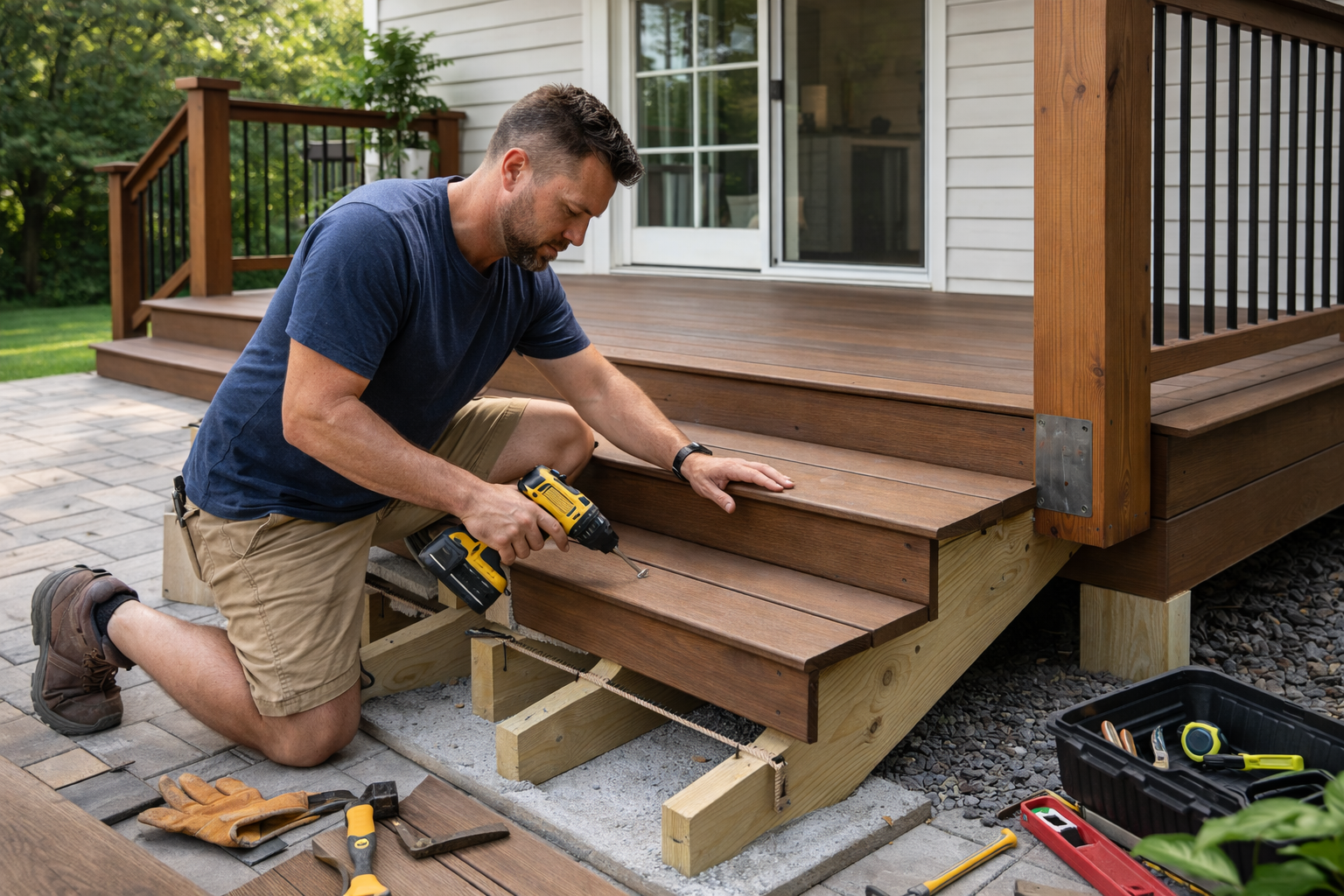
Installing Redwood Deck Boards
Installation technique matters more with redwood than with many modern materials.
Fastener Selection and Corrosion Resistance
Redwood contains tannins that react with certain metals. It is best to use:
- Stainless steel fasteners, whenever possible
- High-quality coated screws if stainless steel isn’t available
Avoid cheap fasteners. They stain the wood and fail prematurely.
Board Spacing and Moisture Content
Redwood moves with moisture, though less than many woods. Here are some installation tips:
- Check the board moisture before spacing
- Leave consistent gaps for drainage
- Avoid forcing boards tight against each other
Proper spacing keeps boards flat and reduces surface checking.
Finishing a Redwood Deck
Finishing protects both appearance and performance.
Natural vs Stained Redwood
You have two main paths.
Leaving redwood unfinished:
- Allows it to weather to a soft silver-gray
- Requires less frequent reapplication
- Results in uneven color in shaded areas
Staining redwood:
- Preserves the warm red tones
- Provides UV protection
- Requires regular maintenance
Neither option is wrong. Choose based on the look you want in the long-term.
Choosing the Right Finish
For most decks:
- Use oil-based or penetrating stains
- Avoid thick surface films
- Apply finishes evenly and sparingly
Redwood absorbs finish well. Overapplying leads to sticky surfaces and uneven wear.
Railings, Trim, and Details
Details matter more with premium wood.
Redwood Railing Options
Redwood railings feel cohesive and high-end. Popular styles include:
- Traditional vertical balusters
- Horizontal slat systems
- Mixed materials with metal or cable infill
Whatever the style, railing posts must be tied into framing, not just deck boards.
Fascia and Edge Treatments
Redwood fascia:
- Cleans up exposed framing
- Protects joist ends
- Adds a finished, intentional look
Install fascia with spacing for movement and consistent alignment at corners.
Maintenance and Longevity
Redwood lasts a long time when maintained. Neglect shortens its lifespan.
Routine Maintenance Tasks
Plan on:
- Annual cleaning
- Clearing debris from gaps
- Checking fasteners and railings
- Reapply finish as needed
Maintenance is predictable and manageable if you stay ahead of it.
Preventing Common Redwood Issues
Watch for:
- Surface checking from sun exposure
- Fasteners backing out over time
- Mildew in shaded or damp areas
Addressing these early keeps the deck looking refined.
Common Mistakes to Avoid
Redwood decks fail when treated like cheap lumber. Avoid:
- Using redwood for framing
- Skipping corrosion-resistant fasteners
- Installing boards too tight
- Ignoring finish and maintenance schedules
Premium materials require premium habits.
Final Thoughts
A redwood deck is an investment in both appearance and experience. It feels solid, looks refined, and ages with character when built correctly.
The key is respecting the material. Use proper framing, install it carefully, and maintain it consistently.
When you do, a redwood deck doesn’t just perform well. It becomes one of the most distinctive and comfortable outdoor spaces you can build.