How to Build a Detached Deck: A Practical Guide
As an Amazon Associate, I earn from qualifying purchases.
Table of Contents
How to Build a Detached Deck?
A detached deck is a great option when attaching to the house isn’t possible or isn’t smart.
Maybe your home has brick veneer. Maybe you want the deck closer to the yard, the pool, or the view. Or maybe you just want a clean break from the house structure.

Whatever the reason, a detached deck gives you flexibility. However, you lose the ledger board, which means the deck must support itself completely. That makes layout, footings, and framing even more important.
This guide walks you through the basics of how to build a detached deck from start to finish.
However, for actionable, location-based bill of materials, cost estimates, and a pro-level PDF, you need the DeckMaster AI. Click on the image below to get it!

Use this guide and Best Practices on How to Build a Deck to learn the fundamentals. Use DeckMaster AI to build “your” deck with confidence.
What Is a Detached Deck?
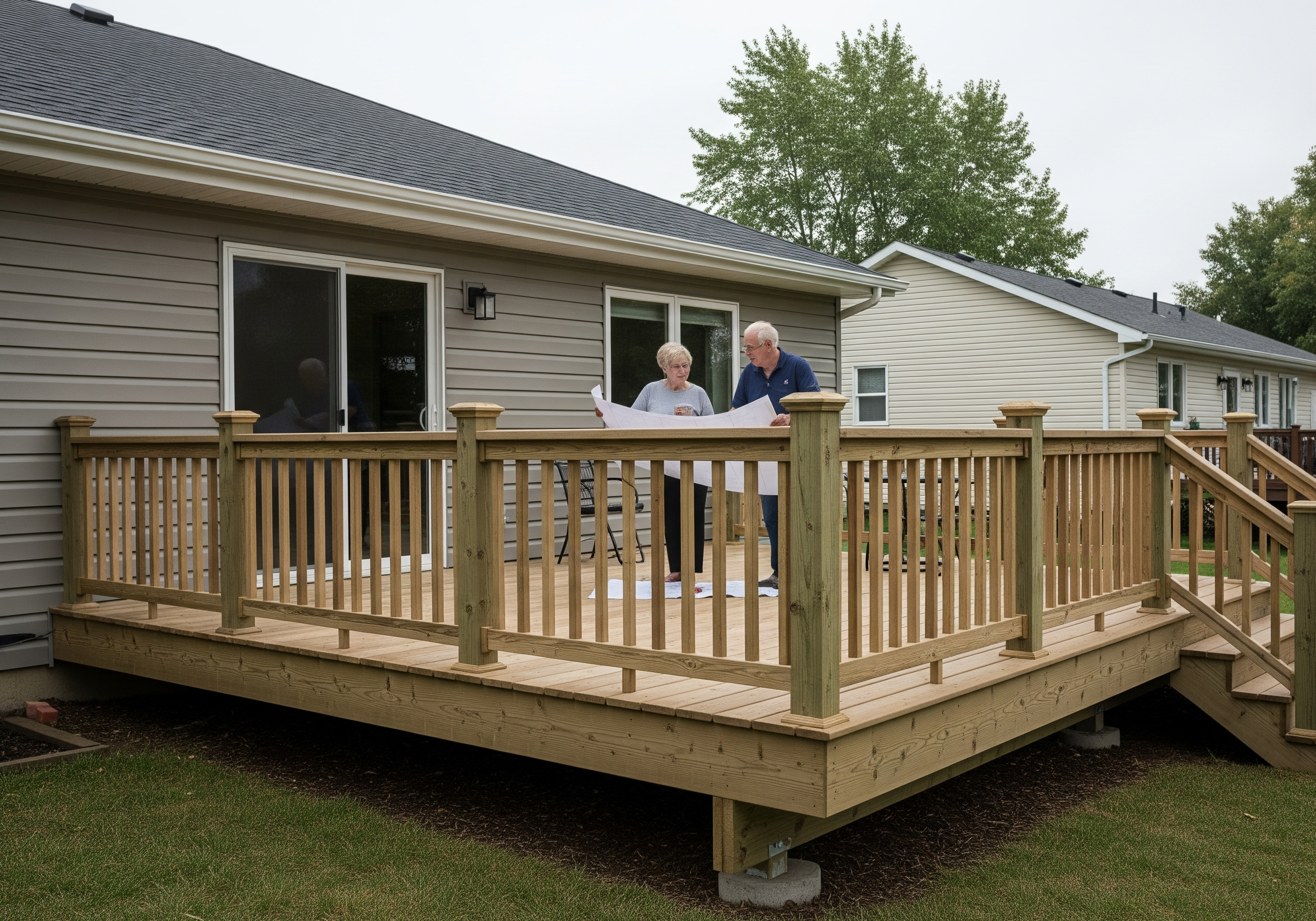
A detached deck is exactly what it sounds like. It stands on its own and does not rely on the house for support.
When to go for a Detached Deck
A detached deck solves several common problems. It works well when:
- The house structure can’t support a ledger board
- You want the deck in a specific spot in the yard
- Drainage or grading makes attachment difficult
- You want to avoid cutting into siding or waterproofing
A detached deck also makes future repairs simpler. No ledger means no risk of water damage to the house.
What are the Best Locations for a Detached Deck?
Detached decks work best when placed with purpose. Good locations include:
- Near a pool or fire pit
- At the edge of a yard with a view
- In low areas where tying into the house would be awkward
The deck should feel intentional, not random. Consider access paths, sightlines, and how people will utilize the space.
The Planning and Layout of a Detached Deck
Planning matters more than muscle here. A minor layout error can disrupt the entire build.
Determining Deck Size and Height
A very important question to ask is, “How will I use the detached deck?”
Go into the details. Ask yourself:
- How many people will typically use it?
- Will it hold furniture, a grill, or a hot tub?
- Do I need steps, or will it sit close to grade?
Detached decks can be low and simple or tall and complex. Height affects everything from footing depth to railing requirements.
Code, Permits, and Setbacks
Detached decks still require permits in most areas. You’ll likely need to account for:
- Property line setbacks
- Maximum deck height
- Guardrail and stair codes
- Frost depth for footings
Check local code early. Detached decks sometimes have different rules than attached ones.
Foundation and Footings
Without a house ledger, the foundation does all the work.
Choosing the Right Footing Type
Concrete footings are the most common and most reliable option. Other options include:
- Precast deck blocks for very low decks
- Helical piles in poor soil conditions
For anything elevated, poured concrete footings below frost depth are the safest choice.
Post Placement and Spacing
Post spacing depends on beam size and load. Some general guidelines:
- Keep posts aligned in straight rows
- Avoid long cantilevers
- Space posts to minimize beam spans
A well-laid-out footing plan makes framing easier and stronger.
Framing the Detached Deck
The frame is the skeleton of the deck. It needs to be square, level, and stiff.
Beams, Joists, and Load Paths
Because the deck is freestanding:
- Beams usually sit on top of posts
- Joists rest on beams, not a ledger
- The load travels straight down to the footings
This setup is simple but unforgiving. If posts aren’t level, the whole deck shows it.
Keeping the Frame Square and Level
Take your time here. Helpful practices include:
- Using string lines for beam alignment
- Checking diagonal measurements often
- Locking the frame in place with blocking
A square frame makes deck board installation faster and cleaner.
Installing Deck Boards
Deck boards are where the project starts to feel finished.
Board Direction and Layout
Decide board direction before you start fastening.
Straight runs are easiest. Picture framing the edges adds polish but takes more time and material.
Make sure the board layout:
- Avoids tiny slivers at edges
- Aligns cleanly with stairs and transitions
A little planning here improves the final look a lot.
Fastening Methods
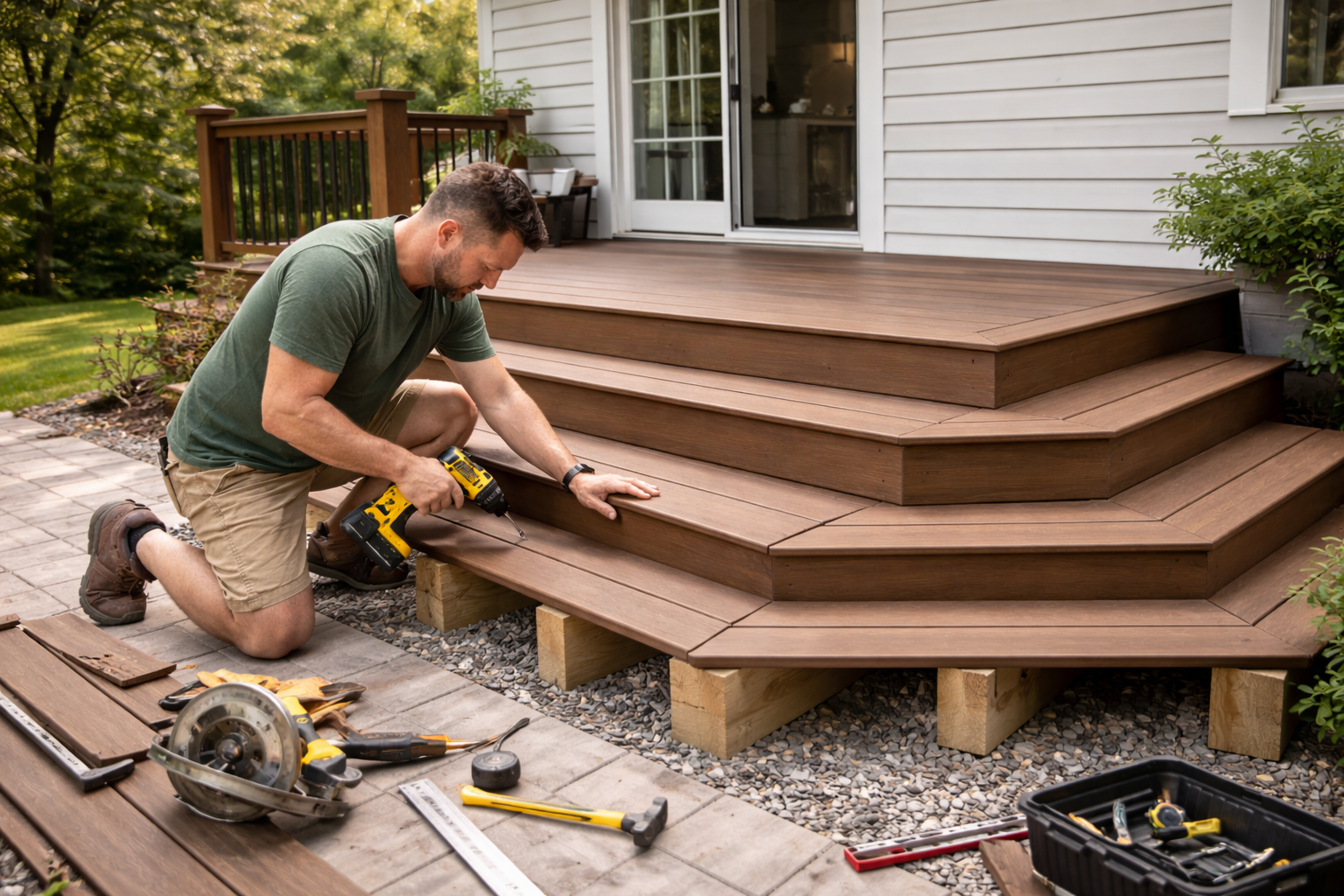
You can use:
- Face screws for strength and simplicity
- Hidden fasteners for a cleaner surface
Use fasteners rated for exterior use. Cheap screws fail quickly outdoors.
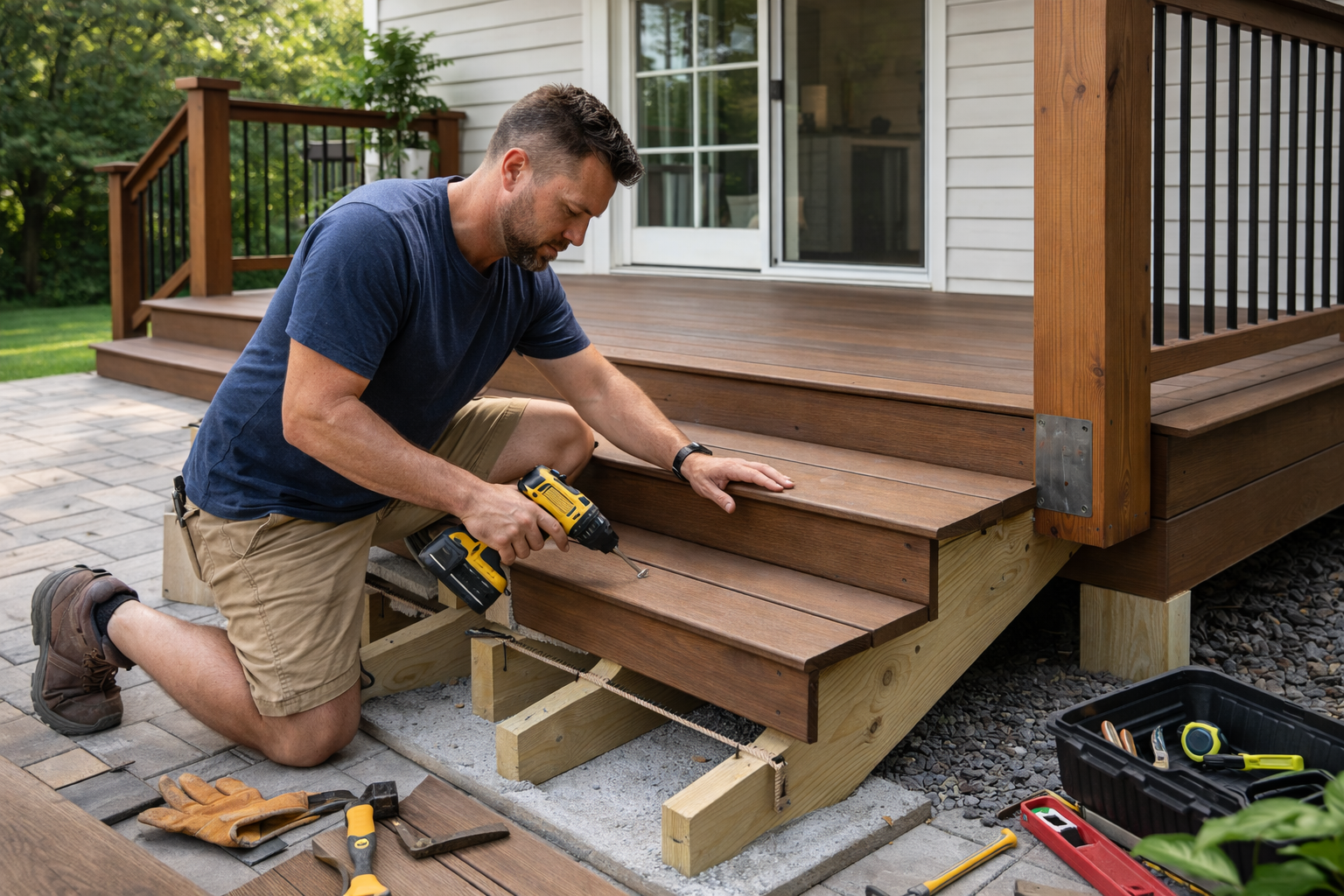
Stairs and Railings
Detached decks often require stairs, even when close to grade.
Stair Design Basics
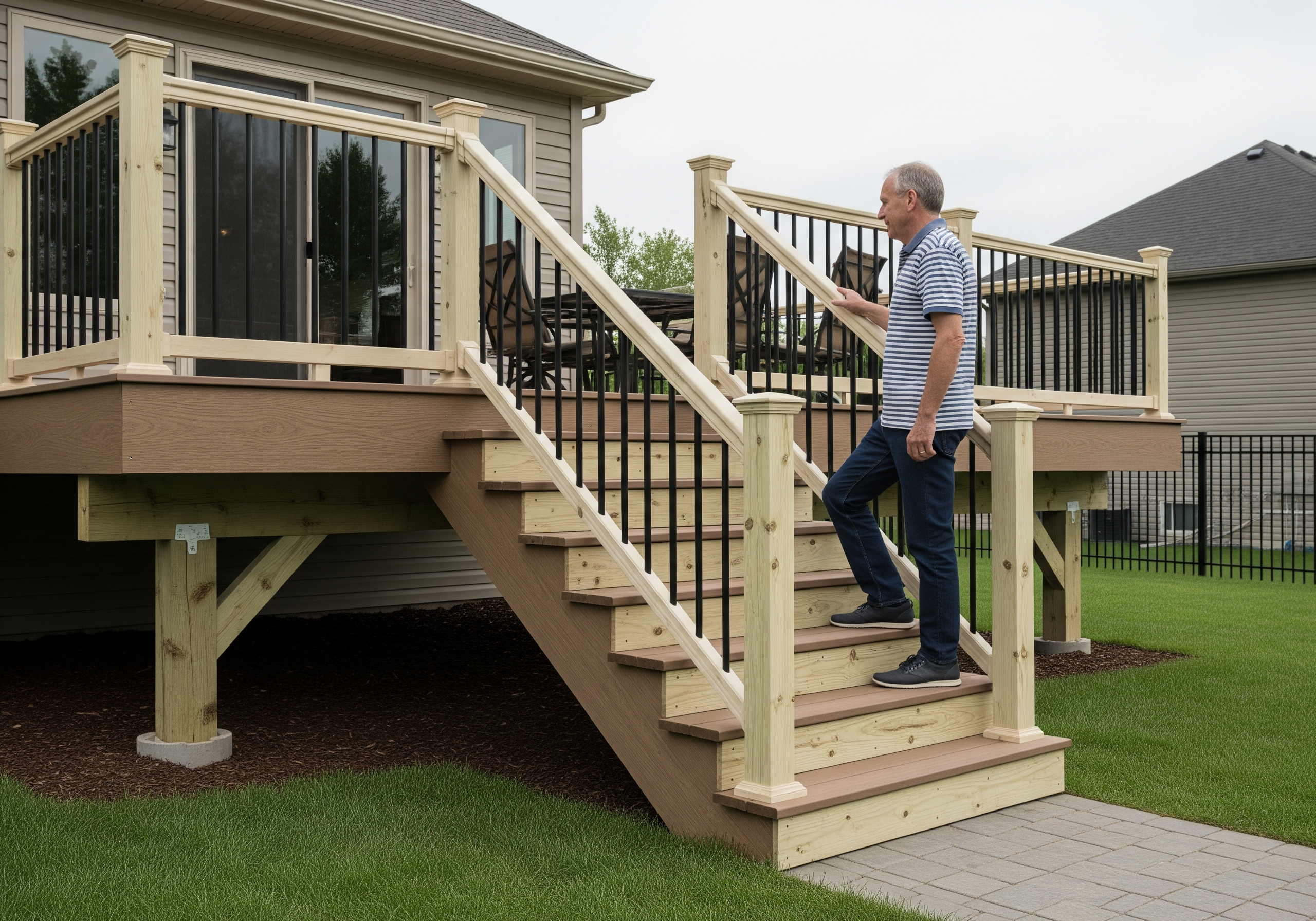
Stairs must feel natural to use. That means:
- Consistent rise and run
- Solid stringer support
- Secure attachment at the top and the bottom
Poor stairs are unsafe and almost always fail inspection.
Railing Options for Detached Decks
Railings are required once the deck reaches a certain height.
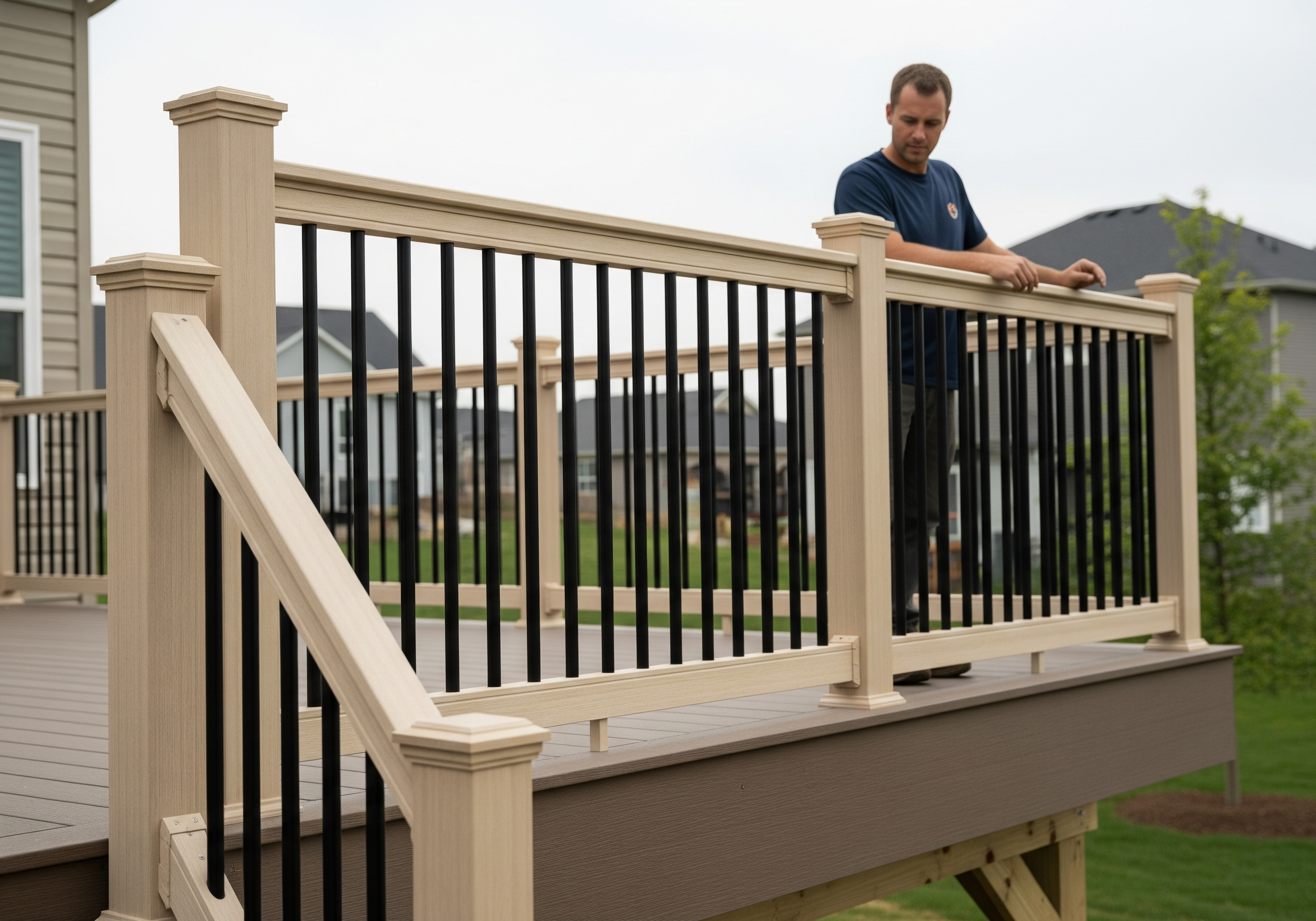
Common options include:
- Wood railings
- Composite systems
- Metal balusters or cable infill
Whatever you choose, make sure posts are tied into the framing, not just the deck boards.
Finishing Details
This is where a detached deck goes from basic to intentional.
Fascia and Trim
Fascia boards hide framing and clean up the edges. They also:
- Protect joist ends
- Give the deck a finished look
- Help define the deck shape
Use exterior-grade materials and proper spacing.
Ground Clearance and Weed Control
Leave space under the deck for airflow. Also consider:
- Landscape fabric and gravel below
- Keeping soil away from framing
- Easy access for inspection and maintenance
Trapped moisture shortens deck life.
Maintenance and Long-Term Care
Detached decks are easier to maintain than attached ones, but they still need attention.
Routine Maintenance Tasks
Plan to:
- Clean the deck annually
- Inspect posts, beams, and fasteners
- Re-seal wood decks as needed
Catching small issues early prevents bigger repairs later.
Settlement and Movement
Because the deck is freestanding, minor movement can happen over time. Watch for:
- Uneven stairs
- Gaps opening at joints
- Posts shifting slightly
These are usually fixable if addressed early.
Common Mistakes to Avoid
Detached decks fail when people underestimate them. Avoid:
- Skipping permits
- Shallow or poorly spaced footings
- Out-of-square framing
- Underbuilt beams and posts
A detached deck must be overbuilt, not underbuilt.
A well-built detached deck feels solid, intentional, and independent. It doesn’t rely on the house, and it doesn’t create future headaches.
If you plan carefully, respect the load paths, and build on a strong foundation, a detached deck can be one of the most flexible and durable outdoor spaces you can add to your property.
Maybe you want to build a pool deck? If so, check out How to Build a Pool Deck: Easy Step-by-Step Guide